Kirjojen hintavertailu. Mukana 12 595 353 kirjaa ja 12 kauppaa.

Kirjailija

Kathleen Dolan

Kirjat ja teokset yhdessä paikassa: 5 kirjaa, julkaisuja vuosilta 2005-2014, suosituimpien joukossa When Does Gender Matter?. Vertaile teosten hintoja ja tarkista saatavuus suomalaisista kirjakaupoista.

5 kirjaa

Kirjojen julkaisuhaarukka 2005-2014.

When Does Gender Matter?

When Does Gender Matter?

Kathleen Dolan

Oxford University Press Inc
2014
sidottu
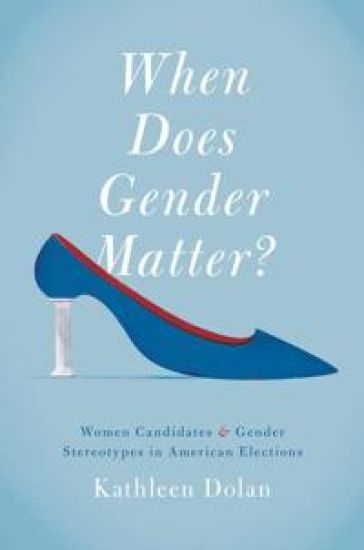
As the number of women candidates for office in the U.S. increases each election cycle, scholars are confronted with questions about the impact of their sex on their chances of success. Chief among these questions involves the influence of gender stereotypes on the decisions voters make in elections in which women run against men. Previous research documents that voters see women and men as possessing different character traits and different abilities to handle policy issues. These findings, combined with anecdotal evidence of sexist attitudes toward women candidates, raises concerns that women candidates are hampered by their sex and gender considerations. Employing data from an original survey of 3150 U.S. adults conducted in 2010, this book confronts scholarly concerns that gender stereotypes work to undermine women's chances of success. Challenging the conventional wisdom, these data demonstrate that voters do not rely heavily on gender stereotypes when evaluating and voting for women candidates. Voters do hold gendered attitudes, both positive and negative, about women candidates, but these attitudes are not related to the political decisions voters make. Instead, in deciding for whom to vote, people are influenced by traditional political forces, like political party and incumbency, regardless of the sex of the candidates. There is also evidence that partisan stereotypes interact with gender stereotypes to influence reactions to candidates, both women and men, depending on their political party. In the end, this project demonstrates that women candidates win as often as do men and that partisan concerns trump gender every time.
When Does Gender Matter?

When Does Gender Matter?

Kathleen Dolan

Oxford University Press Inc
2014
nidottu
As the number of women candidates for office in the U.S. increases each election cycle, scholars are confronted with questions about the impact of their sex on their chances of success. Chief among these questions involves the influence of gender stereotypes on the decisions voters make in elections in which women run against men. Previous research documents that voters see women and men as possessing different character traits and different abilities to handle policy issues. These findings, combined with anecdotal evidence of sexist attitudes toward women candidates, raises concerns that women candidates are hampered by their sex and gender considerations. Employing data from an original survey of 3150 U.S. adults conducted in 2010, this book confronts scholarly concerns that gender stereotypes work to undermine women's chances of success. Challenging the conventional wisdom, these data demonstrate that voters do not rely heavily on gender stereotypes when evaluating and voting for women candidates. Voters do hold gendered attitudes, both positive and negative, about women candidates, but these attitudes are not related to the political decisions voters make. Instead, in deciding for whom to vote, people are influenced by traditional political forces, like political party and incumbency, regardless of the sex of the candidates. There is also evidence that partisan stereotypes interact with gender stereotypes to influence reactions to candidates, both women and men, depending on their political party. In the end, this project demonstrates that women candidates win as often as do men and that partisan concerns trump gender every time.

I NEED A FACE-LIFT! (Spiritually Speaking)
On a pain-free, humorous journey---you will be given a personal spiritual face-lift that will impact your own life as well as others! In I NEED A FACE-LIFT! (Spiritually Speaking), Kathleen J. Dolan, actress and speaker, unearths the hidden treasures that lie within our ordinary, every-day experiences. After revealing her true-life stories, she uncovers their buried, hidden lessons. It's these very insights that will propel you to radiate an amazing inner beauty! An entertaining speaker who informs and inspires audiences to live in hope and optimism, Kathleen's unique sense of humor invigorates and energizes. Her commonsense approach is easy to follow yet full of depth and meaning. Laced with laughter, tears, and love, Ms.Dolan's engaging stories-in short vignettes- will help you to find: A Higher Self-Esteem; A Happier Attitude; A Peaceful Mind; A Renewed Optimism. Take this Thirty-One Day Journey - then look in the mirror!
Lesbian Women and Sexual Health

Lesbian Women and Sexual Health

R Dennis Shelby; Kathleen Dolan

Routledge Member of the Taylor and Francis Group
2005
sidottu
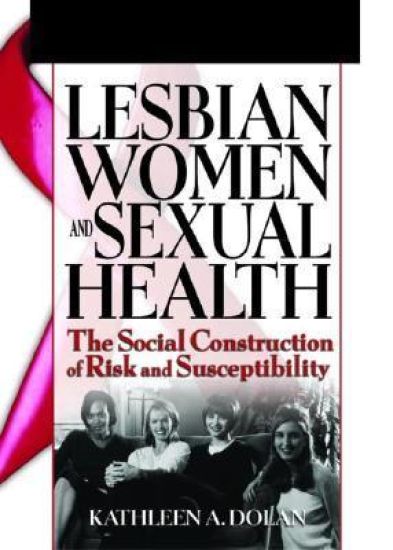
Interviewer: Where did you find out how to have safe lesbian sex?Val: I found out in jail.Why do so many lesbian women engage in sexual behavior that puts their health, even their lives, at risk? Many know they're at risk, yet somehow feel safe enough to behave as if there is no reason to practice safe sex. Lesbian Women and Sexual Health: The Social Construction of Risk and Susceptibility examines how lesbian women perceive their level of risk for HIV and other sexually transmitted infections (STIs). It describes how their perceptions of risk and susceptibility are shaped by factors such as sexual identity, cultural themes, and community knowledge - and how those perceptions impact on the very real HIV/STI risks that lesbian women face.The genesis of Lesbian Women and Sexual Health: The Social Construction of Risk and Susceptibility lies in Kathleen Dolan’s exploratory study of this under-researched area, in which 162 structured interviews and 70 in-depth interviews were conducted with women who self-identify as lesbians. What these women have to say will inform, educate, and probably surprise you. Tables and figures make complex data easy to access and understand.Lesbian women construct and label their identities and actions in complex ways that may lead to risky behavior. In the words of the women surveyed—and in Dr. Dolan’s insightful commentary—this book explores the ways in which lesbian women construct their perceptions of risk and susceptibility to seek answers to questions that include:Do many lesbian women see themselves, to an extent, as immune to HIV contraction?How does their self-constructed sense of risk and susceptibility lead to making dangerous choices?Why, in spite of their professed willingness to engage in protective actions, do many lesbians not actually do so?Why do many lesbian women, and some of the health care professionals who serve them, feel that pap smears are not necessary for women who have sex only with other women—and what are the consequences of this opinion?What is the relationship between drug/alcohol use and risky sexual behaviors in lesbian women?Lesbian Women and Sexual Health: The Social Construction of Risk and Susceptibility is an important resource for women’s/lesbian health advocates, health care professionals, and courses in gay/women’s/medical studies. It addresses gaps in the existing research to enhance our understanding of the physical and mental health status of lesbian women, of risk factors and protective actions regarding HIV and STIs, and of the conditions for which protective actions actually reduce risk. Use it to update your knowledge of this under-studied area at the intersection of physical, emotional, and sexual health.
Lesbian Women and Sexual Health

Lesbian Women and Sexual Health

R Dennis Shelby; Kathleen Dolan

Routledge Member of the Taylor and Francis Group
2005
nidottu
Interviewer: Where did you find out how to have safe lesbian sex?Val: I found out in jail.Why do so many lesbian women engage in sexual behavior that puts their health, even their lives, at risk? Many know they're at risk, yet somehow feel safe enough to behave as if there is no reason to practice safe sex. Lesbian Women and Sexual Health: The Social Construction of Risk and Susceptibility examines how lesbian women perceive their level of risk for HIV and other sexually transmitted infections (STIs). It describes how their perceptions of risk and susceptibility are shaped by factors such as sexual identity, cultural themes, and community knowledge - and how those perceptions impact on the very real HIV/STI risks that lesbian women face.The genesis of Lesbian Women and Sexual Health: The Social Construction of Risk and Susceptibility lies in Kathleen Dolan’s exploratory study of this under-researched area, in which 162 structured interviews and 70 in-depth interviews were conducted with women who self-identify as lesbians. What these women have to say will inform, educate, and probably surprise you. Tables and figures make complex data easy to access and understand.Lesbian women construct and label their identities and actions in complex ways that may lead to risky behavior. In the words of the women surveyed—and in Dr. Dolan’s insightful commentary—this book explores the ways in which lesbian women construct their perceptions of risk and susceptibility to seek answers to questions that include:Do many lesbian women see themselves, to an extent, as immune to HIV contraction?How does their self-constructed sense of risk and susceptibility lead to making dangerous choices?Why, in spite of their professed willingness to engage in protective actions, do many lesbians not actually do so?Why do many lesbian women, and some of the health care professionals who serve them, feel that pap smears are not necessary for women who have sex only with other women—and what are the consequences of this opinion?What is the relationship between drug/alcohol use and risky sexual behaviors in lesbian women?Lesbian Women and Sexual Health: The Social Construction of Risk and Susceptibility is an important resource for women’s/lesbian health advocates, health care professionals, and courses in gay/women’s/medical studies. It addresses gaps in the existing research to enhance our understanding of the physical and mental health status of lesbian women, of risk factors and protective actions regarding HIV and STIs, and of the conditions for which protective actions actually reduce risk. Use it to update your knowledge of this under-studied area at the intersection of physical, emotional, and sexual health.