Kirjojen hintavertailu. Mukana 12 390 323 kirjaa ja 12 kauppaa.

Kirjailija

Kathleen Duffy

Kirjat ja teokset yhdessä paikassa: 6 kirjaa, julkaisuja vuosilta 2014-2021, suosituimpien joukossa Teilhard's Mysticism. Vertaile teosten hintoja ja tarkista saatavuus suomalaisista kirjakaupoista.

6 kirjaa

Kirjojen julkaisuhaarukka 2014-2021.

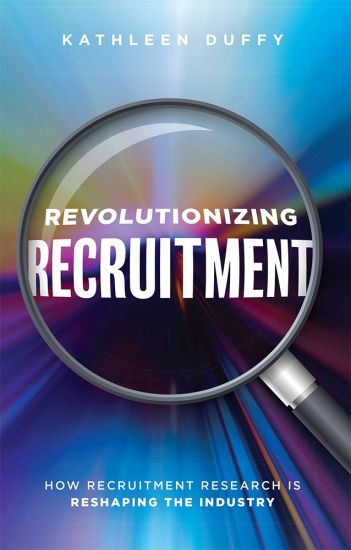
Revolutionizing Recruitment

Revolutionizing Recruitment

Kathleen Duffy

Advantage Media Group
2021
pokkari
REVOLUTIONIZE YOUR HIRING STRATEGY. In Revolutionizing Recruitment, Kathleen Duffy shares the insights that have made her a leading authority on recruitment research. As an expert at connecting employers with the skilled, talented candidates who make their organizations even better, she has created an innovative method centered around five key steps: strategy development, name generation, position promotion, candidate evaluation, and presentation and reporting.Kathleen’s strategic approach has consistently and effectively delivered exceptional candidates while saving her clients up to 50 percent over traditional recruiting fees. And now, those same proven strategies are available to you. Kathleen’s flexible, customizable methodology is efficient, economical, and will help you reenvision your approach to hiring, equipping you to identify candidates who are interested in your opportunity and qualified to begin contributing from day one.
Freud's Early Psychoanalysis, Witch Trials and the Inquisitorial Method
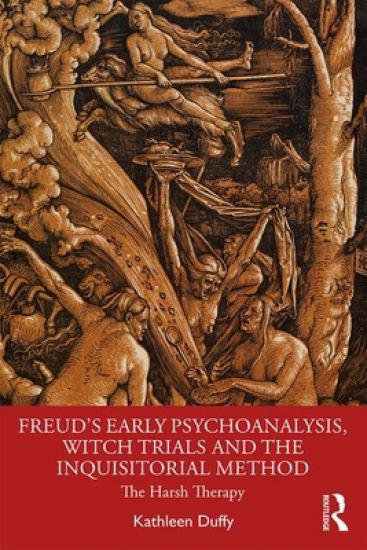
In Freud’s Early Psychoanalysis, Witch Trials and the Inquisitorial Method: The Harsh Therapy, author Kathleen Duffy asks why Freud compared his ‘hysterical’ patients to the accused women in the witch trials, and his ‘psychoanalytical’ treatment to the inquisitorial method of their judges. He wrote in 1897 to Wilhelm Fliess: ‘I ... understand the harsh therapy of the witches’ judges’. This book proves that Freud’s view of his method as inquisitorial was both serious and accurate.In this multidisciplinary and in-depth examination, Duffy demonstrates that Freud carefully studied the witch trial literature to develop the supposed parallels between his patients and the witches and between his own psychoanalytic method and the judges’ inquisitorial extraction of ‘confessions’, by torture if necessary. She examines in meticulous detail both the witch trial literature that Freud studied and his own case studies, papers, letters and other writings. She shows that the various stages of his developing early psychoanalytic method, from the 'Katharina' case of 1893, through the so-called seduction theory of 1896 and its retraction, to the 'Dora' case of 1900, were indeed in many respects inquisitorial and invalidated his patients’ experience.This book demonstrates with devastating effect the destructive consequences of Freud’s nineteenth-century inquisitorial practice. This raises the question about the extent to which his mature practice and psychoanalysis and psychotherapy today, despite great achievements, remain at times inquisitorial and consequently untrustworthy. This book will therefore be invaluable not only to academics, practitioners and students of psychoanalysis, psychotherapy, literature, history and cultural studies, but also to those seeking professional psychoanalytic or psychotherapeutic help.
Freud's Early Psychoanalysis, Witch Trials and the Inquisitorial Method
In Freud’s Early Psychoanalysis, Witch Trials and the Inquisitorial Method: The Harsh Therapy, author Kathleen Duffy asks why Freud compared his ‘hysterical’ patients to the accused women in the witch trials, and his ‘psychoanalytical’ treatment to the inquisitorial method of their judges. He wrote in 1897 to Wilhelm Fliess: ‘I ... understand the harsh therapy of the witches’ judges’. This book proves that Freud’s view of his method as inquisitorial was both serious and accurate.In this multidisciplinary and in-depth examination, Duffy demonstrates that Freud carefully studied the witch trial literature to develop the supposed parallels between his patients and the witches and between his own psychoanalytic method and the judges’ inquisitorial extraction of ‘confessions’, by torture if necessary. She examines in meticulous detail both the witch trial literature that Freud studied and his own case studies, papers, letters and other writings. She shows that the various stages of his developing early psychoanalytic method, from the 'Katharina' case of 1893, through the so-called seduction theory of 1896 and its retraction, to the 'Dora' case of 1900, were indeed in many respects inquisitorial and invalidated his patients’ experience.This book demonstrates with devastating effect the destructive consequences of Freud’s nineteenth-century inquisitorial practice. This raises the question about the extent to which his mature practice and psychoanalysis and psychotherapy today, despite great achievements, remain at times inquisitorial and consequently untrustworthy. This book will therefore be invaluable not only to academics, practitioners and students of psychoanalysis, psychotherapy, literature, history and cultural studies, but also to those seeking professional psychoanalytic or psychotherapeutic help.
Teilhard’s Struggle

Teilhard’s Struggle

Kathleen Duffy

Orbis Books (USA)
2019
pokkari
In 1919, the Jesuit scientist Pierre Teilhard de Chardin wrote a major essay, The Spiritual Power of Matter, which shaped his understanding of the role of struggle and conflict in evolution--whether in the material or on the spiritual plane. For Teilhard, who labored to integrate the insights of evolution with his Catholic faith, and who experienced ongoing conflicts with authorities in the church, these insights continued to play out in the rest of his life. Focusing on the meaning of his seminal essay for Teilhard's life, Kathleen Duffy explores the major struggles that he experienced in his roles as scientist, priest, mystic, friend, and member of the church.
Teilhard's Mysticism

Teilhard's Mysticism

Kathleen Duffy

Orbis Books (USA)
2014
nidottu
Pierre Teilhard de Chardin (1881-1955), a French Jesuit priest and scientist, charted a new path in reconciling Christian theology with evolutionary science. Though church officials in his lifetime rejected his work, his posthumously published writings have illuminated many of the most pressing issues of our time. In particular, he articulated a new mystical vision, in tune with the findings of science and our expanding knowledge of the universe. This book, by a theologian-scientist, examines Teilhard s mysticism, showing how science can help to illuminate the mystical path, while also demonstrating the compatibility between Teilhard s thought and current frontiers in scientific exploration."