Kirjojen hintavertailu. Mukana 12 584 900 kirjaa ja 12 kauppaa.

Kirjailija

Kathleen James-Chakraborty

Kirjat ja teokset yhdessä paikassa: 6 kirjaa, julkaisuja vuosilta 2000-2025, suosituimpien joukossa The Belgian Friendship Building. Vertaile teosten hintoja ja tarkista saatavuus suomalaisista kirjakaupoista.

6 kirjaa

Kirjojen julkaisuhaarukka 2000-2025.

The Belgian Friendship Building

The Belgian Friendship Building

Kathleen James-Chakraborty; Katherine M. Kuenzli; Bryan Clark Green

UNIVERSITY OF VIRGINIA PRESS
2025
sidottu
A singular architectural landmark bridging western Europe and the American South How did the Belgian Friendship Building, originally constructed for the 1939 New York World’s Fair—and one of only a few surviving buildings from that celebrated exhibition—end up on the campus of an HBCU in Richmond, Virginia? In this richly illustrated book, Kathleen James-Chakraborty, Katherine Kuenzli, and Bryan Clark Green relate the fascinating story, spanning three continents, of a distinctly modern structure that has towered over Virginia Union University, in a city characterized by its traditional architecture, for more than eighty years. It is a structure whose original purposes—to present modern Belgian design and to extol its racist, colonial regime—stand in stark contrast to its dedication in 1941 to Robert L. Vann, longtime editor of one of America’s most illustrious historic Black newspapers. And it is an enduring example of prewar modernism that has until now been all but forgotten in histories of American architecture. This indispensable, multifaceted account ties together the history of modern European architecture, colonial exploitation, and African American achievement in a brilliant and compelling case study.
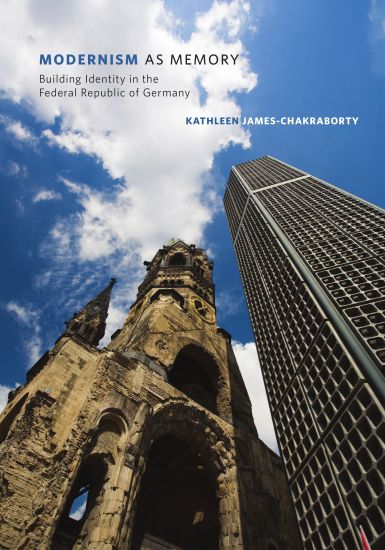
Modernism as Memory

Modernism as Memory

Kathleen James-Chakraborty

University of Minnesota Press
2018
nidottu
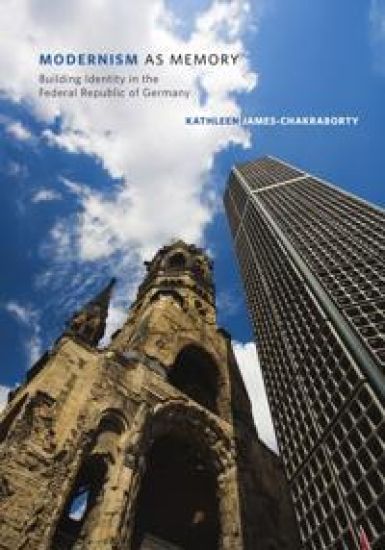
After World War II, West Germans and West Berliners found ways of communicating both their recent sufferings and aspirations for stable communities through buildings that fused the ruins of historicist structures with new constructions rooted in the modernism of the 1910s and 201820s. As Modernism as Memory illustrates, these postwar practices undergird the approaches later taken in influential structures created or renovated in Berlin following the fall of the Wall, including the Jewish Museum and the Reichstag, the New Museum and the Topography of Terror. While others have characterized contemporary Berlins museums and memorials as postmodern, Kathleen James-Chakraborty argues that these environments are examples of an architecture of modern memorythat is much older, more complex, and historically contingent. She reveals that churches and museums repaired and designed before 1989 in Dfcren, Hanover, Munich, Neviges, Pforzheim, Stuttgart, and Weil am Rhein contributed to a modernist precedent for the relationship between German identity and the past developed since then in the Ruhr region and in Berlin. Modernism as Memory demonstrates that how one remembers can be detached from what one remembers, contrasting ruins with recollections of modernism to commemorate German suffering, the Holocaust, and the industrial revolution, as well as new spaces for Islam in the country.
Modernism as Memory

Modernism as Memory

Kathleen James-Chakraborty

University of Minnesota Press
2018
sidottu
After World War II, West Germans and West Berliners found ways of communicating both their recent sufferings and aspirations for stable communities through buildings that fused the ruins of historicist structures with new constructions rooted in the modernism of the 1910s and 201820s. As Modernism as Memory illustrates, these postwar practices undergird the approaches later taken in influential structures created or renovated in Berlin following the fall of the Wall, including the Jewish Museum and the Reichstag, the New Museum and the Topography of Terror. While others have characterized contemporary Berlins museums and memorials as postmodern, Kathleen James-Chakraborty argues that these environments are examples of an architecture of modern memorythat is much older, more complex, and historically contingent. She reveals that churches and museums repaired and designed before 1989 in Dfcren, Hanover, Munich, Neviges, Pforzheim, Stuttgart, and Weil am Rhein contributed to a modernist precedent for the relationship between German identity and the past developed since then in the Ruhr region and in Berlin. Modernism as Memory demonstrates that how one remembers can be detached from what one remembers, contrasting ruins with recollections of modernism to commemorate German suffering, the Holocaust, and the industrial revolution, as well as new spaces for Islam in the country.
Architecture since 1400

Architecture since 1400

Kathleen James-Chakraborty

University of Minnesota Press
2014
nidottu
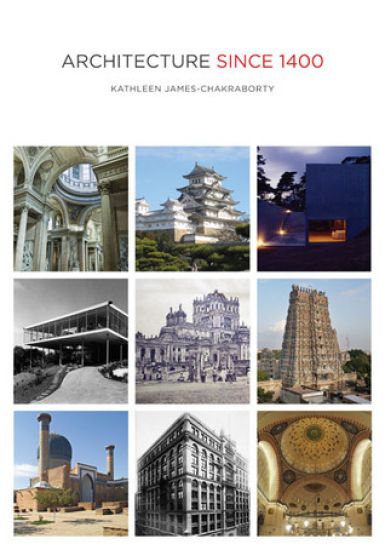
The first global history of architecture to give equal attention to Western and non-Western structures and built landscapes, Architecture since 1400 is unprecedented in its range, approach, and insight. From Tenochtitlan’s Great Pyramid in Mexico City and the Duomo in Florence to Levittown’s suburban tract housing and the Bird’s Nest Stadium in Beijing, its coverage includes the world’s most celebrated structures and spaces along with many examples of more humble vernacular buildings. Lavishly illustrated with more than 300 photographs, plans, and interiors, this book presents key moments and innovations in architectural modernity around the globe. Deftly integrating architectural and social history, Kathleen James-Chakraborty pays particular attention to the motivations of client and architect in the design and construction of environments both sacred and secular: palaces and places of worship as well as such characteristically modern structures as the skyscraper, the department store, and the cinema. She also focuses on the role of patrons and addresses to an unparalleled degree the impact of women in commissioning, creating, and inhabiting the built environment, with Gertrude Jekyll, Lina Bo Bardi, and Zaha Hadid taking their place beside Brunelleschi, Sinan, and Le Corbusier. Making clear that visionary architecture has never been the exclusive domain of the West and recognizing the diversity of those responsible for commissioning, designing, and constructing buildings, Architecture since 1400 provides a sweeping, cross-cultural history of the built environment over six centuries.
Bauhaus Culture

Bauhaus Culture

Kathleen James-Chakraborty

University of Minnesota Press
2006
nidottu
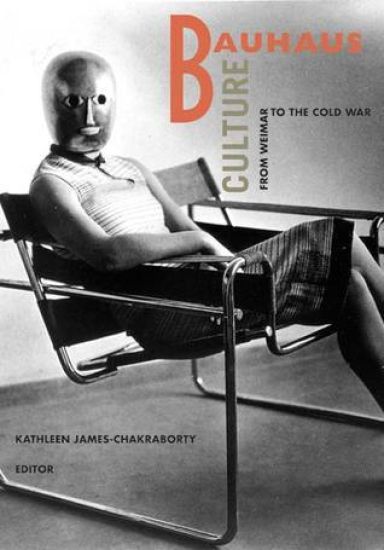
Offering the first comprehensive training in the visual arts grounded in abstraction, the Bauhaus was the site of a dazzling range of influential experiments in painting, architecture, photography, industrial design, and even artistic education itself. Three-quarters of a century later, the “look” of the new remains indebted to the Bauhaus and its equation of technology with modernism. Central to discussions of the relationships between art, industrialization, and politics in the twentieth century, much of the school’s later impact was derived in part from its status as one of the foremost cultural symbols of Germany’s first democracy and its public reputation as a “cathedral of socialism.” In this book, editor Kathleen James-Chakraborty and seven other scholars analyze the accomplishments and dispel the myths of the Bauhaus, placing it firmly in a historical context from before the formation of the Weimar Republic through Nazi ascendancy and World War II into the cold war. Together, they investigate its professors’ and students’ interactions with mass culture; establish the complexity of its relationship with Wilhelmine, Nazi, and postwar German politics; and challenge the claim that its architects greatly influenced American architecture in the 1930s. Their most explosive conclusions address the degree to which some aspects of Bauhaus design continued to flourish during the Third Reich before becoming one of the cold war’s most enduring emblems of artistic freedom. In doing so, Bauhaus Culture calls into question the degree to which this influential school should continue to symbolize an uncomplicated relationship between art, modern technology, and progressive politics. Contributors: Greg Castillo, Juliet Koss, Rose-Carol Washton Long, John V. Maciuika, Wallis Miller, Winifried Nerdinger, Frederic J. Schwartz. Kathleen James-Chakraborty is associate professor of architecture at the University of California, Berkeley, and author of German Architecture for a Mass Audience and Erich Mendelsohn and the Architecture of German Modernism.
German Architecture for a Mass Audience

German Architecture for a Mass Audience

Kathleen James-Chakraborty

Routledge
2000
nidottu
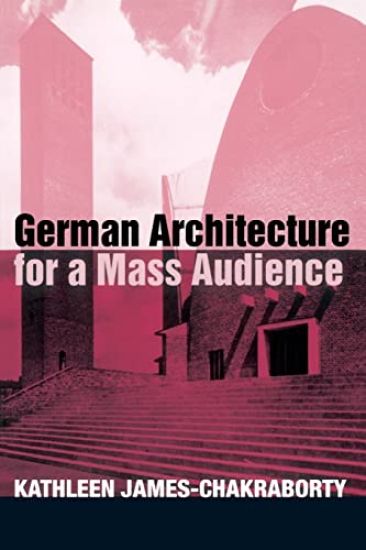
This book vividly illustrates the ways in which buildings designed by many of Germany's most celebrated twentieth century architects were embedded in widely held beliefs about the power of architecture to influence society. German Architecture for a Mass Audience also demonstrates the way in which these modernist ideas have been challenged and transformed, most recently in the rebuilding of central Berlin.