Kirjojen hintavertailu. Mukana 12 390 323 kirjaa ja 12 kauppaa.

Kirjailija

Kathleen Manning

Kirjat ja teokset yhdessä paikassa: 11 kirjaa, julkaisuja vuosilta 1999-2024, suosituimpien joukossa Pacifica. Vertaile teosten hintoja ja tarkista saatavuus suomalaisista kirjakaupoista.

11 kirjaa

Kirjojen julkaisuhaarukka 1999-2024.

Organizational Theory in Higher Education

Organizational Theory in Higher Education

Kathleen Manning

TAYLOR FRANCIS LTD
2024
nidottu
The third edition of Organizational Theory in Higher Education is a comprehensive and accessible treatment of organizational theory and higher education administration. Through her presentation of both traditional and contemporary organizational theories, noted scholar Kathleen Manning offers a multi-faceted take on the models and lenses through which higher education can be viewed.Chapters discuss the disciplinary foundation, uses, constructs, and assumptions of each organizational theory, including theories often excluded from the literature like organized anarchy, feminist, loosely coupled systems, and queer theory. Each chapter concludes with a case study and discussion questions that encourage the reader to make connections to their practice. Combining theory and practice, Manning’s rich, interdisciplinary treatment enables leaders to gain a fuller understanding of the perspectives that operate on college campuses and ways to enact inclusive, ethical change in the context of new and continuing challenges.New to this Edition:A new chapter on Queer Theory that presents more socially just approaches to institutional organizationA new chapter on Loosely Coupled Systems presenting the application of this theory to higher education settingsRevised chapters, updated theory, and new coverage that reflect current issues, such as pandemic, crisis responses, and social mediaSeveral new and revised case studies to address contemporary issues and align with current realities of higher educationUpdated and enhanced discussion questions to continue the conversation

Organizational Theory in Higher Education

Organizational Theory in Higher Education

Kathleen Manning

TAYLOR FRANCIS LTD
2024
sidottu
The third edition of Organizational Theory in Higher Education is a comprehensive and accessible treatment of organizational theory and higher education administration. Through her presentation of both traditional and contemporary organizational theories, noted scholar Kathleen Manning offers a multi-faceted take on the models and lenses through which higher education can be viewed.Chapters discuss the disciplinary foundation, uses, constructs, and assumptions of each organizational theory, including theories often excluded from the literature like organized anarchy, feminist, loosely coupled systems, and queer theory. Each chapter concludes with a case study and discussion questions that encourage the reader to make connections to their practice. Combining theory and practice, Manning’s rich, interdisciplinary treatment enables leaders to gain a fuller understanding of the perspectives that operate on college campuses and ways to enact inclusive, ethical change in the context of new and continuing challenges.New to this Edition:A new chapter on Queer Theory that presents more socially just approaches to institutional organizationA new chapter on Loosely Coupled Systems presenting the application of this theory to higher education settingsRevised chapters, updated theory, and new coverage that reflect current issues, such as pandemic, crisis responses, and social mediaSeveral new and revised case studies to address contemporary issues and align with current realities of higher educationUpdated and enhanced discussion questions to continue the conversation

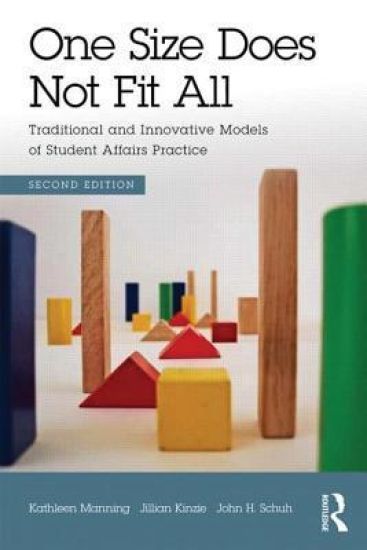
One Size Does Not Fit All

One Size Does Not Fit All

Kathleen Manning; Jillian Kinzie; John Schuh

Routledge
2013
sidottu
In the second edition of this influential book, leading scholars Kathleen Manning, Jillian Kinzie, and John H. Schuh advocate an original approach by presenting 11 models of student affairs practice, including both traditional and innovative programs. Based on a qualitative, multi-institutional research project, One Size Does Not Fit All explores a variety of policies, practices, and programs that contribute to increased student engagement, success, and learning. This book is a must read for all higher education administrators and student affairs professionals.New to this Revised Edition: Refinement of models in light of recent NSSE data and current developments in higher education, including budget cuts and the economic crisis, Updated information throughout about model assessment and techniques to renew divisions of student affairs, A deeper analysis of how models of student affairs practice relate to institutional mission and purposes, End-of-chapter discussion questions to guide thinking about ways to incorporate models in one’s own context, An entirely new Part IV, including chapters on "Catalysts and Tools for Change" and "Redesigning Your Student Affairs Division."
One Size Does Not Fit All

One Size Does Not Fit All

Kathleen Manning; Jillian Kinzie; John Schuh

Routledge
2013
nidottu
In the second edition of this influential book, leading scholars Kathleen Manning, Jillian Kinzie, and John H. Schuh advocate an original approach by presenting 11 models of student affairs practice, including both traditional and innovative programs. Based on a qualitative, multi-institutional research project, One Size Does Not Fit All explores a variety of policies, practices, and programs that contribute to increased student engagement, success, and learning. This book is a must read for all higher education administrators and student affairs professionals.New to this Revised Edition: Refinement of models in light of recent NSSE data and current developments in higher education, including budget cuts and the economic crisis, Updated information throughout about model assessment and techniques to renew divisions of student affairs, A deeper analysis of how models of student affairs practice relate to institutional mission and purposes, End-of-chapter discussion questions to guide thinking about ways to incorporate models in one’s own context, An entirely new Part IV, including chapters on "Catalysts and Tools for Change" and "Redesigning Your Student Affairs Division."
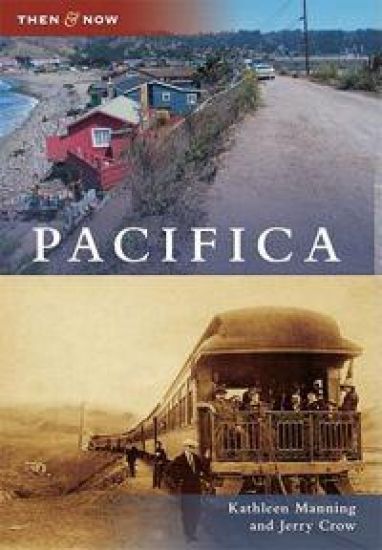
Pacifica

Pacifica

Kathleen Manning; Jerry Crow

Arcadia Publishing (SC)
2010
nidottu
Pacifica and its coast, once envisioned as a string of resorts, casinos, and vacation cottages in place of artichoke fields, was overlooked after the failure of the Ocean Shore Railroad in 1920. Demand for reasonably priced housing revived the boom, and Pacifica was incorporated in 1957.
Half Moon Bay

Half Moon Bay

Kathleen Manning; Jerry Crow

Arcadia Publishing (SC)
2005
nidottu
First dubbed San Benito and then Spanishtown, Half Moon Bay is a coastside town with a long and intriguing story. Many know it for its lovely natural surroundings, quaint downtown architecture, and relaxed atmosphere, but not many people know that this town was the first to be established in San Mateo County as a result of 1840s land grants to early Spanish settlers. Isolated on the coast for a time, it became home to Mexican, Chilean, Italian, Portuguese, and other cultures after the 1850s, when roads finally reached over the mountains. During the 20th century, a wide variety of businesses thrived here, as people arrived by road, water, and even railroad. Farms, churches, schools, businesses, and homes sprang up, and the town modernized, though today's Half Moon Bay looks much like it did 100 years ago.
Rituals, Ceremonies, and Cultural Meaning in Higher Education
College students and graduates have fond memories of campus events such as commencement, founder's days, convocations, and baccalaureate. These events, defined as rites of passage, secular ceremonies, or cultural performances, create a special feel to a campus remembered for years to come. Borrowing from interpretive anthropology, the author spotlights the following ideas: culture is revealed and forms of life are expressed through the actions and words of community members; human communities are dynamic, complex, and ever-changing environments revealed though analysis of cultural events; and commonplace rituals and ceremonies play a central role in the cultural work of human meaning. The purpose of the book is to explore campus culture as revealed through rituals and ceremonies. While rituals are unique to each campus, this book discusses higher education ceremonies and traditions and offers explanations about the roles they play in building and maintaining campus culture. Dr. Manning combines educational research methodology, higher education and anthropological theory to vividly describe college rituals. In a readable fashion, case studies describing the rituals are interspersed between chapters discussing the theory of rituals. The cases include convocation, presidential inauguration, junior show, charter day, founder's birthday celebration, baccalaureate, and laurel chain and alumnae parade.
Giving Voice to Critical Campus Issues

Giving Voice to Critical Campus Issues

Kathleen Manning

American College Personnel Association
1999
nidottu
This volume of case studies, based on original qualitative research, has been written expressly for student affairs educators and administrators at the college and university level. Giving Voice to Critical Campus Issues addresses the complex issues of classism, student suicide, alcohol-related death, acquaintance rape, multiracial identity, and the self-development of young adults with alcoholic parents. Practitioners and faculty can use this crucial book to enrich their understanding of the deep complexities of campus life; and they will also find themselves more attuned to the often unheard and/or unacknowledged voices of young men and women who have both distinctive needs and dynamic potential. With introductory chapters describing the constructivist qualitative methodology that underlies each case study, this book will serve as an excellent text for graduate-level research classes. It will also be an outstanding resource for undergraduate leadership and residence life classes, and for training and seminars aimed at student affairs staff. Co-published with American College Personnel Association.