Kirjojen hintavertailu. Mukana 12 595 353 kirjaa ja 12 kauppaa.

Kirjailija

Kathleen Riley

Kirjat ja teokset yhdessä paikassa: 4 kirjaa, julkaisuja vuosilta 2008-2021, suosituimpien joukossa Healing & Wellness Beyond Recovery: Self-Healing to Relieve Anxiety, Addiction, Depression, Grief, Post-Traumatic Stress, and Pain. Vertaile teosten hintoja ja tarkista saatavuus suomalaisista kirjakaupoista.

4 kirjaa

Kirjojen julkaisuhaarukka 2008-2021.

Imagining Ithaca

Imagining Ithaca

Kathleen Riley

Oxford University Press
2021
sidottu
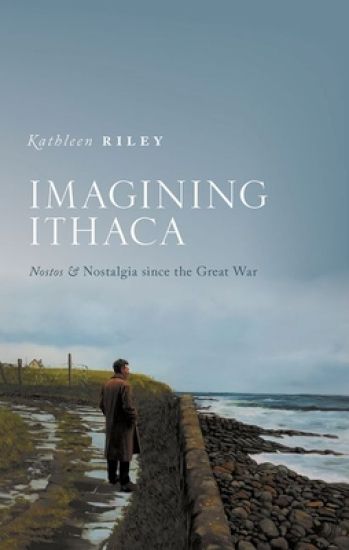
'Though home is a name, a word, it is a strong one', said Charles Dickens, 'stronger than magician ever spoke, or spirit answered to, in strongest conjuration.' The ancient Greek word nostos, meaning homecoming or return, has a commensurate power and mystique. Irish philosopher-poet John Moriarty described it as 'a teeming word... a haunted word... a word to conjure with'. The most celebrated and culturally enduring nostos is that of Homer's Odysseus who spent ten years returning home after the fall of Troy. His journey back involved many obstacles, temptations, and fantastical adventures and even a katabasis, a rare descent by the living into the realm of the dead. All the while he was sustained and propelled by his memories of Ithaca ('His native home deep imag'd in his soul', as Pope's translation has it). From Virgil's Aeneid to James Joyce's Ulysses, from MGM's The Wizard of Oz to the Coen Brothers' O Brother, Where Art Thou?, and from Derek Walcott's Omeros to Margaret Atwood's Penelopiad, the Odyssean paradigm of nostos and nostalgia has been continually summoned and reimagined by writers and filmmakers. At the same time, 'Ithaca' has proved to be an evocative and versatile abstraction. It is as much about possibility as it is about the past; it is a vision of Arcadia or a haunting, an object of longing, a repository of memory, 'a sleep and a forgetting'. In essence it is about seeking what is absent. Imagining Ithaca explores the idea of nostos, and its attendant pain (algos), in an excitingly eclectic range of sources: from Rebecca West's The Return of the Soldier and Remarque's All Quiet on the Western Front, through the exilic memoirs of Nabokov and the time-travelling fantasies of Woody Allen, to Seamus Heaney's Virgilian descent into the London Underground and Michael Portillo's Telemachan railway journey to Salamanca. This kaleidoscopic exploration spans the end of the Great War, when the world at large was experiencing the complexities of homecoming, to the era of Brexit and COVID-19 which has put the notion of nostalgia firmly under the microscope.

The Astaires

The Astaires

Kathleen Riley

Oxford University Press Inc
2014
nidottu
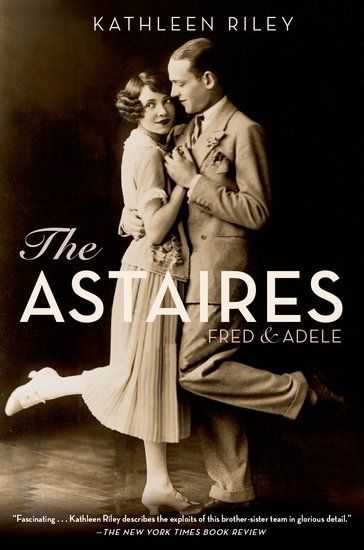
Before "Fred and Ginger," there was "Fred and Adele," a show-business partnership and cultural sensation like no other. In our celebrity-saturated era, it's hard to comprehend what a genuine phenomenon these two siblings from Omaha were. At the height of their success in the mid-1920s, the Astaires seemed to define the Jazz Age. They were Gershwin's music in motion, a fascinating pair who wove spellbinding rhythms in song and dance. In this book, the first comprehensive study of their theatrical career together, Kathleen Riley traces the Astaires' rise to fame from humble midwestern origins and early days as child performers on small-time vaudeville stages (where Fred, fatefully, first donned top hat and tails) to their 1917 debut on Broadway to star billings on both sides of the Atlantic. They became ambassadors of an art form they helped to revolutionize, adored by audiences, feted by royalty, and courted socially by elites everywhere they went. From the start, Adele was the more natural performer, spontaneous, funny, and self-possessed, while Fred had to hone his trademark timing and elegance through endless hours of rehearsal, a disciplined regimen that Adele loathed. Ultimately, Fred's dancing expertise surpassed his sister's, and their paths diverged: Adele married into British aristocracy, and Fred headed for Hollywood. The Astaires examines in depth the extraordinary story of this great brother-sister team, with full attention to its historical and theatrical context. It is not merely an account of the first part of Fred's long and illustrious career but one with its own significance. Born at the close of the 1800s, Fred and Adele grew up together with the new century, and when they reached superstardom during the interwar years, they shone as an affirmation of life and hope amid a prevailing crisis of faith and identity.
The Reception and Performance of Euripides' Herakles

The Reception and Performance of Euripides' Herakles

Kathleen Riley

Oxford University Press
2008
sidottu
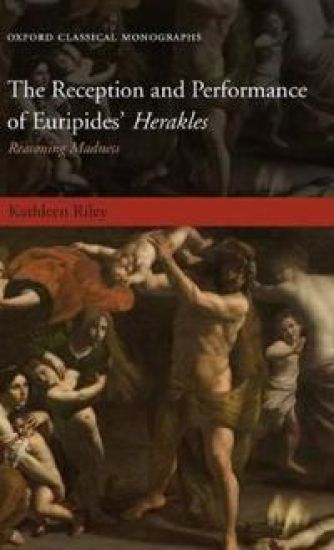
Euripides' Herakles, which tells the story of the hero's sudden descent into filicidal madness, is one of the least familiar and least performed plays in the Greek tragic canon. Kathleen Riley explores its reception and performance history from the fifth century BC to AD 2006. Her focus is upon changing ideas of Heraklean madness, its causes, its consequences, and its therapy. Writers subsequent to Euripides have tried to 'reason' or make sense of the madness, often in accordance with contemporary thinking on mental illness. She concurrently explores how these attempts have, in the process, necessarily entailed redefining Herakles' heroism. Riley demonstrates that, in spite of its relatively infrequent staging, the Herakles has always surfaced in historically charged circumstances - Nero's Rome, Shakespeare's England, Freud's Vienna, Cold-War and post-9/11 America - and has had an undeniable impact on the history of ideas. As an analysis of heroism in crisis, a tragedy about the greatest of heroes facing an abyss of despair but ultimately finding redemption through human love and friendship, the play resonates powerfully with individuals and communities at historical and ethical crossroads.