Kirjojen hintavertailu. Mukana 12 182 279 kirjaa ja 12 kauppaa.

Kirjailija

Kathryn Welch

Kirjat ja teokset yhdessä paikassa: 3 kirjaa, julkaisuja vuosilta 2012-2026, suosituimpien joukossa Magnus Pius. Vertaile teosten hintoja ja tarkista saatavuus suomalaisista kirjakaupoista.

3 kirjaa

Kirjojen julkaisuhaarukka 2012-2026.

Magnus Pius

Magnus Pius

Kathryn Welch

Classical Press of Wales
2012
sidottu
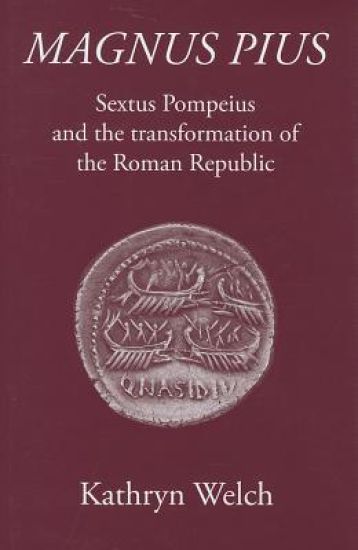
Sextus Pompeius Magnus Pius, son of Pompey the Great, fits uneasily into narratives of Rome's civil war of 49-31BC. Ronald Syme, father of international orthodoxy, stated that Sextus was 'in reality an adventurer' who was 'easily represented as a pirate'. He was wrong. Sextus Pompeius plays havoc with orthodox history. His military success punctures the myth of continuous Caesarian victory. His systematic rescuing of the victims of Triumviral violence belies the claim that only the Caesarian side represented clementia and justice. His naval strategy reveals his commitment to the same cause and ethics as his father and his father's allies. Indeed, Pompey the Great and his Republican allies can only be understood, Welch shows, by a study of his gifted, resilient and ultimately unlucky son. Welch places Sextus Pompeius at the centre of Rome's transition from Republic to Empire and so reveals an ideological landscape very different from 20th-century representations.

Magnus Pius

Magnus Pius

Kathryn Welch

Classical Press of Wales
2024
nidottu
Sextus Pompeius Magnus Pius, son of Pompey the Great, fits uneasily - or not at all - into the grand narrative of the civil war of 49-31 BC. Modern scholars tend to exclude him or mention him without asking what or whom he represented. Ronald Syme, the father of international orthodoxy in this field, famously remarked that Sextus was 'in reality an adventurer' who was 'easily represented as a pirate'. He was wrong. Sextus Pompeius plays havoc with key elements of the accepted narrative. His military success destroys the myth of continuous Caesarian victory. His commitment to rescuing the victims of Triumviral violence belies claims that only the Caesarian side represented clementia and justice. The naval strategy by which he conducted the war demonstrates his commitment to the same cause and ethics as his father and his father's allies. Welch argues that, far from being a 'side-show' or a 'bit player', Sextus Pompeius was integral to the fight for the respublica. She solves the 'problem' by placing him at the centre of the story of Rome's transition from Republic to Empire and so reveals a very different landscape that emerges as a result.