Kirjojen hintavertailu. Mukana 12 595 353 kirjaa ja 12 kauppaa.

Kirjailija

Kathy Davis

Kirjat ja teokset yhdessä paikassa: 14 kirjaa, julkaisuja vuosilta 1994-2026, suosituimpien joukossa Angels. Vertaile teosten hintoja ja tarkista saatavuus suomalaisista kirjakaupoista.

14 kirjaa

Kirjojen julkaisuhaarukka 1994-2026.

Angels

Angels

Kathy Davis

New Generation Publishing
2026
nidottu
I have been blessed with the most precious gift-not once, but three extraordinary times. And I will never forget the moment my second daughter entered the world. When the midwife placed that wriggling, screaming bundle back into my arms, she paused, looked at me, and said words that have echoed in my mind ever since: "This one has been here before." If you are a parent... A carer of a baby, a child, a young person... Or a young person yourself navigating the storms of: - Challenging behaviour - Medical conditions - Eating disorders - Self harm - Or any other struggle life has placed in your path ...then perhaps my ramblings-my stories, missteps, triumphs, and lessons learned the hard way-might offer you something. A spark of support. A flicker of hope. A reminder that you are not alone, and that giving up is never the answer. For every child has a light. Every parent has untapped strength. And every journey, no matter how jagged, has moments worth holding on to. Stay positive. Keep going. And believe-always-in yourself. -The Author, Kathy In memory of Kevin, A devoted father to our three children Forever in our hearts.
Tango tanzen

Tango tanzen

Kathy Davis

Springer Fachmedien Wiesbaden
2025
nidottu
Tangotanzen ist weltweit in Mode gekommen – eine Erfolgsstory mit vielen Gesichtern. Ökonomische, historische und politische Aspekte spielen eine große Rolle, ebenso Sinnlichkeit und Emotionalität, wie dieses Buch am Beispiel der Tangoszenen von Buenos Aires und Amsterdam zeigt. Transnational können empathische Gemeinschaften entstehen, die der sozialen Deprivation der Spätmoderne entgegenwirken. Damit werden der Debatte um die Beziehung von globalem Süden und Norden neue Facetten hinzugefügt. Exklusiv für die vorliegende Ausgabe hat die Autorin ein neues Vorwort verfasst: „Tango nach Corona“. Es schildert die desaströsen Auswirkungen eines strengen Lockdowns auf die Tangoszene, die verschiedenen Überlebensstrategien der Betroffenen und den nunmehr veränderten transnationalen Kulturraum des Tangos, wie auch dessen Widerstandsfähigkeit. Soziale Bedeutung und Funktion des Tangotanzens traten durch die Krise besonders ins Bewusstsein und haben das Wiederaufleben der Szene beeinflusst. „…dies hat mir die Pandemie nahe gebracht - dass er einige der wichtigsten menschlichen Bedürfnisse anspricht, weil er in Zeiten der Bedrängnis einen Raum bietet für Traurigkeit wie für Trost“ (Kathy Davis in ihrem neuen Vorwort).
Life Is a Learning Curve: What am I supposed to be learning?
Imagine you're hiking up an incredibly steep hill. You are climbing a nearly vertical staircase and each step seems to bring you no closer to the top. You're exhausted and ready to give up, wondering, is what is waiting at the top really worth it? Kathy Davis endured such a climb in Glenwood Canyon, Colorado and discovered that what awaited her at the top was completely worth the physical and mental strain as nothing, but the beauty of God's creation awaited her arrival. Climbs are not only meant to define a literal journey taken, but also figurative and spiritual ones taken throughout the course of one's life. No life will ever have a straight and narrow path. There will always be climbs, curves, and plateaus to prevent anyone from reaching what they want; yet there is a solution to overcoming them: God. Life is a Learning Curve is Davis's guide to helping any and all who wish to study the various curves that appear in life and conquer them with the aid of the Holy Spirit. Readers will learn about three different shapes these curves can take: - A Bell Curve - ups, downs, some steep angles, some rounded peaks, and some sharply pointed peaks - A Winding Road - some ups and downs, delays, detours, distractions, and frustrating repeating patterns - A Perpetual Plateau - the mundane, feelings of drudgery, and no progress There will be countless times when the curve someone is on does not make sense. Winding paths seem endless, weariness settles in for the long haul, optimism fades, and it seems discouragement is a constant companion. It is precisely there that Holy Spirit of God comes along - by invitation - and provides comforting guidance. Now is the time to confront the curve head on and learn how to "grow again" with His help.
He Speaks to the Ordinary

He Speaks to the Ordinary

Kathy Davis

WestBow Press
2018
pokkari
Isnt it amazing that the God of the universe would speak to ordinary people like you and me? And its true God wants to speak into our lives through His Holy Spirit and His Word, and we glorify and honor God each time we visit with Him in prayer or seek His wisdom in the Bible. He Speaks to the Ordinary is an inspiring collection of concise, uplifting reminders of the way we can both listen for the still, small voice of God in our daily lives, or call on Him for loving, compassionate guidance in our times of need. It is a book of hope, comfort, peace, and joy, and author Kathy Davis shares some of the transformational truths she has learned through spending quality time with God. With these heartfelt words of wisdom, we should be encouraged to cultivate an intimate personal relationship with God as we develop Christlike qualities. In a world with so many distractions, we should be encouraged and overjoyed that the greatest being in the universe, God, is always there for us to listen to our prayers and speak His love, direction, and hope into our lives. When God calls, He expects us to listen. And with our calling from God, we can receive the peace and the salvation that only He can provide.
Childhood Development and Behavior, An Issue of Pediatric Clinics of North America

Childhood Development and Behavior, An Issue of Pediatric Clinics of North America

Kathy Davis; Chet D. Johnson

Elsevier - Health Sciences Division
2016
sidottu
Pediatricians care for children and families from all walks of life. Some are children known from neighborhoods. Others are children from distant lands. Pediatric focus does not stop with the physical care of children but extends to include their mental and social-emotional health and concern about their families. Pediatricians care about how children are doing at home, at school, and in their communities. In this era, children and their families are impacted by social and political changes in their homes (social media and screen time), in their communities (refugee populations and children requiring palliative supports at school), in their health care networks (EMR in every tertiary pediatric center), and in the larger world (multiple military deployments of fathers and mothers). This issue explores the impact of contemporary public health challenges for pediatric care, promising models for caring for chronically ill children, and state of the art therapies for complex childhood conditions.
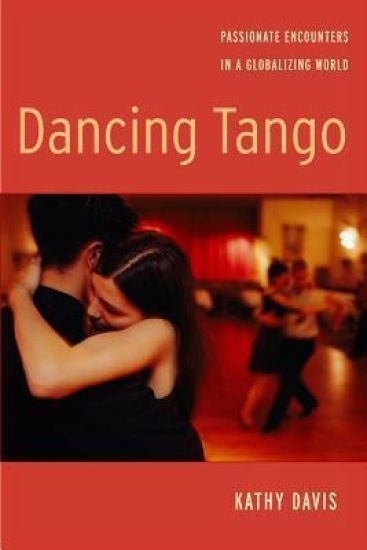
Dancing Tango

Dancing Tango

Kathy Davis

New York University Press
2015
sidottu
Argentinean tango is a global phenomenon. Since its origin among immigrants from the slums of Buenos Aires and Montevideo, it has crossed and re-crossed many borders.Yet, never before has tango been danced by so many people and in so many different places as today. Argentinean tango is more than a specific music and style of dancing. It is also a cultural imaginary which embodies intense passion, hyper-heterosexuality, and dangerous exoticism. In the wake of its latest revival, tango has become both a cultural symbol of Argentinean national identity and a transnational cultural space in which a modest, yet growing number of dancers from different parts of the globe meet on the dance floor. Through interviews and ethnographical research in Amsterdam and Buenos Aires, Kathy Davis shows why a dance from another era and another place appeals to men and women from different parts of the world and what happens to them as they become caught up in the tango salon culture. She shows how they negotiate the ambivalences, contradictions, and hierarchies of gender, sexuality, and global relations of power between North and South in which Argentinean tango is—and has always been—embroiled. Davis also explores her uneasiness about her own passion for a dance which—when seen through the lens of contemporary critical feminist and postcolonial theories—seems, at best, odd, and, at worst, disreputable and even a bit shameful. She uses the disjuncture between the incorrect pleasures and complicated politics of dancing tango as a resource for exploring the workings of passion as experience, as performance, and as cultural discourse. She concludes that dancing tango should be viewed less as a love/hate embrace with colonial overtones than a passionate encounter across many different borders between dancers who share a desire for difference and a taste of the 'elsewhere.' Dancing Tango is a vivid, intriguing account of an important global cultural phenomenon.
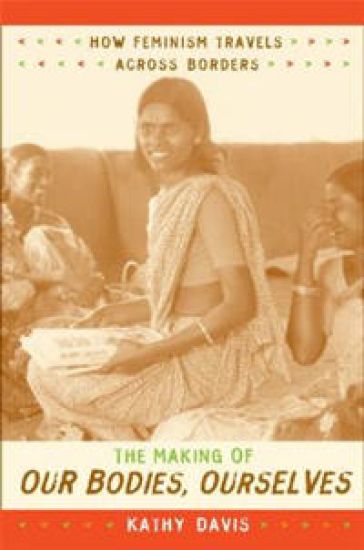
The Making of Our Bodies, Ourselves

The Making of Our Bodies, Ourselves

Kathy Davis

Duke University Press
2007
pokkari
The book Our Bodies, Ourselves is a feminist success story. Selling more than four million copies since its debut in 1970, it has challenged medical dogmas about women’s bodies and sexuality, shaped health care policies, energized the reproductive rights movement, and stimulated medical research on women’s health. The book has influenced how generations of U.S. women feel about their bodies and health. Our Bodies, Ourselves has also had a whole life outside the United States. It has been taken up, translated, and adapted by women across the globe, inspiring more than thirty foreign language editions.Kathy Davis tells the story of this remarkable book’s global circulation. Based on interviews with members of the Boston Women’s Health Book Collective, the group of women who created Our Bodies, Ourselves, as well as responses to the book from readers, and discussions with translators from Latin America, Egypt, Thailand, China, Eastern Europe, Francophone Africa, and many other countries and regions, Davis shows why Our Bodies, Ourselves could never have been so influential if it had been just a popular manual on women’s health. It was precisely the book’s distinctive epistemology, inviting women to use their own experiences as resources for producing situated, critical knowledge about their bodies and health, that allowed the book to speak to so many women within and outside the United States. Davis provides a grounded analysis of how feminist knowledge and political practice actually travel, and she shows how the process of transforming Our Bodies, Ourselves offers a glimpse of a truly transnational feminism, one that joins the acknowledgment of difference and diversity among women in different locations with critical reflexivity and political empowerment.
The Making of Our Bodies, Ourselves

The Making of Our Bodies, Ourselves

Kathy Davis

Duke University Press
2007
sidottu
The book Our Bodies, Ourselves is a feminist success story. Selling more than four million copies since its debut in 1970, it has challenged medical dogmas about women’s bodies and sexuality, shaped health care policies, energized the reproductive rights movement, and stimulated medical research on women’s health. The book has influenced how generations of U.S. women feel about their bodies and health. Our Bodies, Ourselves has also had a whole life outside the United States. It has been taken up, translated, and adapted by women across the globe, inspiring more than thirty foreign language editions.Kathy Davis tells the story of this remarkable book’s global circulation. Based on interviews with members of the Boston Women’s Health Book Collective, the group of women who created Our Bodies, Ourselves, as well as responses to the book from readers, and discussions with translators from Latin America, Egypt, Thailand, China, Eastern Europe, Francophone Africa, and many other countries and regions, Davis shows why Our Bodies, Ourselves could never have been so influential if it had been just a popular manual on women’s health. It was precisely the book’s distinctive epistemology, inviting women to use their own experiences as resources for producing situated, critical knowledge about their bodies and health, that allowed the book to speak to so many women within and outside the United States. Davis provides a grounded analysis of how feminist knowledge and political practice actually travel, and she shows how the process of transforming Our Bodies, Ourselves offers a glimpse of a truly transnational feminism, one that joins the acknowledgment of difference and diversity among women in different locations with critical reflexivity and political empowerment.
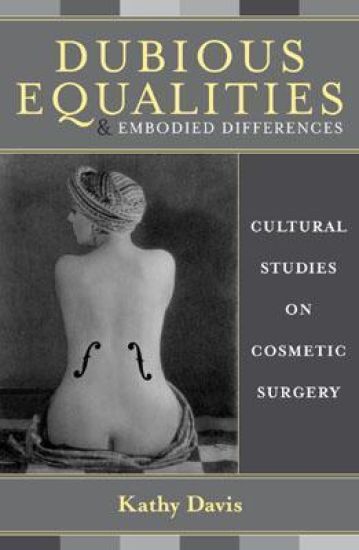
Dubious Equalities and Embodied Differences

Dubious Equalities and Embodied Differences

Kathy Davis

Rowman Littlefield Publishers
2003
sidottu
Dubious Equalities and Embodied Differences explores cosmetic surgery as a cultural phenomenon of late modernity. From its onset as a medical specialty at the end of the nineteenth century, cosmetic surgery has been intimately liked to discourses of 'normalcy,' as well as to gender, race, and other categories of difference that have shaped its technologies and techniques, its professional ideologies, and the objects of its interventions. Davis considers how cosmetic surgery is taken up in representations of cosmetic surgery in medical discourse and in popular culture, drawing on a wide range of cultural manifestations including televised 'infotainment,' popular music, performance art, surgeon biographies, stories of patients, public debates, and medical texts. Davis critically engages with the notion of cosmetic surgery as a neutral technology and shows how it is implicated in the surgical erasure of embodied difference.
Dubious Equalities and Embodied Differences

Dubious Equalities and Embodied Differences

Kathy Davis

Rowman Littlefield Publishers
2003
nidottu
Dubious Equalities and Embodied Differences explores cosmetic surgery as a cultural phenomenon of late modernity. From its onset as a medical specialty at the end of the nineteenth century, cosmetic surgery has been intimately liked to discourses of 'normalcy,' as well as to gender, race, and other categories of difference that have shaped its technologies and techniques, its professional ideologies, and the objects of its interventions. Davis considers how cosmetic surgery is taken up in representations of cosmetic surgery in medical discourse and in popular culture, drawing on a wide range of cultural manifestations including televised 'infotainment,' popular music, performance art, surgeon biographies, stories of patients, public debates, and medical texts. Davis critically engages with the notion of cosmetic surgery as a neutral technology and shows how it is implicated in the surgical erasure of embodied difference.
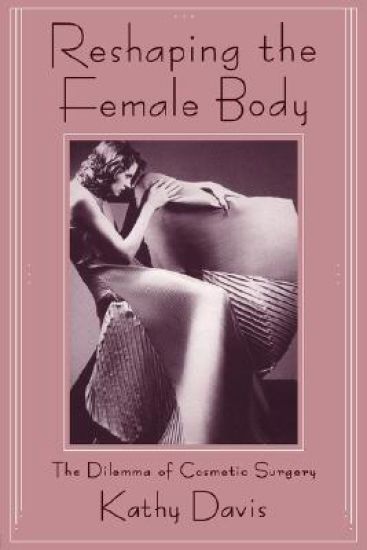
Reshaping the Female Body

Reshaping the Female Body

Kathy Davis

Routledge
1994
nidottu
Reshaping... looks at women's involvement in cosmetic surgery and raises the question of why women put themselves under the knife for operations which are painful, risky and expensive and often leave them in worse shape than before.