Kirjojen hintavertailu. Mukana 12 592 971 kirjaa ja 12 kauppaa.

Kirjailija

Kathy Halbreich

Kirjat ja teokset yhdessä paikassa: 5 kirjaa, julkaisuja vuosilta 2003-2024, suosituimpien joukossa Kerstin Brtsch: BRTSCH. Vertaile teosten hintoja ja tarkista saatavuus suomalaisista kirjakaupoista.

5 kirjaa

Kirjojen julkaisuhaarukka 2003-2024.

Kerstin Brtsch: BRTSCH

Kerstin Brtsch: BRTSCH

Philipp Coulter; Kathy Halbreich; Achim Hochdorfer; Bernhard Maaz; Allison Katz; Lanka Tattersall; Andrea Viliani; Patrizia Dander

Verlag der Buchhandlung Walther Konig,Germany
2024
sidottu
With a chronological plate section and detailed texts, this is the first monograph on the widely acclaimed German-born, New York-based painter Kerstin Bratsch (born 1979), a star of The Museum of Modern Art's 2014 show and catalogue The Forever Now.It surveys her expanded painterly practice, which includes paintings on paper and mylar foil, glass works and marblings, but also performances and collaborative projects as Das Institut (with Adele Roder) and Kaya (with Debo Eilers and Kaya Serene). Throbbing with bright color and thick, writhing forms, Bratsch's paintings are often installed in a manner that further intensifies their physicality--hung by magnets, draped or framed in between sheets of glass and then leaned against the wall. For the first time, this book highlights the developments and connections between her various bodies of work.

Alibis

Alibis

Kathy Halbreich

Museum of Modern Art
2017
sidottu
Working across an unusually broad range of media, including painting, photography, film, drawing and sculpture, Sigmar Polke is widely regarded as one of the most influential and experimental artists of the post-war generation. His irreverent wit and promiscuous intelligence, coupled with his exceptional grasp of the properties of his materials, provided the foundation for his punishing critiques of the conventions of art history and social behavior. Experimenting wildly with materials and tools as varied as meteor dust and the xerox machine, Polke made work of both an intimate and monumental scale, drawn from sources as diverse as newspaper headlines and D rer prints. Polke avoided any one signature style, a fluid method best defined by the word "alibi," which means "in or at another place." This also is a reminder of the deflection of responsibility which shaped German behavior during the Nazi period, compelling Polke's generation to reinvent the role of the artist. Published in conjunction with Alibis: Sigmar Polke 1963-2010, the first exhibition to encompass the artist's work across all media, this richly illustrated publication provides an overview of his cross-disciplinary innovations and career. Essays by Kathy Halbreich, Associate Director of The Museum of Modern Art; Mark Godfrey, Curator of International Art, Tate Modern; and a range of scholars and artists examine the full range of Polke's exceptionally inventive oeuvre and place his enormous skepticism of all social, political and artistic conventions against German history.Sigmar Polke (1941-2010) was born in Oels, in eastern Germany, now Olesnica in present-day Poland. At the end of World War II, Polke and his family fled to East Germany and, in 1953, escaped to D sseldorf, where he was trained as a glass painter and subsequently studied at the Kunstakademie D sseldorf. Since the late 1960s, Polke's work has been shown widely, including solo exhibitions at European and American museums. His last major work was a commission for 12 stained glass windows of the Grossm nster in Zurich, Switzerland, completed in 2009.
Heart of Darkness

Heart of Darkness

Kathy Halbreich

Walker Art Centre,U.S.
2006
pokkari
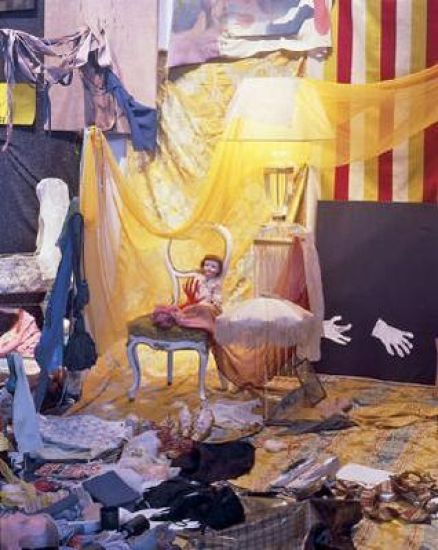
Heart of Darkness centers on three large-scale installations by artists Kai Althoff, Ellen Gallagher and Thomas Hirschhorn. Working with fairy tales, science fiction and sensational imagery, these artists invite us to enter an uncanny world of their own creation, where darkness is not just a representation of chaos, madness and dystopia, but an artistic strategy in the search for clarity and empathy within the insurmountable nihilism of the twenty-first century. With an introduction by curator Philippe Vergne and individual interviews with the artists.
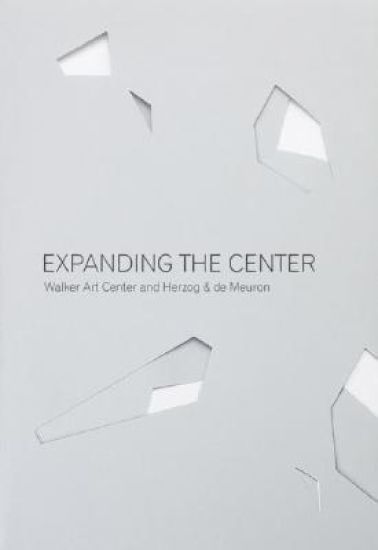
Expanding the Center: Walker Art Center and Herzog & de Meuron
The Walker Art Center recently opened its expanded space, which includes a new theater, a new restaurant and more galleries, but is best known for being Herzog & de Meuron's first public building in the United States. The project drew national coverage from media including The New York Times. Expanding the Center addresses this public interest in the building with a generous selection of images, including sketches, renderings and photographs of the construction process and the completed work. Herzog & de Meuron's shimmering but grounded design mirrors the textures and shades of the Walker's original space, and an institutional philosophy based in innovation and risk-taking, the exploration of alternative approaches to learning, the experimental use of technologies to communicate information, and the design of spaces to enhance a variety of museum experiences. The book is organized around the decisions and actions of the architects, builders, Walker staff and the audience--i.e. designing, constructing, unveiling, staging, gathering, patterning, framing, collecting--and highlights the thinking that led to the visible form of the Center as well as the innovative projects and initiatives that give it its inimitable character.
Strangely Familiar

Strangely Familiar

Kathy Halbreich

Walker Art Centre,U.S.
2003
sidottu
Exploring the paradox of design in our daily lives In the past decade, designers have become increasingly engaged with the quotidian. This shift away from more strictly formal and functional concerns has allowed them to freely explore design's contexts and effects. A light that responds to silence, a table that knows where it is, a pig farm the size of a skyscraper, a coat that becomes a tent, a house that fits in your pocket--these projects by innovators in the field of design question the habitual, transform the commonplace, alter our notions of dwelling and blur the boundaries between form and function. Strangely Familiar: Design and Everyday Life explores the paradox of design in our daily lives. Anonymous and conspicuous, familiar and strange, design surrounds us while fading from view, becoming second nature to us and yet remaining still somehow elusive. This exhibition catalogue includes more than 40 innovative projects drawn internationally from the fields of architecture, product, furniture, fashion and graphic design. Among the designers and architects featured are Shigeru Ban, MVRDV, LOT-EK, Atelier Bow-Wow, Dunne & Raby, Marcel Wanders, Michael Anastassiades, Constantin and Laurene Leon Boym, and Allan Wexler. This richly illustrated volume includes essays on the tactics of formlessness and its impact on everyday consumption, the potential of an endlessly transformable environment to extend product lifecycles, and ruminations on the strange and familiar worlds of design.