Kirjojen hintavertailu. Mukana 12 595 353 kirjaa ja 12 kauppaa.

Kirjailija

Kati Suominen

Kirjat ja teokset yhdessä paikassa: 6 kirjaa, julkaisuja vuosilta 2009-2019, suosituimpien joukossa Revolutionizing World Trade. Vertaile teosten hintoja ja tarkista saatavuus suomalaisista kirjakaupoista.

6 kirjaa

Kirjojen julkaisuhaarukka 2009-2019.

Revolutionizing World Trade

Revolutionizing World Trade

Kati Suominen

Stanford University Press
2019
pokkari
Almost 15 years ago, in The World is Flat, Thomas Friedman popularized the latest wave of globalization as a world of giant corporate supply chains that tripled world trade between 1990 and 2010. Major corporations such as Apple, Dell, and GE offshored manufacturing to low-cost economies; China became the world's factory, mass-producing and exporting computers and gadgets to Western shoppers. This paradigm of globalization has dominated global trade policy-making and guided hundreds of billions of dollars in business investments and development spending for almost three decades. But we are now on the cusp of a new era. Revolutionizing World Trade argues that technologies such as ecommerce, 3D printing, 5G, the Cloud, blockchain, and artificial intelligence are revolutionizing the economics of trade and global production, empowering businesses of all sizes to make, move, and market products and services worldwide and with greater ease than ever before. The twin forces of digitization and trade are changing the patterns, players, politics, and possibilities of world trade, and can reinvigorate global productivity growth. However, new policy challenges and old regulatory frameworks are stifling the promise of this most dynamic, prosperous, and inclusive wave of globalization yet. This book uses new empirical evidence and policy experiences to examine the clash between emerging possibilities in world trade and outdated policies and institutions, offering several policy recommendations for navigating these obstacles to catalyze growth and development around the world.
Revolutionizing World Trade

Revolutionizing World Trade

Kati Suominen

STANFORD UNIVERSITY PRESS
2019
sidottu
Almost 15 years ago, in The World is Flat, Thomas Friedman popularized the latest wave of globalization as a world of giant corporate supply chains that tripled world trade between 1990 and 2010. Major corporations such as Apple, Dell, and GE offshored manufacturing to low-cost economies; China became the world's factory, mass-producing and exporting computers and gadgets to Western shoppers. This paradigm of globalization has dominated global trade policy-making and guided hundreds of billions of dollars in business investments and development spending for almost three decades. But we are now on the cusp of a new era. Revolutionizing World Trade argues that technologies such as ecommerce, 3D printing, 5G, the Cloud, blockchain, and artificial intelligence are revolutionizing the economics of trade and global production, empowering businesses of all sizes to make, move, and market products and services worldwide and with greater ease than ever before. The twin forces of digitization and trade are changing the patterns, players, politics, and possibilities of world trade, and can reinvigorate global productivity growth. However, new policy challenges and old regulatory frameworks are stifling the promise of this most dynamic, prosperous, and inclusive wave of globalization yet. This book uses new empirical evidence and policy experiences to examine the clash between emerging possibilities in world trade and outdated policies and institutions, offering several policy recommendations for navigating these obstacles to catalyze growth and development around the world.
Fueling the Online Trade Revolution

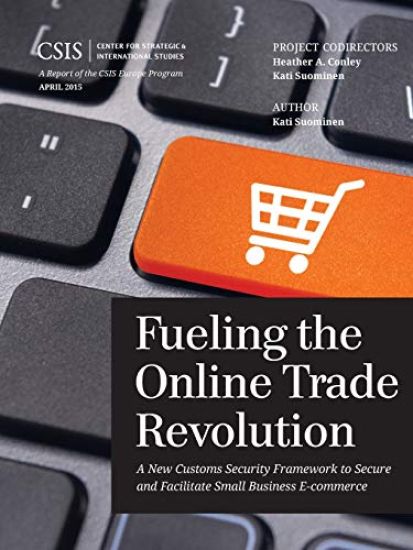
Fueling the Online Trade Revolution

Kati Suominen

Centre for Strategic International Studies,U.S.
2015
nidottu
Across the United States, individuals and small businesses are increasingly buying and selling goods and services online. According to the U.S. Census Bureau, the total value of online transactions in the United States grew from $3 trillion in 2006 to $5.4 trillion in 2012, about a third of U.S. GDP. Increasingly, these transactions are cross border. By 2017, a third of U.S. business-to-consumer (B2C) and consumer-to-consumer (C2C) e-commerce transactions will be with foreign counterparts, up from 16 percent today.
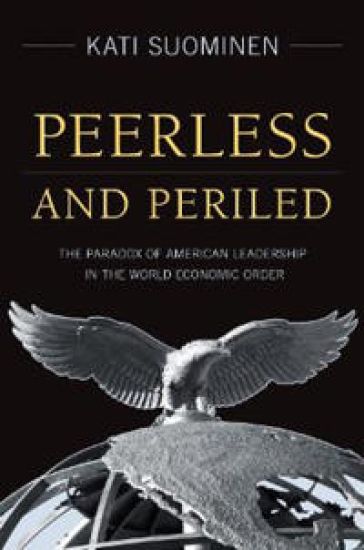
Peerless and Periled

Peerless and Periled

Kati Suominen

Stanford University Press
2012
sidottu
As the world economy emerges from the financial crisis, critics are announcing an end of the American era. The United States is said to be in an inexorable decline, and the expectation for the 21st century is for China to eclipse America and for the contours of global governance to blur. The loss of America's preeminent status will undercut our sway abroad and our safety and standard of living at home. But is America really done? Is the American era really over? In this provocative account, based on interviews with senior policymakers and cutting-edge research, Kati Suominen argues that talk of the end of Pax Americana is more smoke than fire. The international crisis did not fundamentally change the way the world is run. The G20 is but an American-created sequel to the G8, the US dollar still reigns supreme, and no country has resigned from the US-built, post-war financial institutions like the International Monetary Fund. This continuity reflects an absence of alternatives; there are no rival orders that would match the growth and globalization generated by leaving the United States at the helm. But Washington has no time for complacency. The American order is peerless, but it is also imperiled. To transcend this critical moment in history, the United States must step up and lead. Only America can uphold its order. In an interdependent world economy of rising powers, the US must stand for strategic multilateralism: striking deals with pivotal powers to tame destabilizing financial imbalances, securing free and fair markets abroad for US banks and businesses, and transforming the IMF and emerging Asian and European financial schemes into rapid responders to instability.
Globalization at Risk

Globalization at Risk

Gary Clyde Hufbauer; Kati Suominen

Yale University Press
2010
sidottu
Drawing on rigorous research, this book summarizes the payoffs from globalization past, and presents a roadmap for the future of globalization. History has declared globalization the winner of the 20th century. Globalization connected the world and created wealth unimaginable in the wake of the Second World War. But the financial crisis of 2008-09 has now placed at risk the liberal economic policies behind globalization. Engulfing the entire world, the crisis gave new fuel to the skeptics of the benefits of economic integration. Policy responses seem to favor anti-globalizers. New regulations could balkanize the global financial system, while widespread protectionist impulses might undo the Doha Round. Issues from climate change to national security may be used as convenient excuses to keep imports out, keep jobs at home, and to clamp down on global capital. Will globalization triumph or perish in the 21st century? What reforms make sense in the post-crisis world?International economists Gary Clyde Hufbauer and Kati Suominen argue that globalization has been a force of great good, one that needs to be actively advanced and honed. Drawing on the latest economic analyses, they reveal the drivers and effects of global finance and trade, lay out the key risks to globalization, and offer a practical policy roadmap for managing the challenges while increasing the gains. Vital reading for anyone in business, finance, foreign affairs, or economics, Globalization at Risk is sure to advance public debate on this defining issue of the 21st century.
The Sovereign Remedy?

The Sovereign Remedy?

Antoni Estevadeordal; Kati Suominen

Oxford University Press
2009
sidottu
International trade and the rapidly proliferating network of trade agreements have aroused passions for decades. While some blame trade agreements for exporting jobs, sowing poverty, furthering illegal migration, and robbing national sovereignty, others praise them as lynchpins of growth, pillars of peace, guarantors of security, and engines of globalization. Still others view them as useful instruments for fostering global trade and investment. This book examines whether trade agreements merit the blame levelled against them or the hopes pinned on them. It employs extensive new historical data on trade agreements to examine the features of the ongoing trade agreement wave; analyzes the future implications of trade agreements in the context of the multilateral trading system, world trade, and international politics; and puts forth novel policy proposals to make trade agreements a more constructive force in the global economy.