Kirjojen hintavertailu. Mukana 12 595 353 kirjaa ja 12 kauppaa.

Kirjailija

Katie Ellis

Kirjat ja teokset yhdessä paikassa: 12 kirjaa, julkaisuja vuosilta 2008-2020, suosituimpien joukossa Disabling Diversity. Vertaile teosten hintoja ja tarkista saatavuus suomalaisista kirjakaupoista.

12 kirjaa

Kirjojen julkaisuhaarukka 2008-2020.

Disability and Popular Culture

Disability and Popular Culture

Katie Ellis

Routledge
2020
nidottu
As a response to real or imagined subordination, popular culture reflects the everyday experience of ordinary people and has the capacity to subvert the hegemonic order. Drawing on central theoretical approaches in the field of critical disability studies, this book examines disability across a number of internationally recognised texts and objects from popular culture, including film, television, magazines and advertising campaigns, children’s toys, music videos, sport and online spaces, to attend to the social and cultural construction of disability. While acknowledging that disability features in popular culture in ways that reinforce stereotypes and stigmatise, Disability and Popular Culture celebrates and complicates the increasing visibility of disability in popular culture, showing how popular culture can focus passion, create community and express defiance in the context of disability and social change. Covering a broad range of concerns that lie at the intersection of disability and cultural studies, including media representation, identity, the beauty myth, aesthetics, ableism, new media and sport, this book will appeal to scholars and students interested in the critical analysis of popular culture, across disciplines such as disability studies, sociology and cultural and media studies.
Disability and Digital Television Cultures
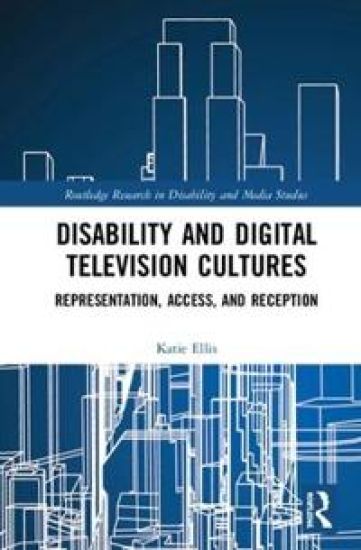
Disability and Digital Television Cultures offers an important addition to scholarly studies at the intersection of disability and media, examining disability in the context of digital television access, representation and reception.Television, as a central medium of communication, has marginalized people with disability through both representation on screen and the lack of accessibility to this medium. With accessibility options becoming available as television is switched to digital transmissions, audience research into television representations must include a corresponding consideration of access. This book provides a comprehensive and critical study of the way people with disability access and watch digital TV. International case studies and media reports are complimented by findings of a user-focused study into accessibility and representation captured during the Australian digital television switchover in 2013-2014. This book will provide a reliable, independent guide to fundamental shifts in media access while also offering insight from the disability community. It will be essential reading for researchers working on disability and media, as well as television, communications and culture; upper-level undergraduate and postgraduate students in cultural studies; along with general readers with an interest in disability and digital culture.
Trauma and Disability in Mad Max

Trauma and Disability in Mad Max

Mick Broderick; Katie Ellis

Springer Nature Switzerland AG
2019
sidottu
This book explores the inter-relationship of disability and trauma in the Mad Max films (1979-2015). George Miller’s long-running series is replete with narratives and imagery of trauma, both physical and emotional, along with major and minor characters who are prominently disabled. The Mad Max movies foreground representations of the body – in devastating injury and its lasting effects – and in the broader social and historical contexts of trauma, disability, gender and myth.Over the franchise’s four-decade span significant social and cultural change has occurred globally. Many of the images of disability and trauma central to Max’s post-apocalyptic wasteland can be seen to represent these societal shifts, incorporating both decline and rejuvenation. These shifts include concerns with social, economic and political disintegration under late capitalism, projections of survival after nuclear war, and the impact of anthropogenic climate change.Drawing on screen production processes, textual analysis and reception studies this book interrogates the role of these representations of disability, trauma, gender and myth to offer an in-depth cultural analysis of the social critiques evident within the fantasies of Mad Max.
Disability and Digital Television Cultures
Disability and Digital Television Cultures offers an important addition to scholarly studies at the intersection of disability and media, examining disability in the context of digital television access, representation and reception.Television, as a central medium of communication, has marginalized people with disability through both representation on screen and the lack of accessibility to this medium. With accessibility options becoming available as television is switched to digital transmissions, audience research into television representations must include a corresponding consideration of access. This book provides a comprehensive and critical study of the way people with disability access and watch digital TV. International case studies and media reports are complimented by findings of a user-focused study into accessibility and representation captured during the Australian digital television switchover in 2013-2014. This book will provide a reliable, independent guide to fundamental shifts in media access while also offering insight from the disability community. It will be essential reading for researchers working on disability and media, as well as television, communications and culture; upper-level undergraduate and postgraduate students in cultural studies; along with general readers with an interest in disability and digital culture.
Disability Media Work

Disability Media Work

Katie Ellis

Palgrave Pivot
2016
sidottu
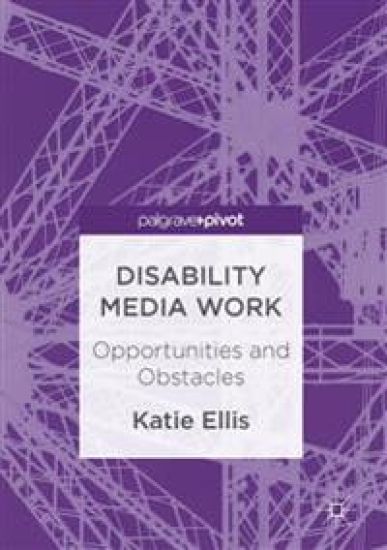
This book interrogates trends in training and employment of people with disabilities in the media through an analysis of people with disabilities’ self-representation in media employment. Improving disability representations in the media is vital to improving the social position of people with disability, and including people with lived experience of disability is integral to this process. While the media industry has changed significantly as a result of digital and participatory media, discriminatory attitudes around fear and pity continue to impact whether people with disability find work in the media. The book demonstrates no significant changes in attitudes towards employing disabled media workers since the 1990s when the last major research into this topic took place. By focusing on the employment of people with disability in media industries, Katie Ellis addresses a neglected area of media diversity, appealing to researchers in media and cultural studies as well as critical disability studies.
Disability, Obesity and Ageing

Disability, Obesity and Ageing

Debbie Rodan; Katie Ellis

Routledge
2016
nidottu
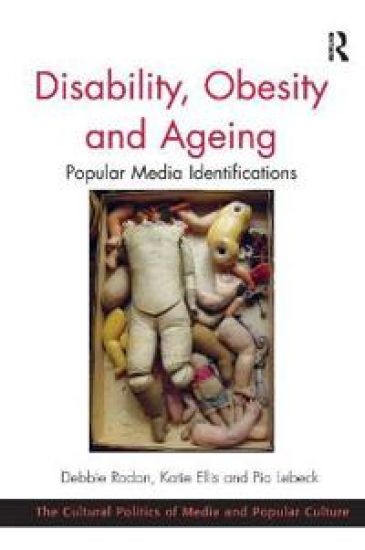
Disability, Obesity and Ageing offers an engaging account of a new area of pressing concern, analysing the way in which ’spurned’ identities are depicted and reacted to in televisual genres and online forums. Examining the symbolic power of the media, this book presents case studies from drama, situation comedies, reality and documentary television programmes popular in the UK, USA and Australia to shed light on the representation of disability, obesity and ageing, and the manner in which their status as unwanted and unwelcome identities is perpetuated. A theoretically sophisticated exploration of television as a translator of identity, and the exploration of identity categories in allied virtual spaces, this book will be of interest to sociologists, as well as scholars of popular culture, and cultural and media studies.
Disability and the Media

Disability and the Media

Katie Ellis; Gerard Goggin

Red Globe Press
2015
nidottu
This concise, integrated introduction to the complex relationship between disability and the media offers a roadmap to the key areas of participation, access and representation. Bringing together international theoretical work and research on disability, with analysis and examples across a diverse range of media forms – from radio, to news, popular television and new digital technologies – this unique text explores the potential for establishing a more diverse, rich and just media. Providing an approachable but critical introduction to the field, Katie Ellis and Gerard Goggin show how disability – like the closely connected areas of race and gender – is a pervasive issue in how the media represent society.Engaging and accessible, this is an invaluable resource for students of Media and Communication Studies, Cultural Studies and Disability Studies, as well as teachers, researchers, media professionals, policy makers, and anyone interested in the intersections of disability and media.
Disability and Popular Culture

Disability and Popular Culture

Katie Ellis

Routledge
2014
sidottu
As a response to real or imagined subordination, popular culture reflects the everyday experience of ordinary people and has the capacity to subvert the hegemonic order. Drawing on central theoretical approaches in the field of critical disability studies, this book examines disability across a number of internationally recognised texts and objects from popular culture, including film, television, magazines and advertising campaigns, children’s toys, music videos, sport and online spaces, to attend to the social and cultural construction of disability. While acknowledging that disability features in popular culture in ways that reinforce stereotypes and stigmatise, Disability and Popular Culture celebrates and complicates the increasing visibility of disability in popular culture, showing how popular culture can focus passion, create community and express defiance in the context of disability and social change. Covering a broad range of concerns that lie at the intersection of disability and cultural studies, including media representation, identity, the beauty myth, aesthetics, ableism, new media and sport, this book will appeal to scholars and students interested in the critical analysis of popular culture, across disciplines such as disability studies, sociology and cultural and media studies.
Disability, Obesity and Ageing

Disability, Obesity and Ageing

Debbie Rodan; Katie Ellis

Ashgate Publishing Limited
2013
sidottu
Disability, Obesity and Ageing offers an engaging account of a new area of pressing concern, analysing the way in which ’spurned’ identities are depicted and reacted to in televisual genres and online forums. Examining the symbolic power of the media, this book presents case studies from drama, situation comedies, reality and documentary television programmes popular in the UK, USA and Australia to shed light on the representation of disability, obesity and ageing, and the manner in which their status as unwanted and unwelcome identities is perpetuated. A theoretically sophisticated exploration of television as a translator of identity, and the exploration of identity categories in allied virtual spaces, this book will be of interest to sociologists, as well as scholars of popular culture, and cultural and media studies.
Disability and New Media

Disability and New Media

Katie Ellis; Mike Kent

Routledge
2013
nidottu
Disability and New Media examines how digital design is triggering disability when it could be a solution. Video and animation now play a prominent role in the World Wide Web and new types of protocols have been developed to accommodate this increasing complexity. However, as this has happened, the potential for individual users to control how the content is displayed has been diminished. Accessibility choices are often portrayed as merely technical decisions but they are highly political and betray a disturbing trend of ableist assumption that serve to exclude people with disability. It has been argued that the Internet will not be fully accessible until disability is considered a cultural identity in the same way that class, gender and sexuality are. Kent and Ellis build on this notion using more recent Web 2.0 phenomena, social networking sites, virtual worlds and file sharing. Many of the studies on disability and the web have focused on the early web, prior to the development of social networking applications such as Facebook, YouTube and Second Life. This book discusses an array of such applications that have grown within and alongside Web 2.0, and analyzes how they both prevent and embrace the inclusion of people with disability.
Disability and New Media

Disability and New Media

Katie Ellis; Mike Kent

Routledge
2010
sidottu
Disability and New Media examines how digital design is triggering disability when it could be a solution. Video and animation now play a prominent role in the World Wide Web and new types of protocols have been developed to accommodate this increasing complexity. However, as this has happened, the potential for individual users to control how the content is displayed has been diminished. Accessibility choices are often portrayed as merely technical decisions but they are highly political and betray a disturbing trend of ableist assumption that serve to exclude people with disability. It has been argued that the Internet will not be fully accessible until disability is considered a cultural identity in the same way that class, gender and sexuality are. Kent and Ellis build on this notion using more recent Web 2.0 phenomena, social networking sites, virtual worlds and file sharing. Many of the studies on disability and the web have focused on the early web, prior to the development of social networking applications such as Facebook, YouTube and Second Life. This book discusses an array of such applications that have grown within and alongside Web 2.0, and analyzes how they both prevent and embrace the inclusion of people with disability.