Kirjojen hintavertailu. Mukana 12 215 187 kirjaa ja 12 kauppaa.

Kirjailija

Katie Willis

Kirjat ja teokset yhdessä paikassa: 6 kirjaa, julkaisuja vuosilta 2011-2020, suosituimpien joukossa Theories and Practices of Development. Vertaile teosten hintoja ja tarkista saatavuus suomalaisista kirjakaupoista.

6 kirjaa

Kirjojen julkaisuhaarukka 2011-2020.

Theories and Practices of Development
The newly updated third edition provides a clear and user-friendly introduction to the complex debates around how development has been understood and achieved. It has been fully updated and expanded to reflect global political and economic shifts, as well as new approaches to development.The book deals with the evolution of development ideas and policies, focusing on economic, political, social, environmental and spatial dimensions. It highlights how development cannot be considered as a neutral concept, but is entwined with inequalities in power at local as well as national and global scales. A new chapter on politics and development presents debates around development and democracy, civil society organizations and human rights. Sections on diversity and development have been expanded, and the book considers the future of development in the era of the Sustainable Development Goals (SDGs). The use of boxed examples, tables and illustrations helps students understand complex theoretical ideas and also demonstrates how development theories are put into practice in the real world. Each chapter ends with a summary section, discussion topics, suggestions for further reading and website resources.This key text provides a clear and thorough explanation of key development theories and practices. The third edition will remain an invaluable resource for undergraduate students in geography, politics and development studies.

Theories and Practices of Development
The newly updated third edition provides a clear and user-friendly introduction to the complex debates around how development has been understood and achieved. It has been fully updated and expanded to reflect global political and economic shifts, as well as new approaches to development.The book deals with the evolution of development ideas and policies, focusing on economic, political, social, environmental and spatial dimensions. It highlights how development cannot be considered as a neutral concept, but is entwined with inequalities in power at local as well as national and global scales. A new chapter on politics and development presents debates around development and democracy, civil society organizations and human rights. Sections on diversity and development have been expanded, and the book considers the future of development in the era of the Sustainable Development Goals (SDGs). The use of boxed examples, tables and illustrations helps students understand complex theoretical ideas and also demonstrates how development theories are put into practice in the real world. Each chapter ends with a summary section, discussion topics, suggestions for further reading and website resources.This key text provides a clear and thorough explanation of key development theories and practices. The third edition will remain an invaluable resource for undergraduate students in geography, politics and development studies.

Challenges and Change in Middle America

Challenges and Change in Middle America

Katie Willis; Cathy Mcilwaine

Routledge
2015
sidottu
A comprehensive introduction to the important economic, social and political processes and development issues in this extremely popular region. The Central American nations and those of the Caribbean (including Guyana, Surinam and French Guiana on the mainland) share many historical processes as well as experiencing similar development problems today. These include European colonialism, structural adjustment, small size, reliance on primary production, influence of the United States and moves towards democratisation. While Mexico is obviously a much larger country in area, economy and population terms, it is included in this volume because of its close ties to the other countries in the region through processes such as trade and migration.
Geographies of Developing Areas

Geographies of Developing Areas

Glyn Williams; Paula Meth; Katie Willis

Routledge
2014
sidottu
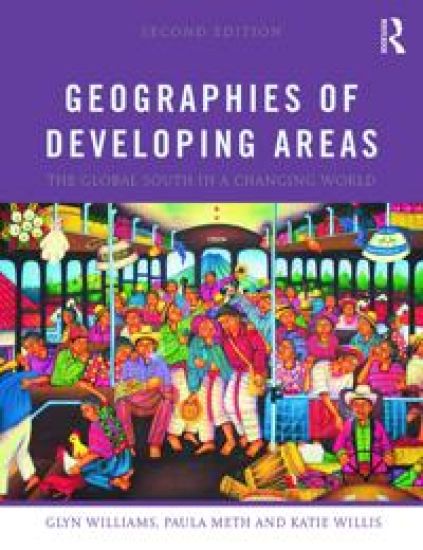
Geographies of Developing Areas is a thought provoking and accessible introductory text, presenting a fresh view of the Global South that challenges students' pre-conceptions and promotes lively debate. Rather than presenting the Global South as a set of problems, from rapid urbanization to poverty, this book focuses on the diversity of life in the South, and looks at the role the South plays in shaping and responding to current global change. The core contents of the book integrate 'traditional' concerns of development geographers, such as economic development and social inequality, with aspects of the global South that are usually given less attention, such as cultural identity and political conflict.This edition has been fully updated to reflect recent changes in the field and highlight issues of security, risk and violence; environmental sustainability and climate change; and the impact of ICT on patterns of North-South and South-South exchange. It also challenges students to think about how space is important in both the directions and the outcomes of change in the Global South, emphasizing the inherently spatial nature of political, economic and socio-cultural processes. Students are introduced to the Global South via contemporary debates in development and current research in cultural, economic and political geographies of developing areas. The textbook consider how images of the so-called 'Third World' are powerful, but problematic. It explores the economic, political and cultural processes shaping the South at the global scale and the impact that these have on people's lives and identities. Finally, the text considers the possibilities and limitations of different development strategies.The main arguments of the book are richly illustrated through case study material drawn from across the Global South as well as full colour figures and photos. Students are supported throughout with clear examples, explanations of key terms, ideas and debates, and introductions to the wider literature and relevant websites in the field. The pedagogical features of the book have been further developed through discussion questions and activities that provide focused tasks for students' research, including investigation based around the book's case studies, and in-depth exploration of debates and concepts it introduces.
Geographies of Developing Areas

Geographies of Developing Areas

Glyn Williams; Paula Meth; Katie Willis

Routledge
2014
nidottu
Geographies of Developing Areas is a thought provoking and accessible introductory text, presenting a fresh view of the Global South that challenges students' pre-conceptions and promotes lively debate. Rather than presenting the Global South as a set of problems, from rapid urbanization to poverty, this book focuses on the diversity of life in the South, and looks at the role the South plays in shaping and responding to current global change. The core contents of the book integrate 'traditional' concerns of development geographers, such as economic development and social inequality, with aspects of the global South that are usually given less attention, such as cultural identity and political conflict.This edition has been fully updated to reflect recent changes in the field and highlight issues of security, risk and violence; environmental sustainability and climate change; and the impact of ICT on patterns of North-South and South-South exchange. It also challenges students to think about how space is important in both the directions and the outcomes of change in the Global South, emphasizing the inherently spatial nature of political, economic and socio-cultural processes. Students are introduced to the Global South via contemporary debates in development and current research in cultural, economic and political geographies of developing areas. The textbook consider how images of the so-called 'Third World' are powerful, but problematic. It explores the economic, political and cultural processes shaping the South at the global scale and the impact that these have on people's lives and identities. Finally, the text considers the possibilities and limitations of different development strategies.The main arguments of the book are richly illustrated through case study material drawn from across the Global South as well as full colour figures and photos. Students are supported throughout with clear examples, explanations of key terms, ideas and debates, and introductions to the wider literature and relevant websites in the field. The pedagogical features of the book have been further developed through discussion questions and activities that provide focused tasks for students' research, including investigation based around the book's case studies, and in-depth exploration of debates and concepts it introduces.
Theories and Practices of Development
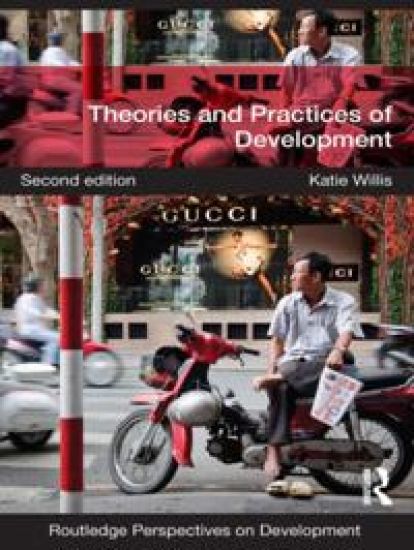
Global economic crisis and the implications of global environmental change have led academics and policy-makers to consider how ‘development’ in all parts of the world should be achieved. However, ‘development’ has always been a contested idea. While often presented as a positive process to improve people’s lives, the potential negative dimensions of ‘development’ on people and environments must also be recognized. Theories and Practices of Development provides a clear and user-friendly introduction to the complex debates around how development has been understood and achieved. The second edition has been fully updated and expanded to reflect global political and economic shifts, as well as new approaches to development. The rise of China and India is given particular attention, as is the global economic crisis and its implications for development theories and practice. There are new sections on faith-based development, and the development dimensions of climate change, as well as greater engagement with development theories as they are put into practice in the Global North. The book deals with the evolution of development ideas and policies, focusing on economic, political, social, environmental and spatial dimensions. It highlights how development cannot be considered as a neutral concept, but is entwined with inequalities in power at local, as well as national and global scales. The use of boxed examples, tables and illustrations helps students understand complex theoretical ideas and also demonstrates how development theories are put into practice in the real world. Each chapter ends with a summary section, discussion topics, suggestions for further reading and website resources.