Kirjojen hintavertailu. Mukana 12 595 353 kirjaa ja 12 kauppaa.
Kirjailija
Katja Mäkinen
Kirjat ja teokset yhdessä paikassa: 6 kirjaa, julkaisuja vuosilta 2020-2021, suosituimpien joukossa Itämeri Suomen luonnossa. Vertaile teosten hintoja ja tarkista saatavuus suomalaisista kirjakaupoista.
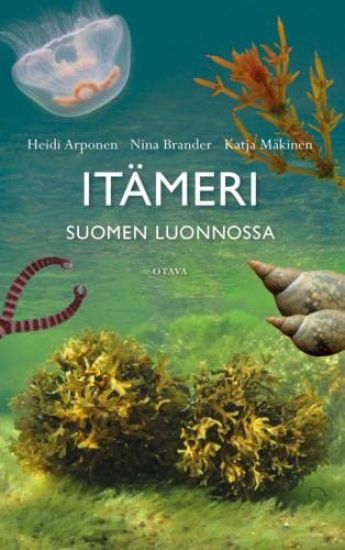
Ihastu Itämeren lajeihin ja meriluontomme monimuotoisuuteenVedenalaisen luonnon lajiopas sukeltaa Itämeren pinnan alle - Suomen rannikolla ja merenpohjilla, rannoilla ja merenlahdissa. Kirjassa esitellään noin 150 yleisintä levää, kasvia ja eläintä, joiden tunnistus sujuu vaivatta upeiden kuvien ja lajiopastuksen avulla. Mukana on tietoa Itämeren erityispiirteistä, ”Näin tutkit Itämerta” -osio sekä Itämeren tilaa ja tulevaisuutta koskevaa ajantasaista tietoa. Ensimmäinen kattava Itämeren lajiston tunnistusopas sopii mökkiläisille, veneilijöille ja kaikille meriluonnon ystäville.
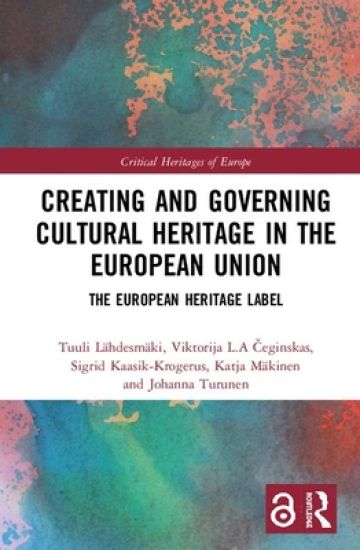
Creating and Governing Cultural Heritage in the European Union: The European Heritage Label provides an interdisciplinary examination of the ways in which European cultural heritage is created, communicated, and governed via the new European Heritage Label scheme.Drawing on ethnographic field research conducted across ten countries at sites that have been awarded with the European Heritage Label, the authors of the book approach heritage as an entangled social, spatial, temporal, discursive, narrative, performative, and embodied process. Recognising that heritage is inherently political and used by diverse actors as a tool for re-imagining communities, identities, and borders, and for generating notions of inclusion and exclusion in Europe, the book also considers the idea of Europe itself as a narrative. Chapters tackle issues such as multilevel governance of heritage; geopolitics of border-crossings and border-making; participation and non-participation; and embodiment and affective experience of heritage.Creating and Governing Cultural Heritage in the European Union advances heritage studies with an interdisciplinary approach that utilises and combines theories and conceptualizations from critical geopolitics, political studies, EU and European studies, cultural policy research, and cultural studies. As such, the volume will be of interest to scholars and students engaged in the study of heritage, politics, belonging, the EU, ideas, and narratives of Europe.
This open access book discusses how cultural literacy can be taught and learned through creative practices. It approaches cultural literacy as a dialogic social process based on learning and gaining knowledge through emphatic, tolerant, and inclusive interaction. The book focuses on meaning-making in children and young people’s visual and multimodal artefacts created by students aged 5–15 as an outcome of the Cultural Literacy Learning Programme implemented in schools in Cyprus, Germany, Israel, Lithuania, Spain, Portugal, and the UK. The lessons in the program address different social and cultural themes, ranging from one’s cultural attachments to being part of a community and engaging more broadly in society. The artefacts are explored through data-driven content analysis and self-reflexive and collaborative interpretation and discussed through multimodality and a sociocultural approach to children’s visual expression. This interdisciplinary volume draws on cultural studies, communication studies, art education, and educational sciences.
This open access book discusses how cultural literacy can be taught and learned through creative practices. It approaches cultural literacy as a dialogic social process based on learning and gaining knowledge through emphatic, tolerant, and inclusive interaction. The book focuses on meaning-making in children and young people’s visual and multimodal artefacts created by students aged 5–15 as an outcome of the Cultural Literacy Learning Programme implemented in schools in Cyprus, Germany, Israel, Lithuania, Spain, Portugal, and the UK. The lessons in the program address different social and cultural themes, ranging from one’s cultural attachments to being part of a community and engaging more broadly in society. The artefacts are explored through data-driven content analysis and self-reflexive and collaborative interpretation and discussed through multimodality and a sociocultural approach to children’s visual expression. This interdisciplinary volume draws on cultural studies, communication studies, art education, and educational sciences.
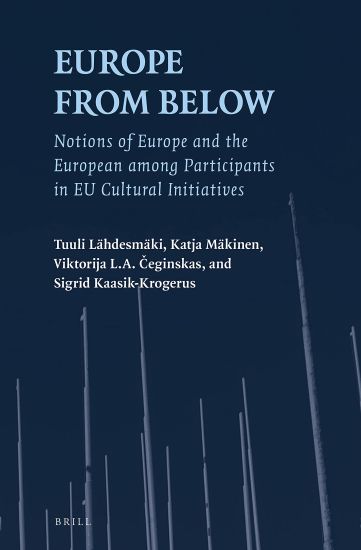
In this book, Tuuli Lähdesmäki, Katja Mäkinen, Viktorija L. A. Ceginskas, and Sigrid Kaasik-Krogerus scrutinize how people who participate in cultural initiatives funded and governed by the European Union understand the idea of Europe. The book focuses on three cultural initiatives: the European Capital of Culture, the European Heritage Label, and a European Citizen Campus project funded through the Creative Europe programme. These initiatives are examined through field studies conducted in 12 countries between 2010 and 2018. The authors describe their approach as ‘ethnography of Europeanization’ and conceptualize the attempts at Europeanization in the European Union’s cultural policy as politics of belonging.
Creating and Governing Cultural Heritage in the European Union: The European Heritage Label provides an interdisciplinary examination of the ways in which European cultural heritage is created, communicated, and governed via the new European Heritage Label scheme.Drawing on ethnographic field research conducted across ten countries at sites that have been awarded with the European Heritage Label, the authors of the book approach heritage as an entangled social, spatial, temporal, discursive, narrative, performative, and embodied process. Recognising that heritage is inherently political and used by diverse actors as a tool for re-imagining communities, identities, and borders, and for generating notions of inclusion and exclusion in Europe, the book also considers the idea of Europe itself as a narrative. Chapters tackle issues such as multilevel governance of heritage; geopolitics of border-crossings and border-making; participation and non-participation; and embodiment and affective experience of heritage.Creating and Governing Cultural Heritage in the European Union advances heritage studies with an interdisciplinary approach that utilises and combines theories and conceptualizations from critical geopolitics, political studies, EU and European studies, cultural policy research, and cultural studies. As such, the volume will be of interest to scholars and students engaged in the study of heritage, politics, belonging, the EU, ideas, and narratives of Europe.