Kirjojen hintavertailu. Mukana 12 595 353 kirjaa ja 12 kauppaa.

Kirjailija

Katrina Porteous

Kirjat ja teokset yhdessä paikassa: 7 kirjaa, julkaisuja vuosilta 1996-2024, suosituimpien joukossa Quartet. Vertaile teosten hintoja ja tarkista saatavuus suomalaisista kirjakaupoista.

7 kirjaa

Kirjojen julkaisuhaarukka 1996-2024.

Quartet

Quartet

Chris Tutton; Michael Schmit; Moniza Alvi; Mimi Khalvati; Lawrence Sail; Alison Brackenbury; Matt Harvey; Martyn Crucefix; Linda France; Katrina Porteous; Roselle Angwin

Avalanche Books
2018
nidottu
Quartet is an anthology of contemporary poetry inspired by the four seasons.and featuring many of our leading poets.
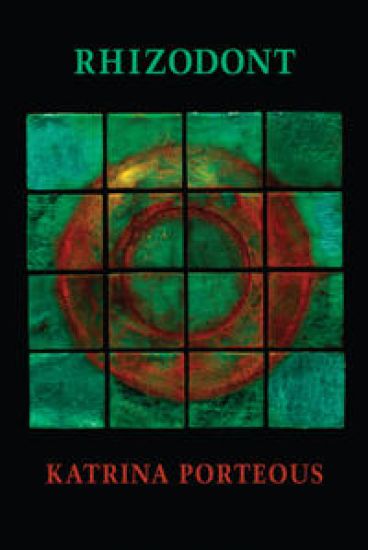
Rhizodont

Rhizodont

Katrina Porteous

Bloodaxe Books Ltd
2024
pokkari
330 million years ago what is now the rocky shore close to Katrina Porteous’s Northumberland home was a tropical swamp inhabited by three-metre long predatory fish with huge tusk-like teeth. They belonged to a family of lobe-finned fishes which evolved to move on land as well as swim, and which are the ancestors of all four-limbed vertebrates, including humans. The fossil fish found in Northumberland is called the ‘rhizodont’. Porteous’s new collection begins with a lovingly-observed contemporary journey through these ancient landscapes, from the former coal-mining communities of the Durham coast, where the coal-bearing Carboniferous strata are overlain with younger rocks, to the Northumberland shores where the rhizodont’s remains were found. Against a backdrop of vast geological time and recent fossil-fuel burning history, these poems address current issues of social and environmental change. They are followed by two sequences about aspects of the latest technological revolution – autonomous systems and AI, and the remote-sensing techniques used to explore the most inaccessible reaches of our planet, Antarctica, to measure Earth’s changing climate. The poems unfold from England’s North-East coast into global questions of evolution, survival and extinction – in communities and languages, and throughout the natural world, where hope resides in Life’s astonishing powers of reinvention. Rhizodont is Katrina Porteous's fourth poetry collection from Bloodaxe, and extends territory explored in her three previous books. It combines scientific themes from Edge (2019) with the ecological localism of Two Countries (2014) and The Lost Music (1996), both of which were concerned with the landscapes and communities of North-East England. Rhizodont is shortlisted for the T.S. Eliot Prize 2024.
Edge

Edge

Katrina Porteous

Bloodaxe Books Ltd
2019
nidottu
Scientists and engineers are the great explorers of our age. Inspired by the work of leading research scientists, by CERN’s Large Hadron Collider, space telescopes which allow us to see our Sun in wavelengths far beyond human vision, and by the Cassini mission’s astonishing photos of Saturn’s moons, poet Katrina Porteous translates to the non-scientist contemporary questions about the nature of physical reality and our understanding of it. Edge contains three poem sequences, Field, Sun and the title sequence, which extend Porteous’ previous work on nature, place and time beyond the human scale. They take the reader from the micro quantum worlds underlying the whole universe, to the macro workings of our local star, the potential for primitive life elsewhere in the solar system on moons such as Enceladus, and finally to the development of complex consciousness on our own planet. As scientific inquiry reveals the beauty and poetry of the universe, Edge celebrates the almost-miraculous local circumstances which enable us to begin to understand it. All three pieces were commissioned for performance in Life Science Centre Planetarium, Newcastle between 2013 and 2016, with computer music by Peter Zinovieff. Sun was part of NUSTEM’s Imagining the Sun project for schools and the wider public (Northumbria University 2016). The title sequence, Edge, was broadcast as a Poetry Please Special on BBC Radio 4. Edge is Katrina Porteous's third poetry book from Bloodaxe, her first to draw upon her long involvement in scientific projects, following two earlier collections, The Lost Music (1996) and Two Countries (2014), concerned with the landscapes and communities of North-East England.
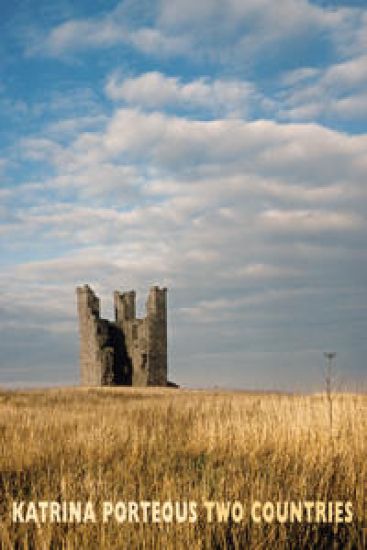
Two Countries

Two Countries

Katrina Porteous

Bloodaxe Books Ltd
2014
nidottu
Two Countries is a book of poems about place: about landscape, community, and the shifting, provisional relations between them. Born in Scotland, Katrina Porteous grew up in North-East England. These poems explore the ambiguities of borderlands, from the Roman Wall to the present-day Anglo-Scottish Border, and the 'debatable lands' between tradition and modernity, real and ideal, country and town, 'nature' and 'culture'. Katrina Porteous's poetry reaches far beyond the local. Two Countries is organised around a selection of her radio work, poems of many voices, drawing on Border Ballad and Northumbrian story-telling and song, and often rooted in direct oral testimony. Among the most remarkable are the dialect voices of Northumbrian fishermen, and the words of hill farmers caught up in the 2001 foot-and-mouth epidemic. The poems of Two Countries are meant to be heard out loud. An ebook with audio is published simultaneously with the print edition. Since her first collection, The Lost Music (1996), Katrina Porteous has collaborated widely with artists and musicians. Much of her work has been for BBC radio, notably with producer Julian May, who describes her as 'extending the boundaries of the genre'.
The Lost Music

The Lost Music

Katrina Porteous

Bloodaxe Books Ltd
1996
pokkari
Katrina Porteous has been living and working alongside the fishermen of the Northumberland village of Beadnell for the past thirty years. Half the poems in The Lost Music celebrate her love of the place and its people. Her first collection also includes some of her own drawings featuring both fishing and industry in decline as well the wildlife of North-East England. All her poems are strongly physical in character, written to be read aloud. They take as their starting-point the tensions between time and eternity, change and stillness. In language which is both passionate and controlled, they express the endless struggle to discover new forms of order. The fishing poems develop these themes within a microcosm of the wider world. In a dialogue between her own voice and the fishermen's dialect, Katrina Porteous traces the identity of the community in its common memory and working practices, finding with the passing of the old ways of life a loss of spiritual direction. The poems suggest the way forward is neither to cling to the past nor to abandon it, but to change and remember.