Kirjojen hintavertailu. Mukana 12 126 192 kirjaa ja 12 kauppaa.

Kirjailija

Kay Prag

Kirjat ja teokset yhdessä paikassa: 2 kirjaa, julkaisuja vuosilta 2017-2018, suosituimpien joukossa Excavations by K.M. Kenyon in Jerusalem 1961–1967, Volume VI. Vertaile teosten hintoja ja tarkista saatavuus suomalaisista kirjakaupoista.

2 kirjaa

Kirjojen julkaisuhaarukka 2017-2018.

Re-Excavating Jerusalem

Re-Excavating Jerusalem

Kay Prag

Oxford University Press
2018
sidottu
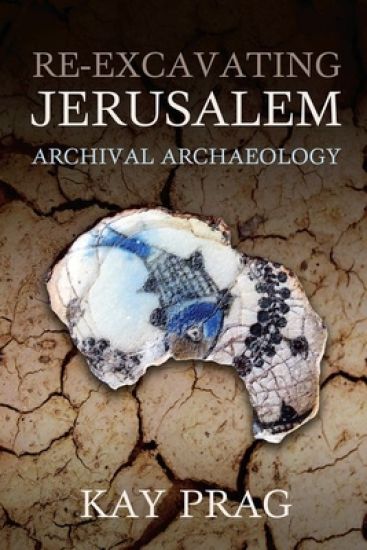
Re-excavating Jerusalem: Archival Archaeology is concerned with the archaeology and history of Jerusalem, and with the story of its people over many centuries. It is a story of ongoing crisis, of adaptations and inheritance under successive rulers, where each generation has owed a cultural debt to its predecessors, from the Bronze Age to the modern world. Illustrated with over 80 photos and drawings, Re-excavating Jerusalem: Archival Archaeology reflects on events as revealed in a major programme of archaeological excavation conducted by Dame Kathleen Kenyon in the 1960s, which is still in the process of publication. The excavation archive has an ongoing relevance today. Even though our knowledge of the city and its inhabitants has increased over the decades since then, the archive still reveals fresh insights to set against contemporary work. The preservation of such archives has great importance for future historians. Amongst topics addressed are the nature of a dispersed settlement pattern in the second millennium BC; a fresh look at the vexed problems of the biblical accounts of the work of David and Solomon and the development of the city in the tenth and ninth centuries BC; the nature of the defensive walls of the town re-established by Nehemiah in the fifth century BC; some evidence of the Roman occupation following the almost total destruction of the city in AD 70; and an exploration in the Islamic city during the twelfth to fifteenth centuries.
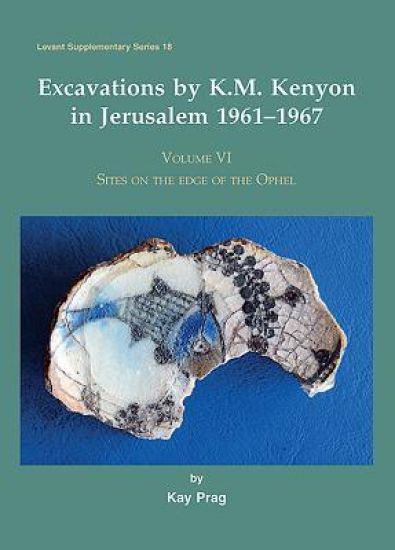
Excavations by K.M. Kenyon in Jerusalem 1961–1967, Volume VI
In this volume the principal focus is on the presence/absence of the city walls on the east side of the city from the Iron Age onwards. The evidence for major walls and their structure from Iron Age II to the Byzantine periods in Sites S.II and R.II is described and substantial revisions suggested, as inter alia no evidence for the tenth century/Solomonic date in Site S.II as suggested by E. Mazar was uncovered. The strategic reasons for the location of the northern boundary of the earlier town is discussed in relation to evidence from Kenyon’s Site H. There is only sparse evidence for the PostExilic period in both areas. Parts of plastered basement rooms survived the destruction of AD 70. For the Roman period more evidence of the presence of the Roman army in the city is collated, including a possible watch tower, rare fragments of terra cottas and of fine imported South Gaulish pottery. Additionally John Hayes presents the catalogue of all the Late Roman fine wares from all remaining unpublished sites excavated by the Joint Expedition. Site S.II adds a little to the picture of the busy and extensive Byzantine city; and Site R.I provides a glimpse of extramural activities in the eighth/ninth centuries AD. A major contribution to the study of Ayyubid ceramics is provided by an assemblage from a large dump of the period. The analysis of iron working debris from Site L (the Armenian Garden) by Gethin and a reconsideration of the use of that area in Ayyubid and Mamluk times illustrates historical data, with ongoing activity in the late Ottoman period illustrated from Site S.II. The finds of the Ayyubid period were especially interesting for the insight provided into the lives of the inhabitants of the city.