Kirjailija
Kay Redfield Jamison
Kirjat ja teokset yhdessä paikassa: 15 kirjaa, julkaisuja vuosilta 1992-2024, suosituimpien joukossa Exuberance. Vertaile teosten hintoja ja tarkista saatavuus suomalaisista kirjakaupoista.
15 kirjaa
Kirjojen julkaisuhaarukka 1992-2024.
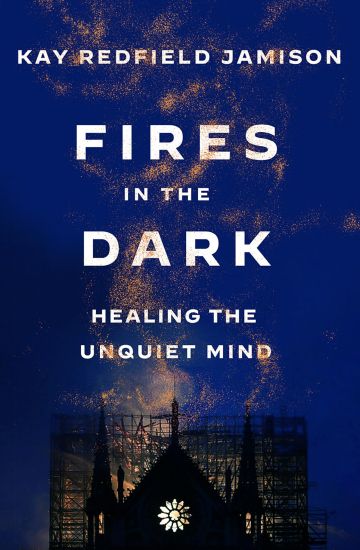
The acclaimed author of An Unquiet Mind considers the age-old quest for relief from psychological pain and the role of the exceptional healer in the journey back to health. "To treat, even to cure, is not always to heal." In this expansive cultural history of the treatment and healing of mental suffering, Kay Jamison writes about psychotherapy, what makes a great healer, and the role of imagination and memory in regenerating the mind. From the trauma of the battlefields of the twentieth century, to those who are grieving, depressed, or with otherwise unquiet minds, to her own experience with bipolar illness, Jamison demonstrates how remarkable psychotherapy and other treatments can be when done well. She argues that not only patients but doctors must be healed. She draws on the example of W.H.R. Rivers, the renowned psychiatrist who treated poet Siegfried Sassoon and other World War I soldiers, and discusses the long history of physical treatments for mental illness, as well as the ancient and modern importance of religion, ritual, and myth in healing the mind. She looks at the vital role of artists and writers, as well as exemplary figures, such as Paul Robeson, who have helped to heal us as a people. Fires in the Dark is a beautiful meditation on the quest and adventure of healing the mind, on the power of accompaniment, and the necessity for knowledge.
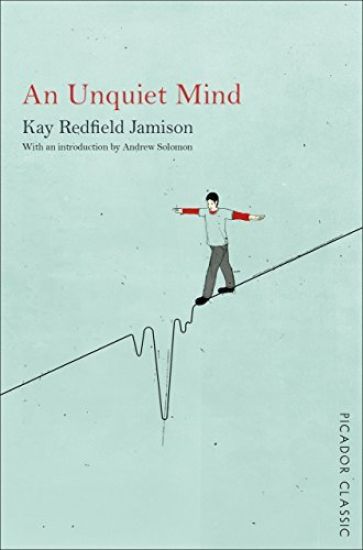
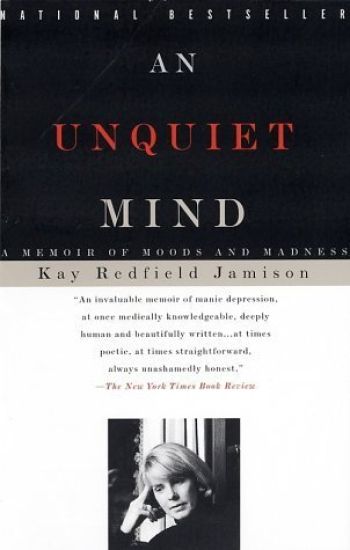
‘It stands alone in the literature of manic depression for its bravery, brilliance and beauty’ – Oliver SacksAn Unquiet Mind is a definitive examination of manic depression from both sides: doctor and patient, the healer and the healed. A classic memoir of enormous candour and courage, it teems with the wit and wisdom of its creator.Dr Kay Redfield Jamison is one of the foremost authorities on manic depression (bipolar disorder), but she has also experienced its terrors and cruel allure first-hand. While pursuing her career in medicine, she was affected by the same exhilarating highs and catastrophic lows that afflicted many of her patients. From her jubilant childhood to the disquiet that has dominated her adult life, she charts a journey through her own mind, and those of others.'Invaluable' – New York Times Book Review
The acclaimed author of An Unquiet Mind considers the age-old quest for relief from psychological pain and the role of the exceptional healer in the journey back to health. "To treat, even to cure, is not always to heal." In this expansive cultural history of the treatment and healing of mental suffering, Kay Jamison writes about psychotherapy, what makes a great healer, and the role of imagination and memory in regenerating the mind. From the trauma of the battlefields of the twentieth century, to those who are grieving, depressed, or with otherwise unquiet minds, to her own experience with bipolar illness, Jamison demonstrates how remarkable psychotherapy and other treatments can be when done well. She argues that not only patients but doctors must be healed. She draws on the example of W.H.R. Rivers, the renowned psychiatrist who treated poet Siegfried Sassoon and other World War I soldiers, and discusses the long history of physical treatments for mental illness, as well as the ancient and modern importance of religion, ritual, and myth in healing the mind. She looks at the vital role of artists and writers, as well as exemplary figures, such as Paul Robeson, who have helped to heal us as a people. Fires in the Dark is a beautiful meditation on the quest and adventure of healing the mind, on the power of accompaniment, and the necessity for knowledge.
A Pulitzer Prize Finalist In this magisterial study of the relationship between illness and art, the best-selling author of An Unquiet Mind brings a fresh perspective to the life and work of Pulitzer Prize-winning poet Robert Lowell. In his poetry, Lowell put his manic-depressive illness (now known as bipolar disorder) into the public domain, and in the process created a new and arresting language for madness. Here Dr. Kay Redfield Jamison brings her expertise in mood disorders to bear on Lowell's story, illuminating not only the relationships between mania, depression, and creativity but also how Lowell's illness and treatment influenced his work (and often became its subject). A bold, sympathetic account of a poet who was--both despite and because of mental illness--a passionate, original observer of the human condition.
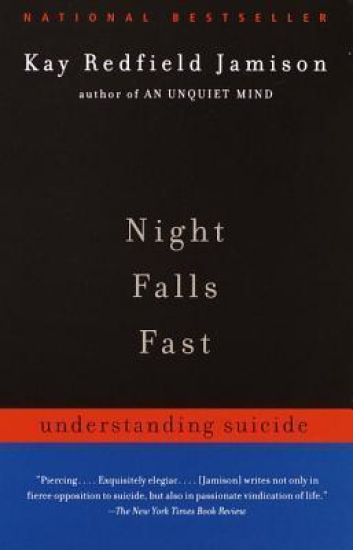
Suicide is the third major killer of young people in the Western world, and in the closing decades of the twentieth century it reached epidemic proportions: around the world there has been a frightening surge in suicides committed by children, adolescents and young adults. Kay Redfield Jamison is herself a survivor of a nearly lethal suicide attempt which came after years of battling manic depression. Her survival marked the beginning of a life’s work to investigate mental illness and self-inflicted death, and she is now an internationally recognized authority on the depressive illnesses. In Night Falls Fast Dr. Jamison dispels the silence and shame that surround the subject of suicide and provides a better understanding of the suicidal mind and a chance to recognize the person at risk. She brings to the book not only wide scientific knowledge and clinical experience but also great compassion. In tracing the network of reasons underlying the phenomenon, she gives us astonishing examples and a startling look at the journals, drawings and farewell notes of people who have chosen to kill themselves. She also provides vivid insight into the most recent findings from hospitals and laboratories across the world; the critical biological and psychological factors that interact to cause suicide; and the new strategies being evolved to combat them. Night Falls Fast is a sensitive and penetrating analysis that helps us to comprehend the profound and disturbing sense of loss created in those left behind. It is the first major book on the subject in a quarter of a century and stands to become a classic account of one of the most devastating and destructive causes of death of our time.
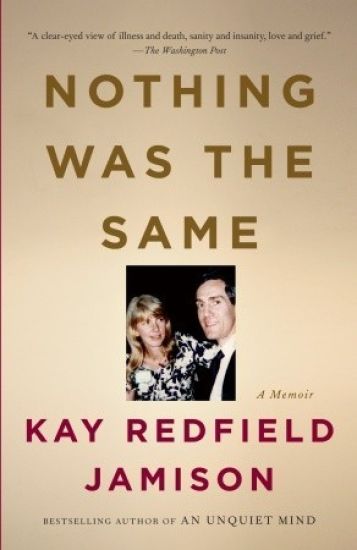
Kay Redfield Jamison, award-winning professor and writer, changed the way we think about moods and madness. Now Jamison uses her characteristic honesty, wit and eloquence to look back at her relationship with her husband, Richard Wyatt, a renowned scientist who died of cancer. Nothing was the Same is a penetrating psychological study of grief viewed from deep inside the experience itself. From the eBook edition.
Bipolar Disorder
David J. Miklowitz; Ellen Frank; Kay Redfield Jamison; David J. Kupfer
Guilford Publications
2010
nidottu
Family-focused psychoeducational treatment (FFT) is among a very small number of psychosocial treatments that have been found to be effective in multiple studies to improve the course of bipolar disorder. This indispensable guide describes how to implement FFT with adult and adolescent patients and their family members. Provided are practical procedures for helping families understand the nature of bipolar disorder, strengthen their communication skills, solve day-to-day problems, and reduce the risk and severity of relapse. The book incorporates state-of-the-art knowledge on the illness and its biological and psychosocial management. More than a dozen reproducible handouts are included.
Manic-Depressive Illness
Frederick K. Goodwin; Kay Redfield Jamison
Oxford University Press Inc
2007
sidottu
The revolution in psychiatry that began in the 1950s led to dramatic advances in the understanding and treatment of manic-depressive illness also known as bipolar disorder. No other mental illness has been the subject of such extensive, clinically useful, and scientifically productive research. Hailed as the most outstanding book in the biomedical sciences when it was originally published in 1990, Manic-Depressive Illness was the first to survey this massive body of evidence comprehensively and to assess its meaning for both clinician and scientist. It also vividly portrayed the experience of manic-depressive illness from the perspective of patients, their doctors, and researchers, and recounted the torments of some of the great poets and composers whose art was almost certainly enriched, energised, and deepened by the extremes of manic-depressive illness. In this magisterial second edition, Drs. Frederick Goodwin and Kay Redfield Jamison, with the assistance of a select team of other leading scientists in the field, exhaustively review the biological and genetic literature that has dominated the field in recent years and incorporate cutting-edge research conducted since publication of the first edition. They also update their surveys of psychological and epidemiological evidence, as well as that pertaining to diagnostic issues, course, and outcome, and they offer practical guidelines for differential diagnosis and clinical management. The medical treatment of manic and depressive episodes is described, strategies for preventing future episodes are given in detail, and psychotherapeutic issues common in this illness are considered. Special emphasis is given to fostering compliance with medication regimens and treating bipolar patients who abuse drugs and alcohol or who pose a risk of suicide. This book, in its newly updated and expanded form, will be a valuable and necessary addition to the libraries of psychiatrists and other physicians, psychologists, clinical social workers, neuroscientists, pharmacologists, and the patients and families who live with manic-depressive illness.
The author of the bestselling "An Unquiet Mind"--an internationally renowned authority on mood disorders--now gives readers something wonderfully different: an exploration of exuberance and how it fuels our most important creative and scientific achievements.
Critical reading for parents, educators, and anyone wanting to understand the tragic epidemic of suicide--"a powerful book that] will change people's lives--and, doubtless, save a few" (Newsday). The first major book in a quarter century on suicide--and its terrible pull on the young in particular--Night Falls Fast is tragically timely: suicide has become one of the most common killers of Americans between the ages of fifteen and forty-five. From the author of the best-selling memoir, An Unquiet Mind--and an internationally acknowledged authority on depression--Dr. Jamison has also known suicide firsthand: after years of struggling with manic-depression, she tried at age twenty-eight to kill herself. Weaving together a historical and scientific exploration of the subject with personal essays on individual suicides, she brings not only her remarkable compassion and literary skill but also all of her knowledge and research to bear on this devastating problem. This is a book that helps us to understand the suicidal mind, to recognize and come to the aid of those at risk, and to comprehend the profound effects on those left behind.
NATIONAL BESTSELLER - A deeply powerful memoir about bipolar illness that has both transformed and saved lives--with a new preface by the author. Dr. Jamison is one of the foremost authorities on manic-depressive (bipolar) illness; she has also experienced it firsthand. For even while she was pursuing her career in academic medicine, Jamison found herself succumbing to the same exhilarating highs and catastrophic depressions that afflicted many of her patients, as her disorder launched her into ruinous spending sprees, episodes of violence, and an attempted suicide. Here Jamison examines bipolar illness from the dual perspectives of the healer and the healed, revealing both its terrors and the cruel allure that at times prompted her to resist taking medication.
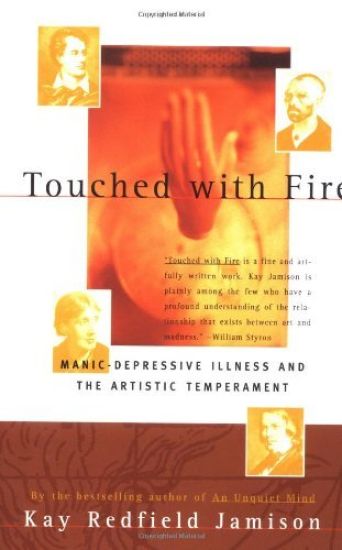
The anguished and volatile intensity associated with the artistic temperament was once thought to be a symptom of genius or eccentricity peculiar to artists, writers and musicians. Kay Jamison's work, based on her study as a clinical psychologist and researcher in mood disorders, reveals that many artists subject to exalted highs and despairing lows were in fact engaged in a struggle with clinically identifiable manic-depressive illness. Jamison presents proof of the biological foundations of this disease and applies what is known about the illness to the lives and works of some of the world's greatest artists including Byron, Van Gogh, Schumann and Woolf.
The Flight of the Mind
Thomas C. Caramagno; Kay Redfield Jamison
University of California Press
1996
pokkari
In this major new book on Virginia Woolf, Caramagno contends psychobiography has much to gain from a closer engagement with science. Literary studies of Woolf's life have been written almost exclusively from a psychoanalytic perspective. They portray Woolf as a victim of the Freudian 'family romance', reducing her art to a neurotic evasion of a traumatic childhood. But current knowledge about manic-depressive illness - its genetic transmission, its biochemistry, and its effect on brain function - reveals a new relationship between Woolf's art and her illness. Caramagno demonstrates how Woolf used her illness intelligently and creatively in her theories of fiction, of mental functioning, and of self structure. Her novels dramatize her struggle to imagine and master psychic fragmentation. They helped her restore form and value to her own sense of self and lead her readers to an enriched appreciation of the complexity of human consciousness.
The Flight of the Mind
Thomas C. Caramagno; Kay Redfield Jamison
University of California Press
1992
sidottu
In this major new book on Virginia Woolf, Caramagno contends psychobiography has much to gain from a closer engagement with science. Literary studies of Woolf's life have been written almost exclusively from a psychoanalytic perspective. They portray Woolf as a victim of the Freudian 'family romance,' reducing her art to a neurotic evasion of a traumatic childhood. But current knowledge about manic-depressive illness - its genetic transmission, its biochemistry, and its effect on brain function - reveals a new relationship between Woolf's art and her illness. Caramagno demonstrates how Woolf used her illness intelligently and creatively in her theories of fiction, of mental functioning, and of self structure. Her novels dramatize her struggle to imagine and master psychic fragmentation. They helped her restore form and value to her own sense of self and lead her readers to an enriched appreciation of the complexity of human consciousness.