Kirjojen hintavertailu. Mukana 12 152 606 kirjaa ja 12 kauppaa.

Kirjailija

Kay Wright Lewis

Kirjat ja teokset yhdessä paikassa: 2 kirjaa, julkaisuja vuosilta 2017-2019, suosituimpien joukossa A Curse upon the Nation. Vertaile teosten hintoja ja tarkista saatavuus suomalaisista kirjakaupoista.

2 kirjaa

Kirjojen julkaisuhaarukka 2017-2019.

A Curse upon the Nation

A Curse upon the Nation

Kay Wright Lewis

University of Georgia Press
2019
pokkari
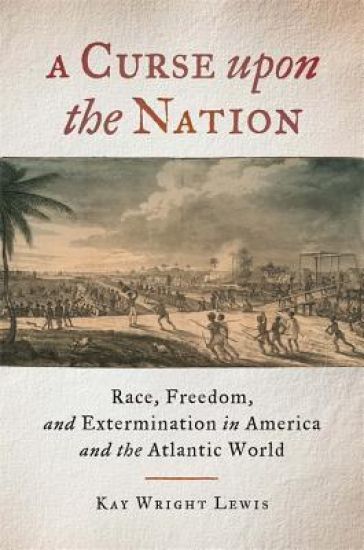
From the inception of slavery as a pillar of the Atlantic World economy, both Europeans and Africans feared their mass extermination by the other in a race war. In the United States, says Kay Wright Lewis, this ingrained dread nourished a preoccupation with slave rebellions and would later help fuel the Civil War, thwart the aims of Reconstruction, justify Jim Crow, and even inform civil rights movement strategy. And yet, says Lewis, the historiography of slavery is all but silent on extermination as a category of analysis. Moreover, little of the existing sparse scholarship interrogates the black perspective on extermination. A Curse upon the Nation addresses both of these issues.To explain how this belief in an impending race war shaped eighteenth- and nineteenth-century American politics, culture, and commerce, Lewis examines a wide range of texts including letters, newspapers, pamphlets, travel accounts, slave narratives, government documents, and abolitionist tracts. She foregrounds her readings in the long record of exterminatory warfare in Europe and its colonies, placing lopsided reprisals against African slave revolts—or even rumors of revolts—in a continuum with past brutal incursions against the Irish, Scots, Native Americans, and other groups out of favor with the empire. Lewis also shows how extermination became entwined with ideas about race and freedom from early in the process of enslavement, making survival an important form of resistance for African peoples in America.For African Americans, enslaved and free, the potential for one-sided violence was always present and deeply traumatic. This groundbreaking study reevaluates how extermination shaped black understanding of the Atlantic slave trade and the political, social, and economic worlds in which it thrived.
A Curse upon the Nation

A Curse upon the Nation

Kay Wright Lewis

University of Georgia Press
2017
sidottu
From the inception of slavery as a pillar of the Atlantic World economy, both Europeans and Africans feared their mass extermination by the other in a race war. In the United States, says Kay Wright Lewis, this ingrained dread nourished a preoccupation with slave rebellions and would later help fuel the Civil War, thwart the aims of Reconstruction, justify Jim Crow, and even inform civil rights movement strategy. And yet, says Lewis, the historiography of slavery is all but silent on extermination as a category of analysis. Moreover, little of the existing sparse scholarship interrogates the black perspective on extermination. A Curse upon the Nation addresses both of these issues.To explain how this belief in an impending race war shaped eighteenth- and nineteenth-century American politics, culture, and commerce, Lewis examines a wide range of texts including letters, newspapers, pamphlets, travel accounts, slave narratives, government documents, and abolitionist tracts. She foregrounds her readings in the long record of exterminatory warfare in Europe and its colonies, placing lopsided reprisals against African slave revolts—or even rumors of revolts—in a continuum with past brutal incursions against the Irish, Scots, Native Americans, and other groups out of favor with the empire. Lewis also shows how extermination became entwined with ideas about race and freedom from early in the process of enslavement, making survival an important form of resistance for African peoples in America.For African Americans, enslaved and free, the potential for one-sided violence was always present and deeply traumatic. This groundbreaking study reevaluates how extermination shaped black understanding of the Atlantic slave trade and the political, social, and economic worlds in which it thrived.