Kirjojen hintavertailu. Mukana 12 595 353 kirjaa ja 12 kauppaa.

Kirjailija

Keisha N. Blain

Kirjat ja teokset yhdessä paikassa: 9 kirjaa, julkaisuja vuosilta 2018-2026, suosituimpien joukossa Without Fear. Vertaile teosten hintoja ja tarkista saatavuus suomalaisista kirjakaupoista.

9 kirjaa

Kirjojen julkaisuhaarukka 2018-2026.

Without Fear

Without Fear

Keisha N. Blain

W. W. NortonCompany
2026
nidottu
Longlisted for the 2026 Andrew Carnegie Medal for Excellence in Nonfiction One of Essence's "7 Political Books By Black Women Authors To Read Now" â?¢ A Library Journal Best Book of the Year â?¢ One of Bookbub's Best Nonfiction of 2025 â?¢ One of the African American Intellectual History Society's Best Black History Books of 2025 â??Without Fear tells the stories of Black women who, like Deborah in the Bible, have engaged in social justice agitation, refusing to simply suffer by engaging in the redemptive work of challenging injustice while in the midst of it. Each of us can and must learn from these women if we are to reconstruct America and build a just world.â? â??Reverend Dr. William J. Barber II, coauthor of White Poverty
Without Fear: Black Women and the Making of Human Rights
Even before they were recognized as citizens of the United States, Black women understood that the fights for civil and human rights were inseparable. Over the course of two hundred years, they were at the forefront of national and international movements for social change, weaving connections between their own and others' freedom struggles around the world. Without Fear tells how, during American history, Black women made humans rights theirs: from worldwide travel and public advocacy in the global Black press to their work for the United Nations, they courageously and effectively moved human rights beyond an esoteric concept to an active, organizing principle. Acclaimed historian Keisha N. Blain tells the story of these women--from the well-known, like Ida B. Wells, Madam C. J. Walker, and Lena Horne, to those who are still less known, including Pearl Sherrod, Aretha McKinley, and Marguerite Cartwright. Blain captures human rights thinking and activism from the ground up with Black women at the center, working outside the traditional halls of power.By shouldering intersecting forms of oppression--including racism, sexism, and classism--Black women have long been in a unique position to fight for freedom and dignity. Without Fear is an account of their aspirations, strategies, and struggles to pioneer a human rights approach to combating systems of injustice.
Until I Am Free

Until I Am Free

Keisha N. Blain

BEACON PRESS
2022
nidottu
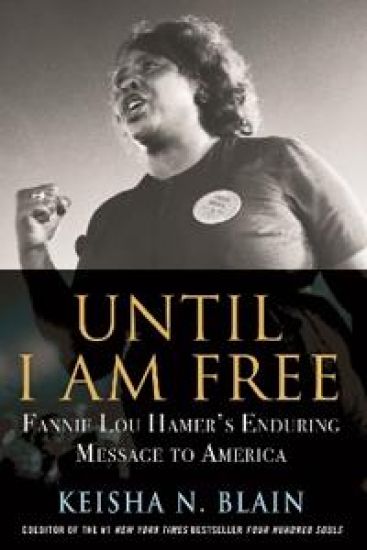
National Book Critics Circle 2021 Biography Finalist 53rd NAACP Image Award Nominee: Outstanding Literary Work - Biography/Autobiography " A] riveting and timely exploration of Hamer's life. . . . Brilliantly constructed to be both forward and backward looking, Blain's book functions simultaneously as a much needed history lesson and an indispensable guide for modern activists."--New York Times Book Review Ms. Magazine "Most Anticipated Reads for the Rest of Us - 2021" - KIRKUS STARRED REVIEW - BOOKLIST STARRED REVIEW - Publishers Weekly Big Indie Books of Fall 2021 Explores the Black activist's ideas and political strategies, highlighting their relevance for tackling modern social issues including voter suppression, police violence, and economic inequality. "We have a long fight and this fight is not mine alone, but you are not free whether you are white or black, until I am free."--Fannie Lou Hamer A blend of social commentary, biography, and intellectual history, Until I Am Free is a manifesto for anyone committed to social justice. The book challenges us to listen to a working-poor and disabled Black woman activist and intellectual of the civil rights movement as we grapple with contemporary concerns around race, inequality, and social justice. Award-winning historian and New York Times best-selling author Keisha N. Blain situates Fannie Lou Hamer as a key political thinker alongside leaders such as Martin Luther King Jr., Malcolm X, and Rosa Parks and demonstrates how her ideas remain salient for a new generation of activists committed to dismantling systems of oppression in the United States and across the globe. Despite her limited material resources and the myriad challenges she endured as a Black woman living in poverty in Mississippi, Hamer committed herself to making a difference in the lives of others. She refused to be sidelined in the movement and refused to be intimidated by those of higher social status and with better jobs and education. In these pages, Hamer's words and ideas take center stage, allowing us all to hear the activist's voice and deeply engage her words, as though we had the privilege to sit right beside her. More than 40 years since Hamer's death in 1977, her words still speak truth to power, laying bare the faults in American society and offering valuable insights on how we might yet continue the fight to help the nation live up to its core ideals of "equality and justice for all." Includes a photo insert featuring Hamer at civil rights marches, participating in the Democratic National Convention, testifying before Congress, and more.
Four Hundred Souls

Four Hundred Souls

Ibram X. Kendi; Keisha N. Blain

Vintage Publishing
2022
pokkari
*THE #1 NEW YORK TIMES BESTSELLER*Four Hundred Souls is an epoch-defining history of African America, the first to appear in a generation, told by ninety leading Black voices -- co-curated by Ibram X. Kendi, author of the million-copy bestseller How To Be an Antiracist, and Keisha N. Blain, author of Set the World on Fire.In chronological chapters, each by a different author and spanning five years, the book charts the four-hundred-year journey of African Americans to the present - a journey defined by inhuman oppression, visionary struggles and stunning achievements.Contributors include some of today's leading writers, historians, journalists, lawyers, poets and activists. Together - through essays and short stories, personal vignettes and fiery polemics - they redefine America and the way its history can be told.'A vital addition to the curriculum on race in America... Compelling' Washington Post'A resounding history...that challenges the myths of America's past... Fresh and engaging' Colin Grant, Guardian
Four Hundred Souls: A Community History of African America, 1619-2019
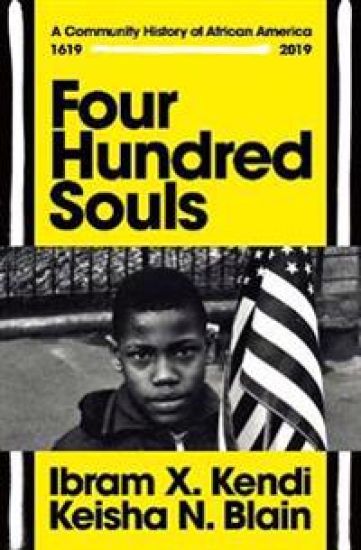
#1 NEW YORK TIMES BESTSELLER - A chorus of extraordinary voices tells the epic story of the four-hundred-year journey of African Americans from 1619 to the present--edited by Ibram X. Kendi, author of How to Be an Antiracist, and Keisha N. Blain, author of Set the World on Fire. FINALIST FOR THE ANDREW CARNEGIE MEDAL - NAMED ONE OF THE BEST BOOKS OF THE YEAR BY The Washington Post, Town & Country, Ms. magazine, BookPage, She Reads, BookRiot, Booklist - "A vital addition to the] curriculum on race in America . . . a gateway to the solo works of all the voices in Kendi and Blain's impressive choir."--The Washington Post "From journalist Hannah P. Jones on Jamestown's first slaves to historian Annette Gordon-Reed's portrait of Sally Hemings to the seductive cadences of poets Jericho Brown and Patricia Smith, Four Hundred Souls weaves a tapestry of unspeakable suffering and unexpected transcendence."--O: The Oprah Magazine The story begins in 1619--a year before the Mayflower--when the White Lion disgorges "some 20-and-odd Negroes" onto the shores of Virginia, inaugurating the African presence in what would become the United States. It takes us to the present, when African Americans, descendants of those on the White Lion and a thousand other routes to this country, continue a journey defined by inhuman oppression, visionary struggles, stunning achievements, and millions of ordinary lives passing through extraordinary history. Four Hundred Souls is a unique one-volume "community" history of African Americans. The editors, Ibram X. Kendi and Keisha N. Blain, have assembled ninety brilliant writers, each of whom takes on a five-year period of that four-hundred-year span. The writers explore their periods through a variety of techniques: historical essays, short stories, personal vignettes, and fiery polemics. They approach history from various perspectives: through the eyes of towering historical icons or the untold stories of ordinary people; through places, laws, and objects. While themes of resistance and struggle, of hope and reinvention, course through the book, this collection of diverse pieces from ninety different minds, reflecting ninety different perspectives, fundamentally deconstructs the idea that Africans in America are a monolith--instead it unlocks the startling range of experiences and ideas that have always existed within the community of Blackness. This is a history that illuminates our past and gives us new ways of thinking about our future, written by the most vital and essential voices of our present.
Until I Am Free

Until I Am Free

Keisha N. Blain

Beacon Press
2021
sidottu
Explores the Black activist's ideas and political strategies, highlighting their relevance for tackling modern social issues including voter suppression, police violence, and economic inequality. "We have a long fight and this fight is not mine alone, but you are not free whether you are white or black, until I am free."--Fannie Lou Hamer A blend of social commentary, biography, and intellectual history, Until I Am Free is a manifesto for anyone committed to social justice. The book challenges us to listen to a working-poor and disabled Black woman activist and intellectual of the civil rights movement as we grapple with contemporary concerns around race, inequality, and social justice. Award-winning historian and New York Times best-selling author Keisha N. Blain situates Fannie Lou Hamer as a key political thinker alongside leaders such as Martin Luther King Jr., Malcolm X, and Rosa Parks and demonstrates how her ideas remain salient for a new generation of activists committed to dismantling systems of oppression in the United States and across the globe. Despite her limited material resources and the myriad challenges she endured as a Black woman living in poverty in Mississippi, Hamer committed herself to making a difference in the lives of others. She refused to be sidelined in the movement and refused to be intimidated by those of higher social status and with better jobs and education. In these pages, Hamer's words and ideas take center stage, allowing us all to hear the activist's voice and deeply engage her words, as though we had the privilege to sit right beside her. More than 40 years since Hamer's death in 1977, her words still speak truth to power, laying bare the faults in American society and offering valuable insights on how we might yet continue the fight to help the nation live up to its core ideals of "equality and justice for all." Includes a photo insert featuring Hamer at civil rights marches, participating in the Democratic National Convention, testifying before Congress, and more.
Four Hundred Souls

Four Hundred Souls

Ibram X. Kendi; Keisha N. Blain

Random House UK
2021
sidottu
*THE #1 NEW YORK TIMES BESTSELLER*Four Hundred Souls is an epoch-defining history of African America, the first to appear in a generation, told by ninety leading Black voices -- co-curated by Ibram X. Kendi, author of the million-copy bestseller How To Be an Antiracist, and Keisha N. Blain, author of Set the World on Fire. The story begins with the arrival of twenty Ndongo people on the shores of the first British colony in mainland America in 1619, the year before the arrival of the Mayflower. In eighty chronological chapters, each by a different author and spanning five years, the book charts the four-hundred-year journey of African Americans to the present - a journey defined by inhuman oppression, visionary struggles and stunning achievements - in a choral work of exceptional power and beauty. Contributors include some of the leading writers, historians, journalists, lawyers, poets and activists of contemporary America.They use a variety of techniques - historical essays, short stories, personal vignettes and fiery polemics - and approach history from various perspectives: through the eyes of towering historical icons or the untold stories of ordinary people, populating these pages with hundreds of extraordinary lives and personalities. Together they illuminate countless new facets to the story of slavery and resistance, segregation and survival, migration and self-discovery, reinvention and hope. Through its diversity of perspectives the book shows that to be African American means many different things and demonstrates the startling range of experiences and ideas that have always existed within the community of Blackness. Four Hundred Souls is an essential work that redefines America and the way its history can be told.
Set the World on Fire

Set the World on Fire

Keisha N. Blain

University of Pennsylvania Press
2019
pokkari
In 1932, Mittie Maude Lena Gordon spoke to a crowd of black Chicagoans at the old Jack Johnson boxing ring, rallying their support for emigration to West Africa. In 1937, Celia Jane Allen traveled to Jim Crow Mississippi to organize rural black workers around black nationalist causes. In the late 1940s, from her home in Kingston, Jamaica, Amy Jacques Garvey launched an extensive letter-writing campaign to defend the Greater Liberia Bill, which would relocate 13 million black Americans to West Africa. Gordon, Allen, and Jacques Garvey-as well as Maymie De Mena, Ethel Collins, Amy Ashwood, and Ethel Waddell-are part of an overlooked and understudied group of black women who take center stage in Set the World on Fire, the first book to examine how black nationalist women engaged in national and global politics from the early twentieth century to the 1960s. Historians of the era generally portray the period between the Garvey movement of the 1920s and the Black Power movement of the 1960s as one of declining black nationalist activism, but Keisha N. Blain reframes the Great Depression, World War II, and the early Cold War as significant eras of black nationalist-and particularly, black nationalist women's-ferment. In Chicago, Harlem, and the Mississippi Delta, from Britain to Jamaica, these women built alliances with people of color around the globe, agitating for the rights and liberation of black people in the United States and across the African diaspora. As pragmatic activists, they employed multiple protest strategies and tactics, combined numerous religious and political ideologies, and forged unlikely alliances in their struggles for freedom. Drawing on a variety of previously untapped sources, including newspapers, government records, songs, and poetry, Set the World on Fire highlights the flexibility, adaptability, and experimentation of black women leaders who demanded equal recognition and participation in global civil society.
Set the World on Fire

Set the World on Fire

Keisha N. Blain

University of Pennsylvania Press
2018
sidottu
In 1932, Mittie Maude Lena Gordon spoke to a crowd of black Chicagoans at the old Jack Johnson boxing ring, rallying their support for emigration to West Africa. In 1937, Celia Jane Allen traveled to Jim Crow Mississippi to organize rural black workers around black nationalist causes. In the late 1940s, from her home in Kingston, Jamaica, Amy Jacques Garvey launched an extensive letter-writing campaign to defend the Greater Liberia Bill, which would relocate 13 million black Americans to West Africa. Gordon, Allen, and Jacques Garvey-as well as Maymie De Mena, Ethel Collins, Amy Ashwood, and Ethel Waddell-are part of an overlooked and understudied group of black women who take center stage in Set the World on Fire, the first book to examine how black nationalist women engaged in national and global politics from the early twentieth century to the 1960s. Historians of the era generally portray the period between the Garvey movement of the 1920s and the Black Power movement of the 1960s as one of declining black nationalist activism, but Keisha N. Blain reframes the Great Depression, World War II, and the early Cold War as significant eras of black nationalist-and particularly, black nationalist women's-ferment. In Chicago, Harlem, and the Mississippi Delta, from Britain to Jamaica, these women built alliances with people of color around the globe, agitating for the rights and liberation of black people in the United States and across the African diaspora. As pragmatic activists, they employed multiple protest strategies and tactics, combined numerous religious and political ideologies, and forged unlikely alliances in their struggles for freedom. Drawing on a variety of previously untapped sources, including newspapers, government records, songs, and poetry, Set the World on Fire highlights the flexibility, adaptability, and experimentation of black women leaders who demanded equal recognition and participation in global civil society.