Kirjojen hintavertailu. Mukana 12 151 134 kirjaa ja 12 kauppaa.
Kirjailija
Keith Ansell Pearson
Kirjat ja teokset yhdessä paikassa: 18 kirjaa, julkaisuja vuosilta 1994-2025, suosituimpien joukossa The New Century. Vertaile teosten hintoja ja tarkista saatavuus suomalaisista kirjakaupoista.
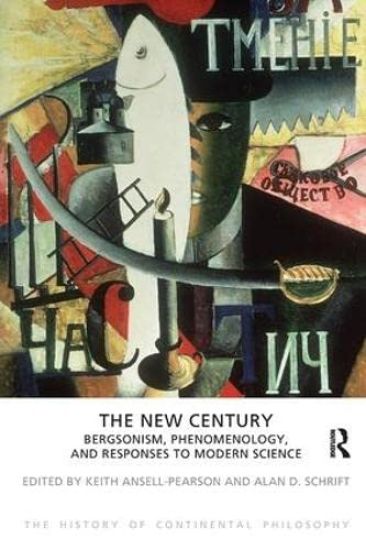
This volume covers the period between the 1890s and 1930s, a period that witnessed revolutions in the arts and society which set the agenda for the rest of the century. In philosophy, the period saw the birth of analytic philosophy, the development of new programmes and new modes of inquiry, the emergence of phenomenology as a new rigorous science, the birth of Freudian psychoanalysis, and the maturing of the discipline of sociology. This period saw the most influential work of a remarkable series of thinkers who reviewed, evaluated and transformed 19th-century thought. A generation of thinkers - among them, Henri Bergson, Emile Durkheim, Sigmund Freud, Martin Heidegger, Edmund Husserl, Karl Jaspers, Max Scheler, and Ludwig Wittgenstein - completed the disenchantment of the world and sought a new re-enchantment.
Approaching the writing of major intellectuals, artists, and philosophers need no longer be daunting. How to Read is a new sort of introduction--a personal master class in reading--that brings you face to face with the work of some of the most influential and challenging writers in history. In lucid, accessible language, these books explain essential topics such as Nietzsche's thinking on beauty, truth, and memory. Nietzsche's thinking revolves around a new and striking concept of humanity a humanity that has come to terms with the death of God and practices the art and science of living well, free of the need for metaphysical certainties and moral absolutes. How, then, are we to live? And what do we love? Keith Ansell Pearson introduces the reader to Nietzsche's distinctive philosophical style and to the development of his thought. Through a series of close readings of Nietzsche's aphorisms he illuminates some of his best-known but often ill-understood ideas, including eternal recurrence and the superman, and he brings to light the challenging nature of Nietzsche's thinking on key topics such as beauty, truth, and memory. Extracts are taken from a range of Nietzsche's work, including Human, All Too Human; The Gay Science; Thus Spoke Zarathustra; and On the Genealogy of Morality."
An incisive exploration of Nietzsche as a bold, visionary poet-philosopher. Today, Nietzsche is justly celebrated for his rich, philosophical naturalism, but Keith Ansell-Pearson warns that we must not overlook the visionary dimension of his thinking and his focus on the need to cultivate a new care of the self and care of life. In Nietzsche’s Earthbound Wisdom, Ansell-Pearson recovers Nietzsche’s love for a philosophy that guides us through our passions, one that opens us more fully to the possibilities of life and the joy of knowledge. Ansell-Pearson offers close readings of Nietzsche’s texts in conversation with philosophical and literary figures including Augustine, Baudelaire, Carlyle, Dostoevsky, Emerson, Flaubert, Stendhal, and more. Throughout, Ansell-Pearson examines Nietzsche’s sophisticated critique of literary naturalism and his alternative conception of the poet as a seer who has a deep longing for a new earth.
The first focused study of Nietzsche's Dawn, offering a close reading of the text by two of the leading scholars on the philosophy of Nietzsche Published in 1881, Dawn: Thoughts on the Presumptions of Morality represents a significant moment in the development of Nietzsche’s philosophy and his break with German philosophic thought. Though groundbreaking in many ways, Dawn remains the least studied of Nietzsche's work. In Nietzsche's Dawn: Philosophy, Ethics, and the Passion of Knowledge, authors Keith Ansell-Pearson and Rebecca Bamford present a thorough treatment of the second of Nietzsche’s so-called “free spirit” trilogy. This unique book explores Nietzsche’s philosophy at the time of Dawn's writing and discusses the modern relevance of themes such as fear, superstition, terror, and moral and religious fanaticism. The authors highlight Dawn's links with key areas of philosophical inquiry, such as "the art of living well," skepticism, and naturalism. The book begins by introducing Dawn and discussing how to read Nietzsche, his literary and philosophical influences, his relation to German philosophy, and his efforts to advance his "free spirit" philosophy. Subsequent discussions address a wide range of topics relevant to Dawn, including presumptions of customary morality, hatred of the self, free-minded thinking, and embracing science and the passion of knowledge. Providing a lively and imaginative engagement with Nietzsche's text, this book: Highlights the importance of an often-neglected text from Nietzsche's middle writingsExamines Nietzsche's campaign against customary moralityDiscusses Nietzsche's responsiveness to key Enlightenment ideasOffers insights on Nietzsche's philosophical practice and influencesContextualizes a long-overlooked work by Nietzsche within the philosopher's life of writing Like no other book on the subject, Nietzsche's Dawn: Philosophy, Ethics, and the Passion of Knowledge is a must-read for advanced undergraduate and graduate students, instructors, and scholars in philosophy, as well as general readers with interest in Nietzsche, particularly his middle writings.
In Nietzsche’s Search for Philosophy: On the Middle Writings Keith Ansell-Pearson makes a novel and thought-provoking contribution to our appreciation of Nietzsche’s neglected middle writings. These are the texts Human, All Too Human (1878-80), Dawn (1881), and The Gay Science (1882). There is a truth in the observation of Havelock Ellis that the works Nietzsche produced between 1878 and 1882 represent the maturity of his genius. In this study he explores key aspects of Nietzsche’s philosophical activity in his middle writings, including his conceptions of philosophy, his commitment to various enlightenments, his critique of fanaticism, his search for the heroic-idyllic, his philosophy of modesty and his conception of ethics, and his search for joy and happiness. The book will appeal to readers across philosophy and the humanities, especially to those with an interest in Nietzsche and anyone who has a concern with the fate of philosophy in the modern world.
In Nietzsche’s Search for Philosophy: On the Middle Writings Keith Ansell-Pearson makes a novel and thought-provoking contribution to our appreciation of Nietzsche’s neglected middle writings. These are the texts Human, all too Human (1878-80), Dawn (1881), and The Gay Science (1882). There is a truth in the observation of Havelock Ellis that the works Nietzsche produced between 1878 and 1882 represent the maturity of his genius. In this study he explores key aspects of Nietzsche’s philosophical activity in his middle writings, including his conceptions of philosophy, his commitment to various enlightenments, his critique of fanaticism, his search for the heroic-idyllic, his philosophy of modesty and his conception of ethics, and his search for joy and happiness. The book will appeal to readers across philosophy and the humanities, especially to those with an interest in Nietzsche and anyone who has a concern with the fate of philosophy in the modern world.
A 2018 Choice Outstanding Academic TitleA thought-provoking contribution to the renaissance of interest in Bergson, this study brings him to a new generation of readers. Ansell-Pearson contends that there is a Bergsonian revolution, an upheaval in philosophy comparable in significance to those that we are more familiar with, from Kant to Nietzsche and Heidegger, that make up our intellectual modernity. The focus of the text is on Bergson’s conception of philosophy as the discipline that seeks to ‘think beyond the human condition’. Not that we are caught up in an existential predicament when the appeal is made to think beyond the human condition; rather that restricting philosophy to the human condition fails to appreciate the extent to which we are not simply creatures of habit and automatism, but also organisms involved in a creative evolution of becoming. Ansell-Pearson introduces the work of Bergson and core aspects of his innovative modes of thinking; examines his interest in Epicureanism; explores his interest in the self and in time and memory; presents Bergson on ethics and on religion, and illuminates Bergson on the art of life.
A 2018 Choice Outstanding Academic TitleA thought-provoking contribution to the renaissance of interest in Bergson, this study brings him to a new generation of readers. Ansell-Pearson contends that there is a Bergsonian revolution, an upheaval in philosophy comparable in significance to those that we are more familiar with, from Kant to Nietzsche and Heidegger, that make up our intellectual modernity. The focus of the text is on Bergson’s conception of philosophy as the discipline that seeks to ‘think beyond the human condition’. Not that we are caught up in an existential predicament when the appeal is made to think beyond the human condition; rather that restricting philosophy to the human condition fails to appreciate the extent to which we are not simply creatures of habit and automatism, but also organisms involved in a creative evolution of becoming. Ansell-Pearson introduces the work of Bergson and core aspects of his innovative modes of thinking; examines his interest in Epicureanism; explores his interest in the self and in time and memory; presents Bergson on ethics and on religion, and illuminates Bergson on the art of life.
This volume covers the period between the 1890s and 1930s, a period that witnessed revolutions in the arts and society which set the agenda for the rest of the century. In philosophy, the period saw the birth of analytic philosophy, the development of new programmes and new modes of inquiry, the emergence of phenomenology as a new rigorous science, the birth of Freudian psychoanalysis, and the maturing of the discipline of sociology. This period saw the most influential work of a remarkable series of thinkers who reviewed, evaluated and transformed 19th-century thought. A generation of thinkers - among them, Henri Bergson, Emile Durkheim, Sigmund Freud, Martin Heidegger, Edmund Husserl, Karl Jaspers, Max Scheler, and Ludwig Wittgenstein - completed the disenchantment of the world and sought a new re-enchantment.
This book presents a student-friendly introduction to one of Nietzsche's most widely-read and studied texts. "Beyond Good and Evil" contains Nietzsche's mature philosophy of the free spirit. Although it is one of his most widely read texts, it is a notoriously difficult piece of philosophical writing. The authors demonstrate in clear and precise terms why it is to be regarded as Nietzsche's philosophical masterpiece and the work of a revolutionary genius. This "Reader's Guide" is the ideal companion to study, offering guidance on: philosophical and historical context, key themes, reading the text, reception and influence and further reading. "Continuum Reader's Guides are clear, concise and accessible introductions to key texts in literature and philosophy. Each book explores the themes, context, criticism and influence of key works, providing a practical introduction to close reading, guiding students towards a thorough understanding of the text. They provide an essential, up-to-date resource, ideal for undergraduate students.
"Beyond Good and Evil" contains Nietzsche's mature philosophy of the free spirit. Although it is one of his most widely read texts, it is a notoriously difficult piece of philosophical writing. The authors demonstrate in clear and precise terms why it is to be regarded as Nietzsche's philosophical masterpiece and the work of a revolutionary genius. This "Reader's Guide" is the ideal companion to study, offering guidance on: philosophical and historical context, key themes, reading the text, reception and influence, and further reading. "Continuum Reader's Guides" are clear, concise and accessible introductions to key texts in literature and philosophy. Each book explores the themes, context, criticism and influence of key works, providing a practical introduction to close reading, guiding students towards a thorough understanding of the text. They provide an essential, up-to-date resource, ideal for undergraduate students.
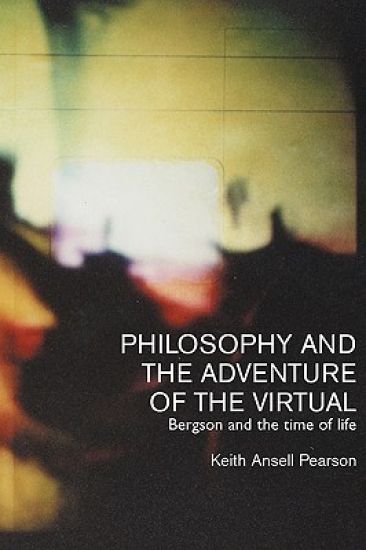
With the development of new technologies and the Internet, the notion of the virtual has grown increasingly important. In this lucid collection of essays, Pearson bridges the continental-analytic divide in philosophy, bringing the virtual to centre stage and arguing its importance for re-thinking such central philosophical questions as time and life. Drawing on philosophers from Bergson, Kant and Nietzsche to Proust, Russell, Dennett and Badiou, Pearson examines the limits of continuity, explores relativity, and offers a concept of creative evolution.
With the development of new technologies and the Internet, the notion of the virtual has grown increasingly important. In this lucid collection of essays, Pearson bridges the continental-analytic divide in philosophy, bringing the virtual to centre stage and arguing its importance for re-thinking such central philosophical questions as time and life. Drawing on philosophers from Bergson, Kant and Nietzsche to Proust, Russell, Dennett and Badiou, Pearson examines the limits of continuity, explores relativity, and offers a concept of creative evolution.
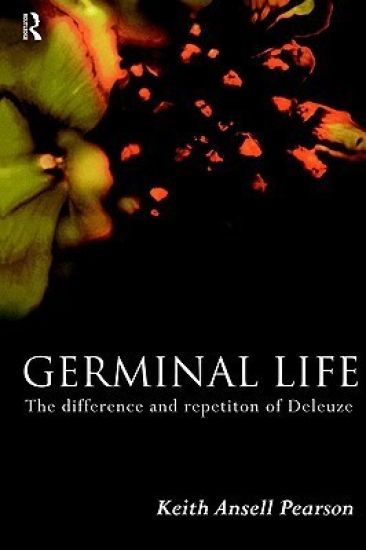
Germinal Life is the sequel to the highly successful Viroid Life. Where Viroid Life provided a compelling reading of Nietzsche's philosophy of the human, Germinal Life is an original and groundbreaking analysis of little known and difficult theoretical aspects of the work of French philosopher Gilles Deleuze.In particular, Keith Ansell Pearson provides fresh and insightful readings of Deleuze's work on Bergson and Deleuze's most famous texts Difference and Repetition and A Thousand Plateaus. Germinal Life also provides new insights into Deleuze's relation to some of the most original thinkers of modernity, from Darwin to Freud and Nietzsche, and explores the connections between Deleuze and more recent thinkers such as Adorno and Merleau-Ponty.
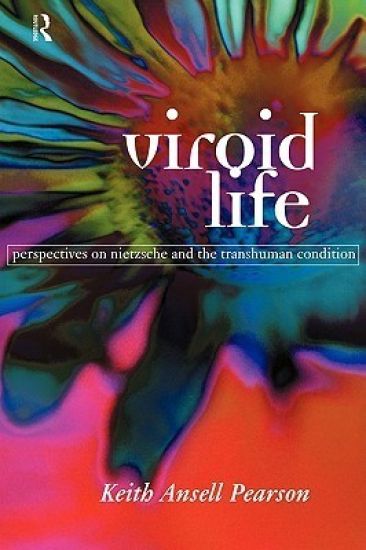
Nietzsche's vision of the 'overman' continues to haunt the postmodern imagination. His call that 'man is something that must be overcome' can no longer be seen as simple rhetoric. Our experiences of the hybrid realities of artificial life have made the 'transhuman' a figure that looks over us all. Inspired by this vision, Keith Ansell Pearson sets out to examine if evolution is 'out of control' and machines are taking over.In a series of six fascinating perspectives, he links Nietzsche's thought with the issues at stake in contemporary conceptions of evolution from the biological to the technological. Viroid Life; Perspectives on Nietzsche and the Transhuman Condition considers the hybrid, 'inhuman' character of our future with the aid of Nietzsche's philosophy. Keith Ansell Pearson contrasts Nietzsche and Darwin before introducing the more recent figures such as Giles Deleuze and Guy Debord to sketch a new thinking of technics and machines and stress the ambiguous character of our 'machine enslavement'.
Nietzsche's vision of the 'overman' continues to haunt the postmodern imagination. His call that 'man is something that must be overcome' can no longer be seen as simple rhetoric. Our experiences of the hybrid realities of artificial life have made the 'transhuman' a figure that looks over us all. Inspired by this vision, Keith Ansell Pearson sets out to examine if evolution is 'out of control' and machines are taking over.In a series of six fascinating perspectives, he links Nietzsche's thought with the issues at stake in contemporary conceptions of evolution from the biological to the technological. Viroid Life; Perspectives on Nietzsche and the Transhuman Condition considers the hybrid, 'inhuman' character of our future with the aid of Nietzsche's philosophy. Keith Ansell Pearson contrasts Nietzsche and Darwin before introducing the more recent figures such as Giles Deleuze and Guy Debord to sketch a new thinking of technics and machines and stress the ambiguous character of our 'machine enslavement'.
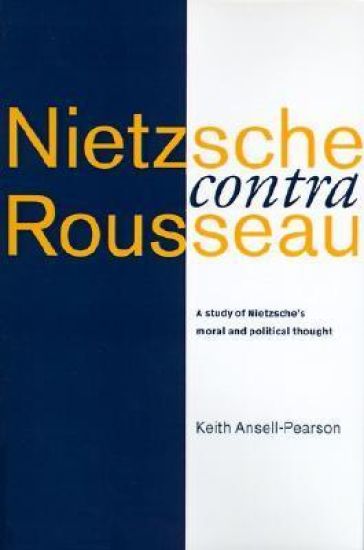
Keith Ansell-Pearson’s book is an important and very welcome contribution to a neglected area of research: Nietzsche’s political thought. Nietzsche is widely regarded as a significant moral philosopher, but his political thinking has often been dismissed as either impossibly individualistic or dangerously totalitarian. Nietzsche contra Rousseau takes a serious look at Nietzsche as political thinker and relates his political ideas to the dominant traditions of modern political thought. In particular, the nature of Nietzsche’s dialogue with the philosophy of Jean-Jacques Rousseau is examined, in order to demonstrate Rousseau’s crucial role in Nietzsche’s understanding of modernity and its discontents.
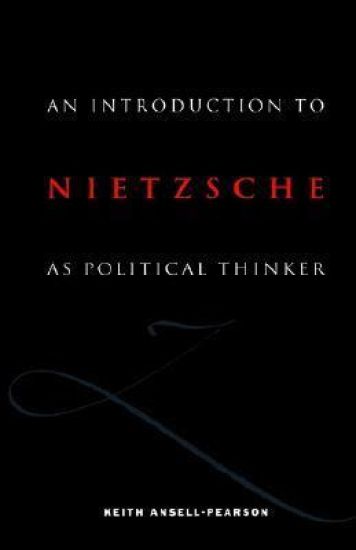
This is a lively and engaging introduction to the contentious topic of Nietzsche’s political thought. It traces the development of Nietzsche’s thinking on politics from his earliest writings to the mature work in which he advocates aristocratic radicalism as opposed to ‘petty’ European nationalism. The key ideas of the will to power, eternal return and the overman are discussed and all Nietzsche’s major works analysed in detail, such as Beyond Good and Evil and The Genealogy of Morals, within the context of the concerns of modern political theory. The book concludes with an assessment of Nietzsche’s enduring relevance and of the insights afforded by contemporary liberal and feminist readings. This textbook will be essential for all students of Nietzsche and of the history of political ideas. It includes a chronology of Nietzsche’s life and works and a guide to further reading.