Kirjojen hintavertailu. Mukana 12 657 676 kirjaa ja 12 kauppaa.

Kirjailija

Keith Ewing

Kirjat ja teokset yhdessä paikassa: 7 kirjaa, julkaisuja vuosilta 2000-2020, suosituimpien joukossa The Struggle for Civil Liberties. Vertaile teosten hintoja ja tarkista saatavuus suomalaisista kirjakaupoista.

7 kirjaa

Kirjojen julkaisuhaarukka 2000-2020.

MI5, the Cold War, and the Rule of Law

MI5, the Cold War, and the Rule of Law

Keith Ewing; Joan Mahoney; Andrew Moretta

Oxford University Press
2020
sidottu
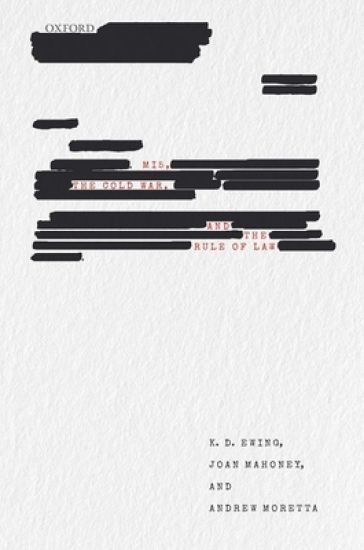
This book explores the powers, activities, and accountability of MI5 from the end of the Second World War to 1964. It argues that MI5 acted with neither statutory authority nor statutory powers, and with no obvious forms of statutory accountability. It was established as a counter-espionage agency, yet was beset by espionage scandals on a frequency that suggested if not high levels of incompetence, then high levels of distraction and the squandering of resources. The book addresses the evolution of MI5's mandate after the Second World War which set out its role and functions, and to a limited extent the lines of accountability, the surveillance targets of MI5 and the surveillance methods that it used for this purpose, with a focus in two chapters on MPs and lawyers respectively; the purposes for which this information was used, principally to exclude people from certain forms of employment; and the accountability of MI5 or the lack thereof for the way in which it discharged its responsibilities under the mandate. As lawyers the authors' concern is to consider these questions within the context of the rule of law, one of the core principles of the British constitution, the values of which it was the duty of the Security Service to uphold. Based on extensive archival research, it suggests that MI5 operated without legal authority or exceeded the legal authority it did have.
Labour Law

Labour Law

Hugh Collins; Keith Ewing; Aileen McColgan

Cambridge University Press
2019
sidottu
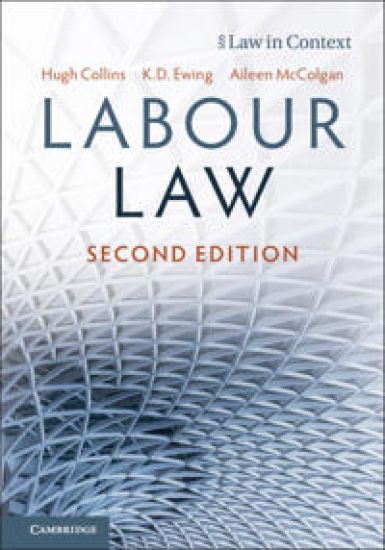
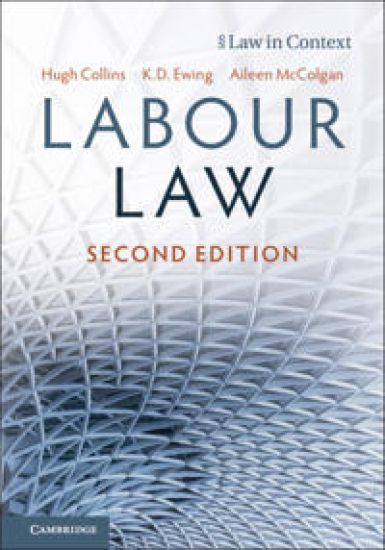
Labour Law offers a comprehensive and critical account of the subject by a team of prominent labour lawyers, and includes both collective labour rights and individual employment rights. By placing the law in its social, economic and political contexts, and showing how the law works in practice through case-studies, students will acquire not only a good knowledge of the law but also an appreciation of its importance and the complexity of the issues. Fully updated with recent developments in the field, the text's clear structure, logical chapter organisation, and uncluttered text design combine to make it a truly accessible way into the subject. Suitable for undergraduates and postgraduates studying UK Labour and Employment law, this book is a must-read for those wishing to excel in the field.
Labour Law

Labour Law

Hugh Collins; Keith Ewing; Aileen McColgan

Cambridge University Press
2019
pokkari
Labour Law offers a comprehensive and critical account of the subject by a team of prominent labour lawyers, and includes both collective labour rights and individual employment rights. By placing the law in its social, economic and political contexts, and showing how the law works in practice through case-studies, students will acquire not only a good knowledge of the law but also an appreciation of its importance and the complexity of the issues. Fully updated with recent developments in the field, the text's clear structure, logical chapter organisation, and uncluttered text design combine to make it a truly accessible way into the subject. Suitable for undergraduates and postgraduates studying UK Labour and Employment law, this book is a must-read for those wishing to excel in the field.
Bonfire of the Liberties

Bonfire of the Liberties

Keith Ewing

Oxford University Press
2010
sidottu
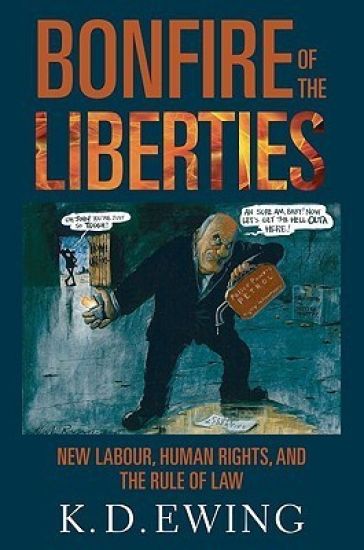
This provocative book confronts the corrosion of civil liberties under successive New Labour governments since 1997. It argues that the last decade has seen a wholesale failure of constitutional principle and exposed the futility of depending on legal rights to restrict the power of executive government. It considers the steps necessary to prevent the continued decline of political standards, arguing that only through rebalancing political power can civil liberties be adequately protected. Relying on extensive new research of inaccessible sources, the book examines the major battlegrounds over civil liberties under New Labour, including the growth and abuse of police power, state surveillance and counter-terrorist measures. It unfolds a compelling narrative of the major battles fought before Parliament and in the courts, and attacks the failure of the political and legal systems to offer protection to those suffering abuses of their civil liberty at the hands of an aggressive Executive. In doing so, it offers a definitive account of the struggle for civil liberty in modern Britain, and a controversial argument for the reforms necessary to contain executive power.
Bonfire of the Liberties

Bonfire of the Liberties

Keith Ewing

Oxford University Press
2010
nidottu
This provocative book confronts the corrosion of civil liberties under successive New Labour governments since 1997. It argues that the last decade has seen a wholesale failure of constitutional principle and exposed the futility of depending on legal rights to restrict the power of executive government. It considers the steps necessary to prevent the continued decline of political standards, arguing that only through rebalancing political power can civil liberties be adequately protected. Relying on extensive new research of inaccessible sources, the book examines the major battlegrounds over civil liberties under New Labour, including the growth and abuse of police power, state surveillance and counter-terrorist measures. It unfolds a compelling narrative of the major battles fought before Parliament and in the courts, and attacks the failure of the political and legal systems to offer protection to those suffering abuses of their civil liberty at the hands of an aggressive Executive. In doing so, it offers a definitive account of the struggle for civil liberty in modern Britain, and a controversial argument for the reforms necessary to contain executive power.
The Struggle for Civil Liberties

The Struggle for Civil Liberties

Keith Ewing; Conor Anthony Gearty

Oxford University Press
2001
nidottu
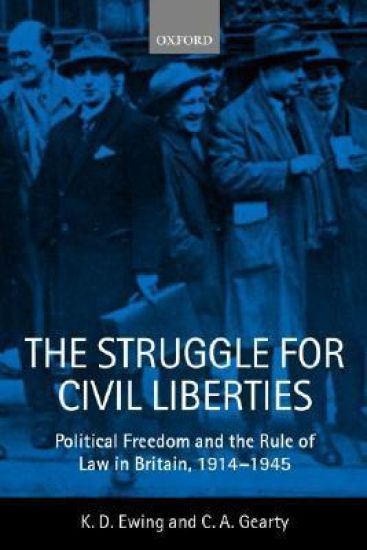
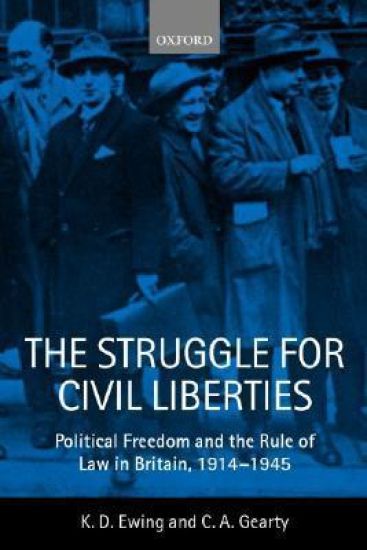
It is widely believed that there is a golden age in which political freedom in Britain was protected by the rule of law, and by judges developing the common law in favour of individual liberty. In an uncompromising and withering account based on a wide range of official and unofficial sources, this path-breaking study by two of the country's leading civil liberties lawyers exposes the mythical nature of much of this traditional learning. The Struggle for Civil Liberties: Political Freedom and the Rule of law in Britain, 1914-1945 traces the hostile response of the executive and judicial branches of government to the various groups and individuals who confronted the power of the State in the first half of the twentieth century: the wartime peace movements, the Communist Party of Great Britain, the striking trade unionists in 1926, the hunger marches, and the Irish Nationalists. In addressing these issues, the study has a loud contemporary resonance, by placing in a new and alarming historical context the struggles for civil liberties that have been and are being fought by radical groups in contemporary British Society, and during the Thatcher decade in particular. This book will change forever the way in which open-minded public lawyers think about their subject, and will require a fundamental re-examination of the foundations of the discipline.
The Struggle for Civil Liberties

The Struggle for Civil Liberties

Keith Ewing; Conor Anthony Gearty

Clarendon Press
2000
sidottu
It is widely believed that there was a golden age in which political freedom in Britain was protected by the rule of law, and by judges developing the common law in favour of individual liberty. In an uncompromising and withering account based on a wide range of official and unofficial sources, this path-breaking study by two of the country's leading civil liberties lawyers exposes the mythical nature of much of this traditional learning. The Struggle for Civil Liberties: Political Freedom and the Rule of Law in Britain, 1914-1945 traces the hostile response of the executive and judicial branches of government to the various groups and individuals who confronted the power of the State in the first half of the twentieth century: the wartime peace movements, the Communist Party of Great Britain, the striking trade unionists in 1926, the hunger marches, and the Irish Nationalists. In addressing these issues, the study has a loud contemporary resonance, by placing in a new and alarming historical context the struggles for civil liberties that have been and are being fought by radical groups in contemporary British Society, and during the Thatcher decade in particular. This book will change forever the way in which open-minded public lawyers think about their subject, and will require a fundamental re-examination of the foundations of the discipline.