Kirjojen hintavertailu. Mukana 12 595 353 kirjaa ja 12 kauppaa.

Kirjailija

Keith F. Carter

Kirjat ja teokset yhdessä paikassa: 4 kirjaa, julkaisuja vuosilta 2021-2025, suosituimpien joukossa Bridging the Academia Industry Divide. Vertaile teosten hintoja ja tarkista saatavuus suomalaisista kirjakaupoista.

4 kirjaa

Kirjojen julkaisuhaarukka 2021-2025.

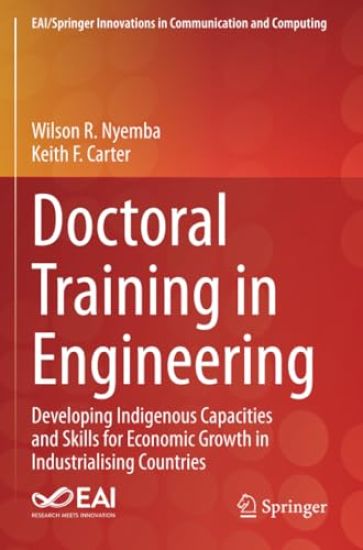
Doctoral Training in Engineering

Doctoral Training in Engineering

Wilson R. Nyemba; Keith F. Carter

Springer International Publishing AG
2025
nidottu
The book provides a comprehensive analysis of Engineering Education in industrialising countries, with Southern Africa as the case study, benchmarked on institutions from the industrialised world, with UK institutions as the reference. This was motivated by the perennial shortage of engineers and engineering skills to drive industry in Southern Africa, compounded by the mismatch of skills between those produced by tertiary institutions and those required by industry. This book focuses on the insufficiencies in training, through addressing the gap where the majority of engineering academics’ qualifications at MSc/MEng level fall short of the internationally acceptable PhD/DEng/DTech. In order to address such insufficiencies, the book proposes and advocates for reskilling and doctoral training of engineering academics through the proposed and established DTCs within the region. The book is targeted at graduate students, engineering academics, researchers, university administrators, foreign aid agencies, captains of industry and policy-makers in governments. To all these readers, the book offers:
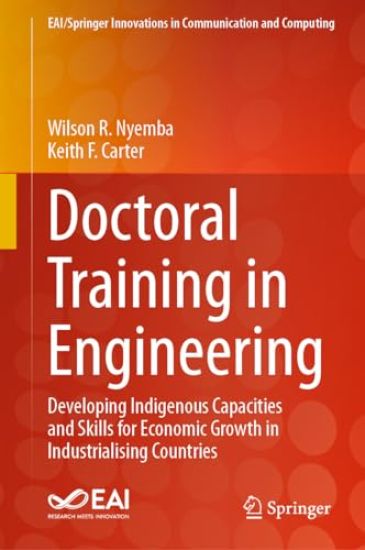
Doctoral Training in Engineering

Doctoral Training in Engineering

Wilson R. Nyemba; Keith F. Carter

Springer International Publishing AG
2024
sidottu
The book provides a comprehensive analysis of Engineering Education in industrialising countries, with Southern Africa as the case study, benchmarked on institutions from the industrialised world, with UK institutions as the reference. This was motivated by the perennial shortage of engineers and engineering skills to drive industry in Southern Africa, compounded by the mismatch of skills between those produced by tertiary institutions and those required by industry. This book focuses on the insufficiencies in training, through addressing the gap where the majority of engineering academics’ qualifications at MSc/MEng level fall short of the internationally acceptable PhD/DEng/DTech. In order to address such insufficiencies, the book proposes and advocates for reskilling and doctoral training of engineering academics through the proposed and established DTCs within the region. The book is targeted at graduate students, engineering academics, researchers, university administrators, foreign aid agencies, captains of industry and policy-makers in governments. To all these readers, the book offers:
Bridging the Academia Industry Divide

Bridging the Academia Industry Divide

Wilson R. Nyemba; Charles Mbohwa; Keith F. Carter

Springer Nature Switzerland AG
2022
nidottu
This book is the result of years of research following a realization of the mismatch of engineering skills produced by universities and those that industry required, based on the situation in Sub-Saharan Africa, equally applicable to other regions in Africa and indeed worldwide. The book is meant to assist engineering academics and engineers in industry to build capacity and cope with the dynamic trends in technology brought on by the 4th Industrial Revolution and to prepare for the 5th Industrial Revolution, an era predicted to be dominated by critical and system thinkers with creative and innovative skills as basic necessities. The book is also useful for policy-making researchers in academia, industrial and public sector researchers, and implementers in governments that provide required funding for the development of human resources and skills. The book primarily consists of the novel research and innovation approaches of modelling and building systems thinking sub-models which were ultimately integrated into the Universal Systems Thinking (UST) model aimed at improving the quality of engineers and engineering practice. The initiatives in this book include strategies for bridging the gap between industry and academia through systems thinking research. The book provides information on how to model, simulate, adjust and implement integrated systems thinking approaches to engineering education and training for capacity building and sustainability. The book also covers approaches to address research gaps and mismatch of skills while capitalizing on the successes of several projects carried out and supported by the Royal Academy of Engineering over the years.
Bridging the Academia Industry Divide

Bridging the Academia Industry Divide

Wilson R. Nyemba; Charles Mbohwa; Keith F. Carter

Springer Nature Switzerland AG
2021
sidottu
This book is the result of years of research following a realization of the mismatch of engineering skills produced by universities and those that industry required, based on the situation in Sub-Saharan Africa, equally applicable to other regions in Africa and indeed worldwide. The book is meant to assist engineering academics and engineers in industry to build capacity and cope with the dynamic trends in technology brought on by the 4th Industrial Revolution and to prepare for the 5th Industrial Revolution, an era predicted to be dominated by critical and system thinkers with creative and innovative skills as basic necessities. The book is also useful for policy-making researchers in academia, industrial and public sector researchers, and implementers in governments that provide required funding for the development of human resources and skills. The book primarily consists of the novel research and innovation approaches of modelling and building systems thinking sub-models which were ultimately integrated into the Universal Systems Thinking (UST) model aimed at improving the quality of engineers and engineering practice. The initiatives in this book include strategies for bridging the gap between industry and academia through systems thinking research. The book provides information on how to model, simulate, adjust and implement integrated systems thinking approaches to engineering education and training for capacity building and sustainability. The book also covers approaches to address research gaps and mismatch of skills while capitalizing on the successes of several projects carried out and supported by the Royal Academy of Engineering over the years.