Kirjojen hintavertailu. Mukana 12 390 323 kirjaa ja 12 kauppaa.

Kirjailija

Keith Grint

Kirjat ja teokset yhdessä paikassa: 18 kirjaa, julkaisuja vuosilta 1995-2024, suosituimpien joukossa A Cartography of Resistance. Vertaile teosten hintoja ja tarkista saatavuus suomalaisista kirjakaupoista.

18 kirjaa

Kirjojen julkaisuhaarukka 1995-2024.

A Cartography of Resistance

A Cartography of Resistance

Keith Grint

Oxford University Press
2024
nidottu
Resistance is universal, but why does it occur, and fail or succeed? Resistance is often regarded in traditional management books as a problem to be overcome because it is seen as short-sighted or self-interested. Grint suggests, however, that resistance is not necessarily right or wrong. From resistance to the Roman Empire, to slavery, to the Nazis, to racism, to the state and capital, to patriarchy, and to imperialism, this book ranges across time and place to explain the success or failure of resistance. While many contemporary approaches focus on leadership as the explanatory variable, A Cartography of Resistance expands the approach to include management and command of resistance movements - and of their opponents. Many of the case studies explore the failures, as well as the successes, of resistance and the book suggests that even the failures reveal a fundamental truth about the human condition: just because the situation looks bleak for those suffering from oppression does not mean they surrendered meekly. Rather many seemed to adopt the same attitude that led Sisyphus to keep rolling the boulder up the hill: they were determined not to let their situation define or defeat them.
A Cartography of Resistance

A Cartography of Resistance

Keith Grint

Oxford University Press
2024
sidottu
Resistance is universal, but why does it occur, and fail or succeed? Resistance is often regarded in traditional management books as a problem to be overcome because it is seen as short-sighted or self-interested. Grint suggests, however, that resistance is not necessarily right or wrong. From resistance to the Roman Empire, to slavery, to the Nazis, to racism, to the state and capital, to patriarchy, and to imperialism, this book ranges across time and place to explain the success or failure of resistance. While many contemporary approaches focus on leadership as the explanatory variable, A Cartography of Resistance expands the approach to include management and command of resistance movements - and of their opponents. Many of the case studies explore the failures, as well as the successes, of resistance and the book suggests that even the failures reveal a fundamental truth about the human condition: just because the situation looks bleak for those suffering from oppression does not mean they surrendered meekly. Rather many seemed to adopt the same attitude that led Sisyphus to keep rolling the boulder up the hill: they were determined not to let their situation define or defeat them.
Mutiny and Leadership

Mutiny and Leadership

Keith Grint

Oxford University Press
2024
nidottu
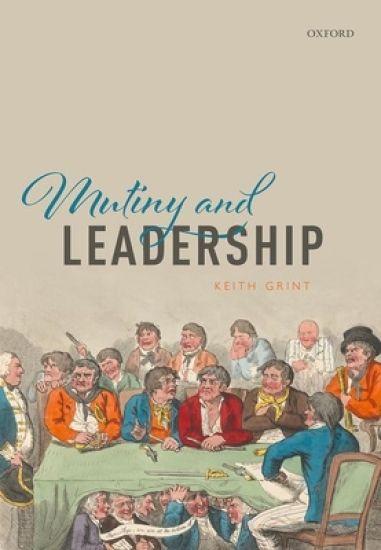
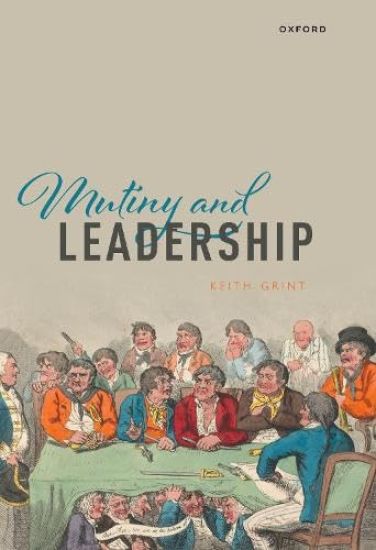
Whenever leadership emerges within a group, there will be resistance to that leadership. Discontent may manifest in a number of ways, and action will always be determined by factors such as resource, numbers, time, space, and the legitimacy of the resistance. What, then, turns discontent into mutiny? Mutiny is often associated with the occasional mis-leadership of the masses by politically inspired hotheads, or a spontaneous and unusually romantic gesture of defiance against a uniquely overbearing military superior. In reality it is seldom either and usually has far more mundane origins, not in the absolute poverty of the subordinates but in the relative poverty of the relationships between leaders and the led in a military situation. The roots of mutiny lie in the leadership skills of a small number of leaders, and what transforms that into a constructive dialogue, or a catastrophic disaster, depends on how the leaders of both sides mobilize their supporters and their networks. Using contemporary leadership theory to cast a critical light on an array of mutinies throughout history, this book suggests we consider mutiny as a permanent possibility that is further encouraged or discouraged in some contexts. From mutinies in ancient Roman and Greek armies to those that toppled the German and Russian states and forced governments to face their own disastrous policies, and changed them forever, this book covers an array of cases across land, sea, and air that still pose a threat to military establishments today. The critical theoretical line also puts into sharp relief the assumption that oftentimes people have little choice in how they respond to circumstances not of their own making. If mutineers could choose to resist what they saw as tyranny, then so can we.
Leadership

Leadership

Keith Grint; Owain Smolovic Jones

BLOOMSBURY PUBLISHING PLC
2022
sidottu
Leadership: Limits and Possibilities offers a critical discussion of leadership that draws upon a wide range of approaches, material and examples to demonstrate the complex and challenging role of leadership and through this debate suggests possible ways to improve as a leader. It is structured around 5 key aspects of leadership: person, product, position, process and purpose, providing a useful organizing framework. It combines theoretical discussions with lively examples to bring the subject alive.
Leadership

Leadership

Keith Grint; Owain Smolovic Jones

BLOOMSBURY PUBLISHING PLC
2022
nidottu
Leadership: Limits and Possibilities offers a critical discussion of leadership that draws upon a wide range of approaches, material and examples to demonstrate the complex and challenging role of leadership and through this debate suggests possible ways to improve as a leader. It is structured around 5 key aspects of leadership: person, product, position, process and purpose, providing a useful organizing framework. It combines theoretical discussions with lively examples to bring the subject alive.
Kort om ledarskap

Kort om ledarskap

Keith Grint

Studentlitteratur AB
2022
nidottu
Vad är ledarskap? Föds man till ledare eller är det något man blir? Hur leder ledare? Hur skiljer sig ledarskap från styrning och att föra befäl? Dessa och andra frågor begrundar Keith Grint i den här korta introduktionen till ledarskap, som sporrar läsaren att ompröva sin syn på vad ledarskap är. Grint undersöker hur ledarskap har förändrats över tid och utforskar synen på ledarskap i våra dagar och de olika former som ledarskap tar sig.”Utifrån aktuella tankegångar inom ledarskapsforskningen etablerar Grint ett reflexivt och användbart sätt att resonera kring ledarskap både som fenomen och som praktik.”Johan Alvehus, professor i tjänstevetenskap, Lunds universitet
Mutiny and Leadership

Mutiny and Leadership

Keith Grint

Oxford University Press
2021
sidottu
Whenever leadership emerges within a group, there will be resistance to that leadership. Discontent may manifest in a number of ways, and action will always be determined by factors such as resource, numbers, time, space, and the legitimacy of the resistance. What, then, turns discontent into mutiny? Mutiny is often associated with the occasional mis-leadership of the masses by politically inspired hotheads, or a spontaneous and unusually romantic gesture of defiance against a uniquely overbearing military superior. In reality it is seldom either and usually has far more mundane origins, not in the absolute poverty of the subordinates but in the relative poverty of the relationships between leaders and the led in a military situation. The roots of mutiny lie in the leadership skills of a small number of leaders, and what transforms that into a constructive dialogue, or a catastrophic disaster, depends on how the leaders of both sides mobilise their supporters and their networks. Using contemporary leadership theory to cast a critical light on an array of mutinies throughout history, this book suggests we consider mutiny as a permanent possibility that is further encouraged or discouraged in some contexts. From mutinies in ancient Roman and Greek armies to those that toppled the German and Russian states and forced governments to face their own disastrous policies and changed them forever, this book covers an array of cases across land, sea, and air that still pose a threat to military establishments today. The critical theoretical line also puts into sharp relief the assumption that oftentimes people have little choice in how they respond to circumstances not of their own making. If mutineers could choose to resist what they saw as tyranny, then so can we.
The Sociology of Work

The Sociology of Work

Keith Grint; Darren Nixon

Polity Press
2015
sidottu
This leading, authoritative textbook has been carefully and substantially revised to provide the indispensable foundational resource for the sociology of work. The fourth edition has been transformed to combine unrivalled explanations of classic theories with the most cutting-edge research, data and debates.Keith Grint and Darren Nixon examine different sociological approaches to work, emphasizing the links between social processes, institutions of employment and their social and domestic contexts. The fourth edition includes: a new chapter on work and identity, exploring issues such as the rise of consumption and the cultural economy, work–life balance, the social meaning of work and unemployment; a fully rewritten chapter that comprehensively reviews trends in the contemporary service economy, particularly the rise of emotional and aesthetic forms of labour and the polarization of employment in the knowledge or informational economy; a new concluding chapter that examines the structure of the global economy, taking in debates around globalization, precarious labour and public sector reforms and unemployment in the wake of the financial crisis and austerity; updated bibliographic references and data throughout, with particularly significant revisions to the sections on gender and work, ethnicity and work, and work technologies. The book has been designed to support readers’ understanding of, and to develop their critical approach to, the field of ‘work’, with a range of empirical evidence and examples helping to reveal the complex picture of work–society relations. Written in a lively and accessible style, the book also provides suggestions for further reading and seminar discussion questions. This fourth edition will continue to be essential reading for students of the sociology of work, industrial sociology, organizational behaviour and industrial relations. Students studying business and management courses with a sociological component will also find the book invaluable.
The Sociology of Work

The Sociology of Work

Keith Grint; Darren Nixon

Polity Press
2015
nidottu
This leading, authoritative textbook has been carefully and substantially revised to provide the indispensable foundational resource for the sociology of work. The fourth edition has been transformed to combine unrivalled explanations of classic theories with the most cutting-edge research, data and debates.Keith Grint and Darren Nixon examine different sociological approaches to work, emphasizing the links between social processes, institutions of employment and their social and domestic contexts. The fourth edition includes: a new chapter on work and identity, exploring issues such as the rise of consumption and the cultural economy, work–life balance, the social meaning of work and unemployment; a fully rewritten chapter that comprehensively reviews trends in the contemporary service economy, particularly the rise of emotional and aesthetic forms of labour and the polarization of employment in the knowledge or informational economy; a new concluding chapter that examines the structure of the global economy, taking in debates around globalization, precarious labour and public sector reforms and unemployment in the wake of the financial crisis and austerity; updated bibliographic references and data throughout, with particularly significant revisions to the sections on gender and work, ethnicity and work, and work technologies. The book has been designed to support readers’ understanding of, and to develop their critical approach to, the field of ‘work’, with a range of empirical evidence and examples helping to reveal the complex picture of work–society relations. Written in a lively and accessible style, the book also provides suggestions for further reading and seminar discussion questions. This fourth edition will continue to be essential reading for students of the sociology of work, industrial sociology, organizational behaviour and industrial relations. Students studying business and management courses with a sociological component will also find the book invaluable.
Leadership

Leadership

Keith Grint

Oxford University Press
2010
nidottu
The subject of leadership raises many questions: What is it? How does it differ from management and command? Are leaders born or bred? Who are the leaders? Do we actually need leaders? Inevitably, the answers are provocative and partial; leadership is a hugely important topic of debate. There are constant calls for 'greater' or 'stronger' leadership, but what this actually means, how we can evaluate it, and why it's important are not very clear. In this Very Short Introduction Keith Grint prompts the reader to rethink their understanding of what leadership is. He examines the way leadership has evolved from its earliest manifestations in ancient societies, highlighting the beginnings of leadership writings through Plato, Sun Tzu, Machiavelli and others, to consider the role of the social, economic, and political context undermining particular modes of leadership. Exploring the idea that leaders cannot exist without followers, and recognising that we all have diverse experiences and assumptions of leadership, Grint looks at the practice of management, its history, future, and influence on all aspects of society. ABOUT THE SERIES: The Very Short Introductions series from Oxford University Press contains hundreds of titles in almost every subject area. These pocket-sized books are the perfect way to get ahead in a new subject quickly. Our expert authors combine facts, analysis, perspective, new ideas, and enthusiasm to make interesting and challenging topics highly readable.
The Arts of Leadership

The Arts of Leadership

Keith Grint

Oxford University Press
2001
nidottu
An investigation into how we can best understand leadership, using historical case studies and essay portraits. Are leaders born or made? Do they have particular traits or are we all potential leaders? Do the requirements for leadership change over time or are there timeless patterns?
Work and Society

Work and Society

Keith Grint

Polity Press
2000
nidottu
This book provides a lively and accessible introduction to key new areas in the contemporary study of work. While traditional accounts of work have tended to focus upon male manual workers in factories, recent developments have shifted the notions of what counts as work, what work is, and where it takes place. This topical book takes up these developments, broadening our understanding of work. Complementing the second edition of Grint's successful Sociology of Work textbook, this book is divided into five parts, each of which explores recent developments in the theory and practice of work. The wide range of substantive areas covered includes domestic work, globalization, gender, resistance, child labour and labour relations. The theoretical approaches incorporate theories of technology, time, identity, change and discipline. The authors include some of the leading international writers in their fields today, such as Stephen Barley, John Hassard, Bruno Latour and Judy Wajcman, plus some of the rising stars of the future. Each part has an introduction by the editor which contextualizes the selections, and there is a general introduction to help students navigate the text. Work and Society: A Reader will be essential reading for anyone taking courses in the sociology of work, organizational behaviour, business studies, studying MBAs or wishing to understand the contemporary world of work.
Work and Society

Work and Society

Keith Grint

Polity Press
2000
sidottu
This book provides a lively and accessible introduction to key new areas in the contemporary study of work. While traditional accounts of work have tended to focus upon male manual workers in factories, recent developments have shifted the notions of what counts as work, what work is, and where it takes place. This topical book takes up these developments, broadening our understanding of work. Complementing the second edition of Grint's successful Sociology of Work textbook, this book is divided into five parts, each of which explores recent developments in the theory and practice of work. The wide range of substantive areas covered includes domestic work, globalization, gender, resistance, child labour and labour relations. The theoretical approaches incorporate theories of technology, time, identity, change and discipline. The authors include some of the leading international writers in their fields today, such as Stephen Barley, John Hassard, Bruno Latour and Judy Wajcman, plus some of the rising stars of the future. Each part has an introduction by the editor which contextualizes the selections, and there is a general introduction to help students navigate the text. Work and Society: A Reader will be essential reading for anyone taking courses in the sociology of work, organizational behaviour, business studies, studying MBAs or wishing to understand the contemporary world of work.
The Arts of Leadership

The Arts of Leadership

Keith Grint

Oxford University Press
2000
sidottu
Leadership is still much discussed, studied, and sought after, even though we now live in supposedly more democratic times with flatter organizations and empowered employees. But how can we best understand leadership? Are leaders born or made? Do they have particular traits or are we all potential leaders? Do the requirements for leadership change over time or are there timeless patterns? Do traditional approaches help us to pick and develop leaders or are there alternative ways that advance our understanding? In this book, Keith Grint–who has been studying and teaching leadership for over a decade–investigates the notion of leadership in a series of historical case studies and rich essay portraits of some of the most famous, and infamous, leaders (e.g. Florence Nightingale, Richard Branson, Horatio Nelson, Martin Luther King, Henry Ford, etc.). The scenarios are drawn from right across the spectrum to include business, politics, society, and the military. The first part of the book considers four sets of parallel cases where leadership appears to be a major explanation of success and failure. The second part takes the four critical issues arising from these parallel cases (identity, strategic vision, organizational tactics, and persuasive communication) and explores them in detail. One main reason we have such difficulty in explaining and enhancing leadership, Grint argues, is because we often adopt perspectives and models that obscure rather than illuminate the issues involved. The reliance upon traditional scientific analysis has not provided the anticipated advances in our understanding because leadership is more fruitfully considered as an art, or more exactly an array of arts, rather than as a science. Grint's rich and meticulously-researched profiles combine to reveal these Arts of Leadership.
Fuzzy Management

Fuzzy Management

Keith Grint

Oxford University Press
1997
nidottu
Fuzzy Management is designed for thsoe who find current management orthodoxies inadequate, who are interested in alternative ideas and how they might be applied to management practice, but are not enthralled by the esoteric world of theoretical books about theory. This book offers a bridge between the `esoteric' world of theory and the `practical' world of management by exploring and illustrating some current theories (Fuzzy Logic, Actor-Network Theory, Chaos Theory, Constructivism etc.) through discussion of some everyday management issues (Strategic Decision Making, Appraisals, Negotiation, Leadership, Culture, and Motivation). Crisp and concise, it will be a useful guide to all concerned with the relationship between management theory and practice.
Fuzzy Management

Fuzzy Management

Keith Grint

Oxford University Press
1997
sidottu
Fuzzy Management is designed for those who find current management orthodoxies inadequate, who are interested in alternative ideas and how they might be applied to management practice, but are not enthralled by the esoteric world of theoretical books about theory. This book offers a bridge between the 'esoteric world of theory and the practical world of management by exploring and illustrating some current theories (Fuzzy Logic, ActorNetwork Theory, Chaos Theory, Constructivism etc.) through discussion of some everyday management issues (Strategic Decision Making, Appraisals, Negotiation, Leadership, Culture, and Motivation). Crisp and concise, it will be a useful guide to all concerned with the relationship between management theory and practice.
The Machine at Work

The Machine at Work

Keith Grint; Steve Woolgar

JOHN WILEY AND SONS LTD
1997
nidottu
This highly topical book is a concise and accessible account of the relationship between technology and work. Firstly, it reviews and critically assesses a variety of recent approaches to the social and cultural dimensions of technology. Secondly, it examines the implications of these new approaches for existing ideas about the nature of technology and work organization. At the core of much thinking about technology is the assumption that the technical character and capacity of artefacts is given. The enduring image of deus ex machina captures the idea that it is the essential capacity 'within' a technology which, in the end, accounts for the way we organize ourselves, our work and other life experiences. Recent work in the sociology of technology, by contrast, sets out relativist and constructivist accounts of technology, which begin to challenge this central assumption. The Machine at Work includes a reinterpretation of the Luddites; a review of the social processes of development in information technology; a reassessment of theories of the role of technology in work; and an analysis of the common limitations of some constructivist and feminist perspectives on technology. The book argues that only a commitment to a particular conception of constructivism enables the kind of radical rethinking about technology and work relations that is needed. This engaging and informative text will be of interest to students in a range of subject areas - from sociology, organizational theory and behaviour, to industrial relations, management and business studies.
Management

Management

Keith Grint

JOHN WILEY AND SONS LTD
1995
nidottu
Adopting ideas from contemporary sociological theory, the text examines an array of management orthodoxies: from corporate culture to managing change, from language to leadership, from re-engineering to reality, from feminism to fatalism and from upward appraisals to utopian management.