Kirjojen hintavertailu. Mukana 12 595 353 kirjaa ja 12 kauppaa.

Kirjailija

Keith Oatley

Kirjat ja teokset yhdessä paikassa: 15 kirjaa, julkaisuja vuosilta 1992-2025, suosituimpien joukossa Perceptions and Representations. Vertaile teosten hintoja ja tarkista saatavuus suomalaisista kirjakaupoista.

15 kirjaa

Kirjojen julkaisuhaarukka 1992-2025.

Perceptions and Representations

Perceptions and Representations

Keith Oatley

Routledge
2019
nidottu
Originally published in 1978, this study examines the shortcomings of some theoretical approaches to psychological and neurophysiological mechanisms at the time. Keith Oatley illustrates the extent of these shortcomings by showing how inefficient brain researchers – using their present approaches – would be in trying to understand a computer, which is considerably simpler than the human brain. He concludes that we need better theories than those usually espoused in psychology, and goes on to expound a theory of cognitive representation and inference in perception, which began with Helmholtz more than a hundred years ago but which can now be given substance and formal structure in artificial intelligence programs. The author deploys this theory to give an account of some fundamental problems, such as how we see a three-dimensional world, and how the brain copes so well with incomplete sensory data and with damage to its own components.
Action and Consequence

Action and Consequence

Keith Oatley; Jennifer Jenkins

Archway Publishing
2025
pokkari
Why do people like reading and watching detective stories? This book is a detective story, moving to discover an answer to this question. A murder tears a jagged hole in society. A detective discovers this hole and then repairs it, helping us all to live with each other.
Our Minds, Our Selves

Our Minds, Our Selves

Keith Oatley

Princeton University Press
2020
pokkari
An original history of psychology told through the stories of its most important breakthroughs—and the men and women who made themIn Our Minds, Our Selves, distinguished psychologist and writer Keith Oatley provides an engaging, original, and authoritative history of modern psychology told through the stories of its most important breakthroughs and the men and women who made them. The book traverses a fascinating terrain: conscious and unconscious knowledge, brain physiology, emotion, mental development, language, memory, mental illness, creativity, human cooperation, and much more. Biographical sketches illuminate the thinkers behind key insights: historical figures such as Darwin, Piaget, Skinner, and Turing; leading contemporaries such as Michael Tomasello and Tania Singer; and influential people from other fields, including Margaret Mead, Noam Chomsky, and Jane Goodall. Enhancing our understanding of ourselves and others, psychology holds the potential to create a better world. Our Minds, Our Selves tells the story of this most important of sciences in a new and appealing way.
Understanding Emotions, EMEA Edition

Understanding Emotions, EMEA Edition

Dacher Keltner; Keith Oatley; Jennifer M. Jenkins

John Wiley Sons Inc
2019
nidottu
Emotions are an inescapable part of the human experience. They motivate actions and reactions, guide our interpersonal and business relationships, inspire political and societal trends, and influence our sense of self and well-being. Emphasizing the broad practical reach of this field of study, Understanding Emotions draws from neuroscience, psychiatry, biology, genetics, the humanities, economics, and more to provide a strong foundation in core concepts. An easy-to-follow narrative arc encompasses the entire life span, while representative studies provide immediate insight into the real-world implications of important findings. This new Fourth Edition continues to provide clear and concise guidance toward the factors that drive emotion, with new, revised, and expanded discussions that reflect the current state of the field. Detailed coverage of social and anti-social motivations, moral judgment, empathy, psychological disorders, the physiological components of emotion, and many more equip students with the conceptual tools to probe deeper into the material and apply methods and techniques to their own personal lives.
Our Minds, Our Selves

Our Minds, Our Selves

Keith Oatley

PRINCETON UNIVERSITY PRESS
2018
sidottu
An original history of psychology told through the stories of its most important breakthroughs and the people who made themAdvances in psychology have revolutionized our understanding of the human mind. Imaging technology allows researchers to monitor brain activity, letting us see what happens when we perceive, think, and feel. But technology is only part of how ideas about the mind and brain have developed over the past century and a half. In Our Minds, Our Selves, distinguished psychologist and writer Keith Oatley provides an engaging, original, and authoritative history of modern psychology told through the stories of its most important breakthroughs and the men and women who made them.Our Minds, Our Selves traverses a fascinating terrain: forms of conscious and unconscious knowledge; brain physiology; emotion; stages of mental development from infancy to adulthood; language acquisition and use; the nature of memory; mental illness; morality; free will; creativity; the mind at work in art and literature; and, most important, our ability to cooperate with one another. Controversial experiments--such as Stanley Milgram's investigation of our willingness to obey authority and inflict pain and Philip Zimbardo and his colleagues' study of behavior in a simulated prison—are covered in detail. Biographical sketches illuminate the thinkers behind key insights and turning points: historical figures such as Hermann Helmholtz, Charles Darwin, Sigmund Freud, Jean Piaget, B. F. Skinner, and Alan Turing; leading contemporaries such as Geoffrey Hinton, Michael Tomasello, and Tania Singer; and influential people from other fields, including Margaret Mead, Noam Chomsky, Jane Goodall, and Gabrielle Starr.Enhancing our understanding of ourselves and others, psychology holds the potential to create a better world. Our Minds, Our Selves tells the story of this most important of sciences in a new and appealing way.
Perceptions and Representations

Perceptions and Representations

Keith Oatley

Routledge
2017
sidottu
Originally published in 1978, this study examines the shortcomings of some theoretical approaches to psychological and neurophysiological mechanisms at the time. Keith Oatley illustrates the extent of these shortcomings by showing how inefficient brain researchers – using their present approaches – would be in trying to understand a computer, which is considerably simpler than the human brain. He concludes that we need better theories than those usually espoused in psychology, and goes on to expound a theory of cognitive representation and inference in perception, which began with Helmholtz more than a hundred years ago but which can now be given substance and formal structure in artificial intelligence programs. The author deploys this theory to give an account of some fundamental problems, such as how we see a three-dimensional world, and how the brain copes so well with incomplete sensory data and with damage to its own components.
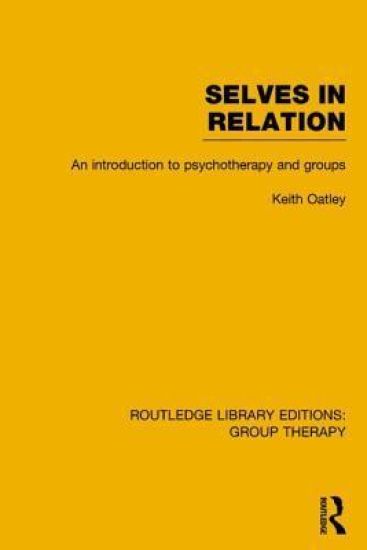
Selves in Relation (RLE: Group Therapy)
Emotional crises and breakdowns are not things going wrong in individuals’ minds: they are disturbances in their relations with themselves and others. In psychotherapy an attempt is made to resolve such crises through a therapeutic relationship with an individual or in a group. First published in 1984, this book introduces the theory of individual and group therapy, and explains some of its principles in practice. Although there had been a rapid development of ideas in the area of psychotherapy at the time, it was only recently before original publication of this book that these had been related to theory. Keith Oatley assesses the influence of cognitive social psychology, psychoanalysis and the existential/phenomenological tradition, and considers the role of emotions, thinking and social interactions in therapeutic transformation. The theory, he argues, must also be related to the research findings on the outcomes of different therapies.This book is for those who study psychotherapy in psychology, psychiatry, counselling and social work – and for anyone who wants to know what psychotherapy was about in the 1980s.
Selves in Relation (RLE: Group Therapy)
Emotional crises and breakdowns are not things going wrong in individuals’ minds: they are disturbances in their relations with themselves and others. In psychotherapy an attempt is made to resolve such crises through a therapeutic relationship with an individual or in a group. First published in 1984, this book introduces the theory of individual and group therapy, and explains some of its principles in practice. Although there had been a rapid development of ideas in the area of psychotherapy at the time, it was only shortly before the original publication of this book that these had been related to theory. Keith Oatley assesses the influence of cognitive social psychology, psychoanalysis and the existential/phenomenological tradition, and considers the role of emotions, thinking and social interactions in therapeutic transformation. The theory, he argues, must also be related to the research findings on the outcomes of different therapies.This book is for those who study psychotherapy in psychology, psychiatry, counselling and social work – and for anyone who wants to know what psychotherapy was about in the 1980s.
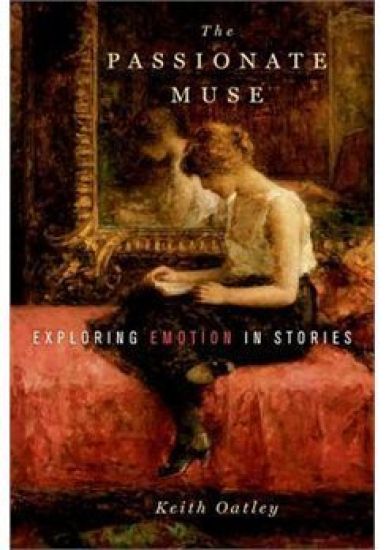
The Passionate Muse

The Passionate Muse

Keith Oatley

Oxford University Press Inc
2012
sidottu
Fiction is based on narratives in which characters act on their intentions and encounter vicissitudes. Readers enjoy entering into the lives of characters, coming to empathize with them as their plans progress or they meet obstacles. Readers enjoy, too, meeting characters with whom they sympathize, and being reminded of emotional episodes in their own lives. Keith Oatley is both a novelist and research psychologist, and so it is not surprising that he has created a hybrid text that alternates between sections of an original short story, One Another, and chapters on the psychology of emotion and fiction. People's enjoyment of stories depends on the emotions they experience as they read, watch, or listen. We human beings are intensely social and it's to imagined social worlds that fiction transports us, enabling us to meet more people and feel for them in many more situations than we could if we lived many lives. In this text, the author explains why people who read a great deal of fiction have better understandings of others than those who tend to read nonfiction. He argues that through fiction, we come to know more about the emotions of others and of ourselves.
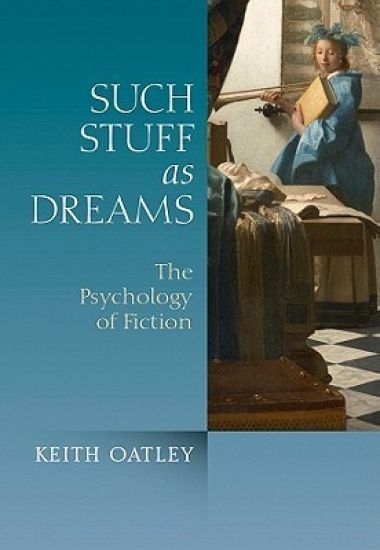
Such Stuff as Dreams

Such Stuff as Dreams

Keith Oatley

John Wiley Sons Inc
2011
nidottu
Such Stuff as Dreams: The Psychology of Fiction explores how fiction works in the brains and imagination of both readers and writers. Demonstrates how reading fiction can contribute to a greater understanding of, and the ability to change, ourselvesInformed by the latest psychological research which focuses on, for example, how identification with fictional characters occurs, and how literature can improve social abilitiesExplores traditional aspects of fiction, including character, plot, setting, and theme, as well as a number of classic techniques, such as metaphor, metonymy, defamiliarization, and cuesIncludes extensive end-notes, which ground the work in psychological studiesFeatures excerpts from fiction which are discussed throughout the text, including works by William Shakespeare, Jane Austen, Kate Chopin, Anton Chekhov, James Baldwin, and others
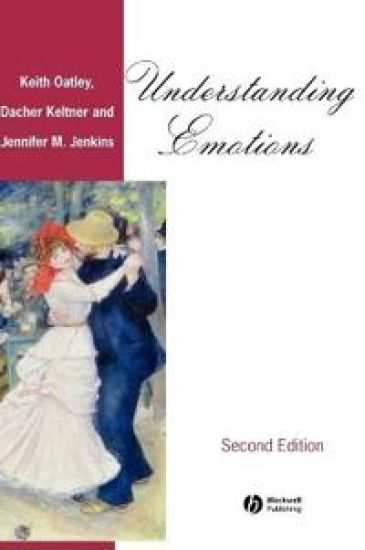
Understanding Emotions

Understanding Emotions

Keith Oatley; Dacher Keltner; Jennifer M. Jenkins

Wiley-Blackwell (an imprint of John Wiley Sons Ltd)
2006
sidottu
Keith Oatley and Jennifer M. Jenkins’s best-selling book on the psychology of emotions is the most highly regarded and engaging text for the emotions course. While retaining its interdisciplinary breadth, historical insights, and engaging format, this new edition adds the expertise of outstanding researcher and dedicated teacher Dacher Keltner. The second edition has been thoroughly updated to reflect the latest research and developments in emotions and includes the following features: Cohesive synthesis of evolutionary and cultural approaches to emotionNew chapters on communication of emotion, bodily changes, and appraisalIncreased emphasis on interpersonal implications of emotions, including studies of newly discovered expressions and systems of communicationNew coverage on moral judgment, individual differences, gene-environment interactions, and positive emotionsNew coverage of subjective well-being and pro-social emotions like gratitude and compassionUpdated references throughout reflect current research and data, including research on affective neuroscienceA new design and pedagogical features include new integrated boxes that depict historical landmarks and historical figures, updated tables, boldfaced terms, and end-of-chapter summaries. An Instructor's Manual with lecture notes and teaching tips is available upon request. Please visit www.blackwellpublishing.com/oatley.
Emotions

Emotions

Keith Oatley

Wiley-Blackwell (an imprint of John Wiley Sons Ltd)
2004
nidottu
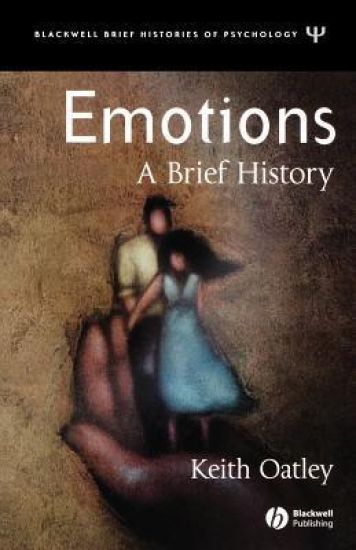
Emotions: A Brief History investigates the history of emotions across cultures as well as the evolutionary history of emotions and of emotional development across an individual’s life span. In clear and accessible language, Keith Oatley examines key topics such as emotional intelligence, emotion and the brain, and emotional disorders. Throughout, he interweaves three themes: the changes that emotions have undergone from the past to the present, the extent to which we are able to control our emotions, and the ways in which emotions help us discern the deeper layers of ourselves and our relationships.
Emotions

Emotions

Keith Oatley

Wiley-Blackwell (an imprint of John Wiley Sons Ltd)
2004
sidottu
Emotions: A Brief History investigates the history of emotions across cultures as well as the evolutionary history of emotions and of emotional development across an individual’s life span. In clear and accessible language, Keith Oatley examines key topics such as emotional intelligence, emotion and the brain, and emotional disorders. Throughout, he interweaves three themes: the changes that emotions have undergone from the past to the present, the extent to which we are able to control our emotions, and the ways in which emotions help us discern the deeper layers of ourselves and our relationships.
Best Laid Schemes

Best Laid Schemes

Keith Oatley

Cambridge University Press
1992
pokkari
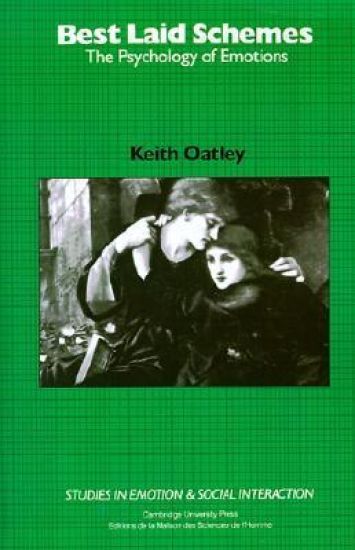
Keith Oatley draws on theories from psychology, philosophy and linguistics, as well as writings from other social sciences, to show how emotions are central to any understanding of human actions and mental life.