Kirjojen hintavertailu. Mukana 12 390 323 kirjaa ja 12 kauppaa.

Kirjailija

Keith Roberts

Kirjat ja teokset yhdessä paikassa: 36 kirjaa, julkaisuja vuosilta 1966-2025, suosituimpien joukossa Keith Roberts SF Gateway Omnibus. Vertaile teosten hintoja ja tarkista saatavuus suomalaisista kirjakaupoista.

36 kirjaa

Kirjojen julkaisuhaarukka 1966-2025.

Keith Roberts SF Gateway Omnibus
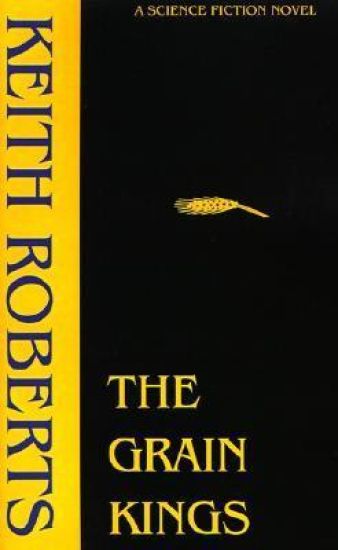
As author and illustrator, Keith Roberts did more than most to define the look of UK science fiction magazines in the 1960s. In addition to his BFSA Award wins, he was nominated for the Hugo, Nebula and Arthur C. Clarke Awards. He is perhaps best known for his seminal alternate history novel, Pavane, but his work covered a broad range of SF's tropes and settings, as can be seen from the titles collected in this omnibus: The Chalk Giants, Kiteworld and The Grain Kings. THE CHALK GIANTS: After the apocalypse the hazardous evolution of mankind continues. And in primeval response to the disaster, humanity's solutions to catastrophe carve the harsh new world in violent patterns of magic and myth, rite and religion. Brave images scar the ancient hills, the clash of swords and the ageless power of sexuality sign-post another, bloodsoaked path to civilisation.KITEWORLD: Powerful churches have long kept their grip on the people with a theology of fear that makes formidable demons out of the poor, weak mutants of the surrounding badlands. To ward off these specters, an elaborate, tradition-encrusted system of kites with hex signs or armed observers fly over the realm. The men of this Kite Corps, performing hazardous duty to sustain a myth, are driven to find a separate peace, to transform, if they can, disillusionment into enlightenment, to move forward from an assumption of guilt to an assumption of responsibility.THE GRAIN KINGS: They call them The Grain Kings. Gigantic mechanical monarchs of the wheat-bearing plains that were once the frozen Alaskan wastes. Whole eco-systems in themselves, they can supply the food so desperately needed by the teeming millions of our overpopulated planet. But even now, as the whole world waits in hungry suspense, the great powers battle for control of the prairies and two competing combine harvesters find they are heading on a course of collision.

Molekularbiologie der Zelle

Molekularbiologie der Zelle

Bruce Alberts; Rebecca Heald; Alexander D. Johnson; David Morgan; Martin Raff; Keith Roberts; Peter Walter

Wiley-VCH Verlag GmbH
2024
sidottu
Die Zelle – das ganze Wissen in einem Buch „Molekularbiologie der Zelle“ ist seit 40 Jahren das führende Lehrbuch der Zellbiologie. Vollständig aktualisiert stellt die Neuauflage das sich rasch weiter-entwickelnde Wissen zum zentralen Gegenstand der Biologie dar – der Zelle. Aufbauend auf den biochemisch-molekularbiologischen Grundlagen der Lebensvorgänge werden Aufbau und Funktion von eukaryotischen Zellen und Geweben, deren Lebenszyklus und die Interaktion mit Pathogenen beschrieben. Mit erstklassiger und bewährter Didaktik führt die siebte Auflage dieses weltweiten Klassikers sowohl in die grundlegenden Konzepte der Zellbiologie als auch in deren faszinierende Anwendungen in Medizin und Biotechnologie ein: durchgehend aktualisiert mit einem Fokus auf Aspekten der Evolution und Biodiversitätneue Unterkapitel zu Modellorganismen, zur DNA-Reparatur und zum humanen Mikrobiomstellt aktuelle Themen verständlich dar, wie biomolekulare Kondensate, korrelative Mikroskopie, Tumorgenomforschung, Coronaviren und mRNA-ImpfstoffeFast 1500 anschauliche Farbabbildungen, die zum großen Teil neu gestaltet wurden21 großformatige Tafeln verdeutlichen komplexe Vorgänge, klassische Experimente und aktuelle Methodenweiterführende Literatur mit wichtigen Originalarbeiten und LehrbüchernGlossar mit mehr als 1100 grundlegenden Begriffen Studierende in den Fächern Molekularbiologie, Genetik, Zellbiologie, Biochemie und Biotechnologie führt dieses Buch vom ersten Semester des Bachelor- bis ins Master-Studium und darüber hinaus. Aus Rezensionen zu früheren englisch- und deutschsprachigen Auflagen „Jede Seite zeugt von der Liebe der Autoren zum exakten Detail, gleichzeitig aber von ihrer Anstrengung, Wissen aus einem schier unüberschaubaren Fachgebiet leicht erfassbar und gut lesbar aufzubereiten. … Der klare, prägnante Stil, die Fülle an informativen Diagram-men und Abbildungen setzen eindrucksvolle Maßstäbe.“ Nature „…Molecular Biology of the Cell gelingt es ausgezeichnet, die Fortschritte [der moleku-laren Zellbiologie] darzustellen. Auch aus der kommenden Generation von Interessenten wird es niemand auch nur einen Moment bedauern, sich dieses Werk zugelegt zu haben.“ Cell „Man spürt, wie sehr es den Autoren daran gelegen ist, ihre eigene Begeisterung für ihr Metier auf den geneigten Leser zu übertragen. … Wer hier einmal eingestiegen ist, wird nur schwerlich wieder herausfinden, denn Biologie live macht süchtig. … Das Buch … gehört auf das Bücherregal jedes Lebenswissenschaftlers …“ BIOspektrum „Gleichgültig, was man gerade sucht: immer wird mehr geboten als erwartet … Beispiel-haft sind nicht nur die verständlichen, prägnanten Texte, sondern auch die großzügigen, durchwegs farbigen Illustrationen.“ Frankfurter Allgemeine Zeitung
Essential Cell Biology

Essential Cell Biology

Bruce Alberts; Rebecca Heald; Karen Hopkin; Alexander Johnson; David Morgan; Keith Roberts; Peter Walter

WW NORTON CO
2023
muu
Essential Cell Biology features lively, clear writing paired with exceptional illustrations and Dynamic Figures in the Norton Illumine Ebook, making it the ideal textbook for a first course in cell biology. The Sixth Edition incorporates new research throughout, highlighting emerging research areas like COVID-19. Check Your Understanding questions with rich answer-specific feedback throughout each chapter in the Illumine Ebook allow students to assess their reading comprehension, while Smartwork problems provide the opportunity for concept application and practice.
Molecular Biology of the Cell

Molecular Biology of the Cell

Bruce Alberts; Rebecca Heald; Alexander Johnson; David Morgan; Martin Raff; Keith Roberts; Peter Walter

WW NORTON CO
2022
muu
For more than four decades, Molecular Biology of the Cell has distilled the vast amount of scientific knowledge to illuminate basic principles, enduring concepts, and cutting-edge research. The Seventh Edition has been extensively revised and updated with the latest research, and has been thoroughly vetted by experts and instructors. The classic companion text, The Problems Book, has been reimagined as the Digital Problems Book in Smartwork, an interactive digital assessment course with a wide selection of questions and automatic-grading functionality. The digital format with embedded animations and dynamic question types makes the Digital Problems Book in Smartwork easier to assign than ever before—for both in-person and online classes.
Lehrbuch der Molekularen Zellbiologie

Lehrbuch der Molekularen Zellbiologie

Bruce Alberts; Karen Hopkin; Alexander D. Johnson; David Morgan; Martin Raff; Keith Roberts; Peter Walter

Wiley-VCH Verlag GmbH
2021
nidottu
Der "kleine Alberts" ist die unbestrittene Nummer 1 unter den einführenden Lehrbüchern der Molekular- und Zellbiologie. Aus der Fülle der neuen und neuesten Erkenntnisse werden die unentbehrlichen Grundlagen der molekularen Zellbiologie sowie ihre Anwendungen in Medizin, Gen- und Biotechnologie herausgearbeitet, mit der Genauigkeit, Verlässlichkeit und Aktualität des großen Bruders "Molekularbiologie der Zelle" und illustriert durch 900 durchgehend farbige Abbildungen. 21 ganzseitige Übersichtstafeln zu komplexen Themen wie Stoffwechsel und Regulation, die bestens für die Prüfungsvorbereitung geeignet sind, Zusammenfassungen der wichtigsten Inhalte und Schlüsselbegriffe am Kapitelende, mehr als 400 Verständnisfragen, Übungsaufgaben und deren Lösungen sowie ein illustriertes Glossar mit mehr als 600 Begriffen machen das Lernen leicht. Die 5. Auflage wurde komplett überarbeitet und um aktuelle Themen ergänzt. Sie bietet u. a. eine bessere Einführung in die "schwierigen" Themen chemische Bindung und Membranpotential, ein neues Unterkapitel zur Rolle genetischer Faktoren bei der Entstehung von Krankheiten und berücksichtigt zahlreiche neue Erkenntnisse, u. a. zu Chromatin-Remodellierung, Genome Editing mit dem CRISPR/Cas-System, Optogenetik, Amyloidbildung, genomweite Assoziationsstudien, pluripotente Stammzellen u. v. m. Stimmern zur Vorauflage: "Der kleine Bruder des Alberts-Klassikers Molekularbiologie der Zelle versteht es [...], mit didaktischer Eleganz und herausragenden Illustrationen den Leser mit 20 Kapiteln vom Gen bis zur Entstehung von Krebs zu faszinieren." BIOspektrum 11/2012 "Der 'Alberts' ist völlig zu Recht das beliebteste einführende Lehrbuch der Zellbiologie. [...] Ein ausgefeiltes didaktisches Konzept vereinigt Bewährtes mit völlig Neuem [...]." Science-shop.de (April 2012)
Essential Cell Biology

Essential Cell Biology

Bruce Alberts; Karen Hopkin; Alexander Johnson; David Morgan; Martin Raff; Keith Roberts; Peter Walter

WW Norton Co
2020
muu
This text features lively, clear writing and exceptional illustrations, making it the ideal textbook for a first course in both cell and molecular biology. Thoroughly revised and updated, the Fifth Edition maintains its focus on the latest cell biology research. For the first time ever, Essential Cell Biology will come with access to Smartwork5, Norton’s innovative online homework platform, creating a more complete learning experience.
The Origins of Business, Money, and Markets

The Origins of Business, Money, and Markets

Keith Roberts

Columbia University Press
2015
pokkari
To understand business and its political, cultural, and economic context, it helps to view it historically, yet most business histories look no further back than the nineteenth century. The full sweep of business history actually begins much earlier, with the initial cities of Mesopotamia. In the first book to describe and explain these origins, Roberts depicts the society of ancient traders and consumers, tracing the roots of modern business and underscoring the relationship between early and modern business practice. Roberts's narrative begins before business, which he defines as selling to voluntary buyers at a profit. Before business, he shows, the material conditions and concepts for the pursuit of profit did not exist, even though trade and manufacturing took place. The earliest business, he suggests, arose with the long distance trade of early Mesopotamia, and expanded into retail, manufacturing and finance in these command economies, culminating in the Middle Eastern empires. (Part One) But it was the largely independent rise of business, money, and markets in classical Greece that produced business much as we know it. Alexander the Great's conquests and the societies that his successors created in their kingdoms brought a version of this system to the old Middle Eastern empires, and beyond. (Part Two) At Rome this entrepreneurial market system gained important new features, including business corporations, public contracting, and even shopping malls. The story concludes with the sharp decline of business after the 3rd century CE. (Part Three) In each part, Roberts portrays the major new types of business coming into existence. He weaves these descriptions into a narrative of how the prevailing political, economic, and social culture shaped the nature and importance of business and the status, wealth, and treatment of business people. Throughout, the discussion indicates how much (and how little) business has changed, provides a clear picture of what business actually is, presents a model for understanding the social impact of business as a whole, and yields stimulating insights for public policy today.
The Origins of Business, Money, and Markets

The Origins of Business, Money, and Markets

Keith Roberts

Columbia University Press
2011
sidottu
To understand business and its political, cultural, and economic context, it helps to view it historically, yet most business histories look no further back than the nineteenth century. The full sweep of business history actually begins much earlier, with the initial cities of Mesopotamia. In the first book to describe and explain these origins, Roberts depicts the society of ancient traders and consumers, tracing the roots of modern business and underscoring the relationship between early and modern business practice. Roberts's narrative begins before business, which he defines as selling to voluntary buyers at a profit. Before business, he shows, the material conditions and concepts for the pursuit of profit did not exist, even though trade and manufacturing took place. The earliest business, he suggests, arose with the long distance trade of early Mesopotamia, and expanded into retail, manufacturing and finance in these command economies, culminating in the Middle Eastern empires. (Part One) But it was the largely independent rise of business, money, and markets in classical Greece that produced business much as we know it. Alexander the Great's conquests and the societies that his successors created in their kingdoms brought a version of this system to the old Middle Eastern empires, and beyond. (Part Two) At Rome this entrepreneurial market system gained important new features, including business corporations, public contracting, and even shopping malls. The story concludes with the sharp decline of business after the 3rd century CE. (Part Three) In each part, Roberts portrays the major new types of business coming into existence. He weaves these descriptions into a narrative of how the prevailing political, economic, and social culture shaped the nature and importance of business and the status, wealth, and treatment of business people. Throughout, the discussion indicates how much (and how little) business has changed, provides a clear picture of what business actually is, presents a model for understanding the social impact of business as a whole, and yields stimulating insights for public policy today.
Plant Cell Walls

Plant Cell Walls

Peter Albersheim; Alan Darvill; Keith Roberts; Ron Sederoff; Andrew Staehelin

CRC Press Inc
2010
sidottu
Plant cell walls are complex, dynamic cellular structures essential for plant growth, development, physiology and adaptation. Plant Cell Walls provides an in depth and diverse view of the microanatomy, biosynthesis and molecular physiology of these cellular structures, both in the life of the plant and in their use for bioproducts and biofuels. Plant Cell Walls is a textbook for upper-level undergraduates and graduate students, as well as a professional-level reference book. Over 400 drawings, micrographs, and photographs provide visual insight into the latest research, as well as the uses of plant cell walls in everyday life, and their applications in biotechnology. Illustrated panels concisely review research methods and tools; a list of key terms is given at the end of each chapter; and extensive references organized by concept headings provide readers with guidance for entry into plant cell wall literature.Cell wall material is of considerable importance to the biofuel, food, timber, and pulp and paper industries as well as being a major focus of research in plant growth and sustainability that are of central interest in present day agriculture and biotechnology. The production and use of plants for biofuel and bioproducts in a time of need for responsible global carbon use requires a deep understanding of the fundamental biology of plants and their cell walls. Such an understanding will lead to improved plant processes and materials, and help provide a sustainable resource for meeting the future bioenergy and bioproduct needs of humankind.
Pike and Shot Tactics 1590–1660

Pike and Shot Tactics 1590–1660

Keith Roberts

Osprey Publishing
2010
nidottu
Throughout the 17th century large parts of Europe were depopulated during the wide-ranging and savage wars of religion and dynasty, involving all of the major powers. This was therefore a key period in the development of 'modern' infantry tactics, such as the use of pole-arms and muskets together - hence the popular expression 'pike and shot'. These infantry tactics involved different national schools on thought and practice, and were tested bloodily in great battles. This title covers the Dutch-Spanish wars of independence, The Thirty Years' War and the English Civil Wars.