Kirjojen hintavertailu. Mukana 12 390 323 kirjaa ja 12 kauppaa.

Kirjailija

Keith Taber

Kirjat ja teokset yhdessä paikassa: 6 kirjaa, julkaisuja vuosilta 2002-2013, suosituimpien joukossa Researching Schools. Vertaile teosten hintoja ja tarkista saatavuus suomalaisista kirjakaupoista.

6 kirjaa

Kirjojen julkaisuhaarukka 2002-2013.

Classroom-based Research and Evidence-based Practice
This refreshing Second Edition offers a helpful overview of educational research for those training to be teachers, or setting out on classroom-based research projects. The book illustrates the nature and logic of the research process, and supports readers in critically evaluating the strengths and limitations of published studies. Drawing on a variety of relevant examples, the book demonstrates each stage of the research process - including formulating research questions, selecting data collection techniques and deciding on approaches to data analysis - and usefully integrates each stage. The new edition includes: - an expanded treatment of data analysis - new, discrete chapters looking at ethical issues, and at how teachers can research their own classrooms through the use of case studies - discussion of research carried out by trainee teachers. Clear and comprehensive, the examples included in the book demonstrate the range of topics that are suitable for research in the classroom and identify key factors for consideration when undertaking classroom-based research. This book is essential reading for students, researchers, teachers and trainee teachers interested in doing research in the classroom.
Classroom-based Research and Evidence-based Practice
This refreshing Second Edition offers a helpful overview of educational research for those training to be teachers, or setting out on classroom-based research projects. The book illustrates the nature and logic of the research process, and supports readers in critically evaluating the strengths and limitations of published studies. Drawing on a variety of relevant examples, the book demonstrates each stage of the research process - including formulating research questions, selecting data collection techniques and deciding on approaches to data analysis - and usefully integrates each stage. The new edition includes: - an expanded treatment of data analysis - new, discrete chapters looking at ethical issues, and at how teachers can research their own classrooms through the use of case studies - discussion of research carried out by trainee teachers. Clear and comprehensive, the examples included in the book demonstrate the range of topics that are suitable for research in the classroom and identify key factors for consideration when undertaking classroom-based research. This book is essential reading for students, researchers, teachers and trainee teachers interested in doing research in the classroom.
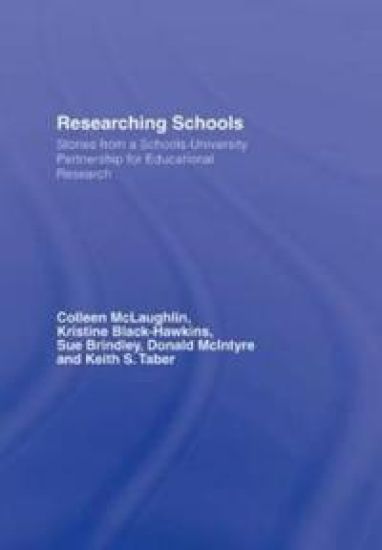
Researching Schools

Researching Schools

Colleen McLaughlin; Kristine Black Hawkins; Sue Brindley; Donald McIntyre; Keith Taber

Routledge
2006
sidottu
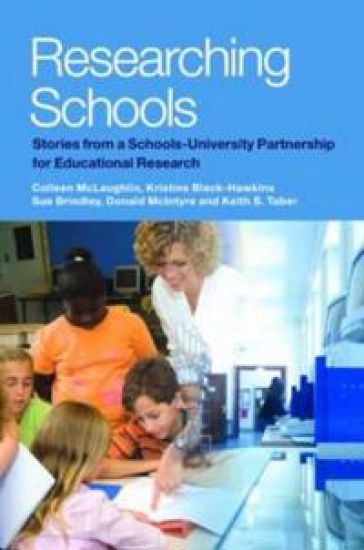
Presenting the work of a highly innovative partnership between the University of Cambridge Faculty of Education and eight secondary schools, this book explores this networked learning community which has helped to define the use and production of educational knowledge and research within and between various partners. This book examines the central questions and gives examples of the outcomes of the development that will assist any researchers, especially teachers undertaking research, to develop school-university partnerships. Stories and examples from practitioners and others who worked directly in and with schools are presented throughout the book. It will appeal to a wide audience of practitioners and academics, and to all who are interested in how research and enquiry can be used to support the development of practice in schools.
Researching Schools

Researching Schools

Colleen McLaughlin; Kristine Black Hawkins; Sue Brindley; Donald McIntyre; Keith Taber

Routledge
2006
nidottu
Presenting the work of a highly innovative partnership between the University of Cambridge Faculty of Education and eight secondary schools, this book explores this networked learning community which has helped to define the use and production of educational knowledge and research within and between various partners. This book examines the central questions and gives examples of the outcomes of the development that will assist any researchers, especially teachers undertaking research, to develop school-university partnerships. Stories and examples from practitioners and others who worked directly in and with schools are presented throughout the book. It will appeal to a wide audience of practitioners and academics, and to all who are interested in how research and enquiry can be used to support the development of practice in schools.
Chemical Misconceptions

Chemical Misconceptions

Keith Taber

Royal Society of Chemistry
2002
nidottu
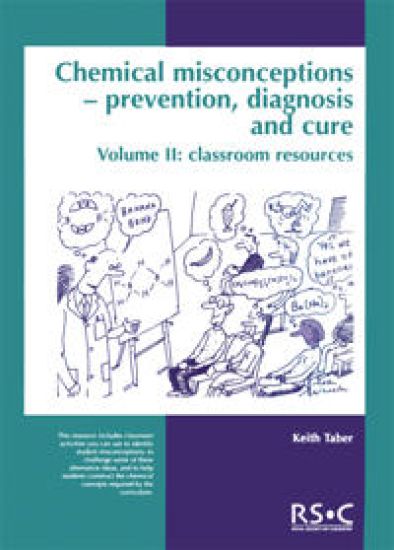
Chemistry is a conceptual subject and, in order to explain many of the concepts, teachers use models to describe the microscopic world and relate it to the macroscopic properties of matter. This can lead to problems, as a student's every-day experiences of the world and use of language can contradict the ideas put forward in chemical science. These titles have been designed to help tackle this issue of misconceptions. Part 1 deals with the theory, by including information on some of the key alternative conceptions that have been uncovered by research; ideas about a variety of teaching approaches that may prevent students acquiring some common alternative conceptions; and general ideas for assisting students with the development of appropriate scientific conceptions. Part 2 provides strategies for dealing with some of the misconceptions that students have, by including ready to use classroom resources including copies of probes that can be used to identify ideas held by students; some specific exercises aimed at challenging some of the alternative ideas; and classroom activities that will help students to construct the chemical concepts required by the curriculum. Used together, these two books will provide a good theoretical underpinning of the fundamentals of chemistry. Trialled in schools throughout the UK, they are suitable for teaching ages 11-18.
Chemical Misconceptions

Chemical Misconceptions

Keith Taber

Royal Society of Chemistry
2002
nidottu
Chemistry is a conceptual subject and, in order to explain many of the concepts, teachers use models to describe the microscopic world and relate it to the macroscopic properties of matter. This can lead to problems, as a student's every-day experiences of the world and use of language can contradict the ideas put forward in chemical science. These titles have been designed to help tackle this issue of misconceptions. Part 1 deals with the theory, by including information on some of the key alternative conceptions that have been uncovered by research; ideas about a variety of teaching approaches that may prevent students acquiring some common alternative conceptions; and general ideas for assisting students with the development of appropriate scientific conceptions. Part 2 provides strategies for dealing with some of the misconceptions that students have, by including ready to use classroom resources including copies of probes that can be used to identify ideas held by students; some specific exercises aimed at challenging some of the alternative ideas; and classroom activities that will help students to construct the chemical concepts required by the curriculum. Used together, these two books will provide a good theoretical underpinning of the fundamentals of chemistry. Trialled in schools throughout the UK, they are suitable for teaching ages 11-18.