Kirjojen hintavertailu. Mukana 12 192 517 kirjaa ja 12 kauppaa.
Kirjailija
Keith Vernon
Kirjat ja teokset yhdessä paikassa: 6 kirjaa, julkaisuja vuosilta 2004-2026, suosituimpien joukossa The Co-operative College and a Century of Social Change. Vertaile teosten hintoja ja tarkista saatavuus suomalaisista kirjakaupoista.
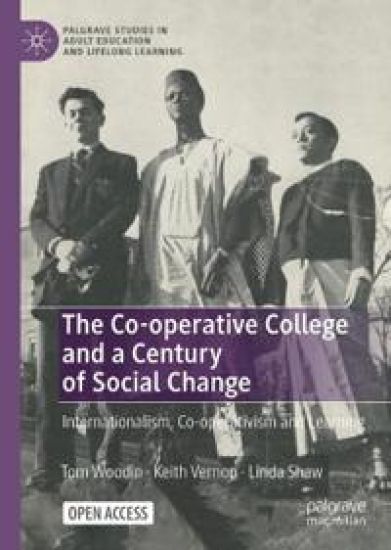
This open access book explores the Co-operative College’s distinctive adult educational tradition over the past century as it provided education for co-operative leaders, employees and members in addition to developing a range of wider educational initiatives and ideas internationally. The Co-operative College is a British educational charity established in 1919, founded on co-operative principles. It played a crucial role in co-operative education in the British Empire and subsequently in the independent nations. In doing so, it brought together vocational and liberal education as well as educating members as part of a movement that fostered significant social change. It draws on original archival research at the National Co-operative Archive in Manchester as well as other material at the National Archives, Bishopsgate Institute and the British Library. Furthermore, the rich archives of the National Co-operative Archive allow for the development of a rich visual history of the movement to be explored.
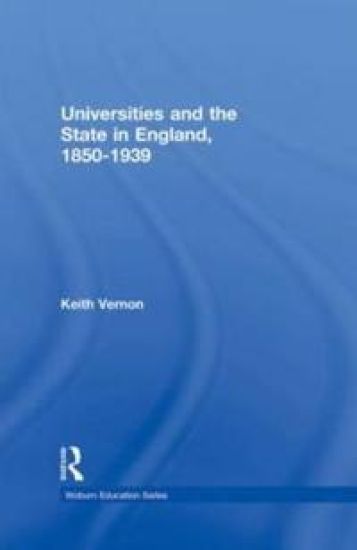
The question of the relationships between universities and the state is one of considerable current concern and debate. This book studies the development of the modern university system in England from the mid-nineteenth century to the outbreak of the Second World War, focusing on the role of the state. In this formidabe study, the author covers a range of key areas, including:* a review of the reforms of the ancient universities, the creation of civic universities and the formation of the federal London University* an examination of the co-ordinated system in the early years of the twentieth century and the inter-war period* an analysis of universities as modenising agencies of the state* a discussion of such issues as technical versus literary curricula, the clash between central and local authorities, and the output of universities in terms of the needs of the state and the economy.Students of history and education, academic historians will find this an informative and important text.
'This book, informed by exceptionally wide inquiry into current history teaching practices in the English-speaking world, is a real achievement. The authors convey current context and challenges with great insight, and they move through possibilities in sequencing, content, skills and assessment, without strident comment, extending our knowledge of options and pitfalls in the process' - Peter N. Stearns, Provost, George Mason University 'Comprehensive, persuasive, and at all times accessible in style and argument, this text both encourages and empowers university historians to review and enhance their teaching practices. All key facets of programme development are explored with reference to an extensive and well-chosen range of international examples. The chapter on the historian's skills and qualities of mind is one of several that I will be referring to frequently' - Jeanine Graham, Senior Lecturer, History, University of Waikato '... the varied findings make fascinating reading ... this book should be required reading for everyone involved in teaching history: there is plenty here for us all to learn from' - ESCalate 'In providing such a clear, informative and thoughtful exploration of the current state of history in higher education, and in helping to raise the quality of critical debate about its future, this book contributes greatly to the growing scholarship of teaching and learning in the discipline. It should also become a vital resource for all historians who wish to honour the old dictum that, in teaching as in research, the one duty we owe history is to rewrite it' - Professor Paul Hyland, Director of History in the Subject Centre for History, Classics and Archaeology '[E]xtremely useful... provides a thought-provoking and useful discussion concerning the task of actually teaching history at university level... This timely book needs to be read widely, and the many issues it raises should command our closest attention' - Higher Education Review Over the last 10 years or so, history as an academic discipline has become steeped in controversy and introspection. Additional areas of interest have opened up, fresh perspectives and approaches have been offered, and new teaching and learning strategies have been advocated. There has been an increasing emphasis on producing well-qualified graduates equipped with the skills, knowledge and attitudes to cope with the changing demands of the world of work. This book suggests how these issues may be managed. The authors identify and discuss the underlying principles, and consider ways in which they can be applied at module and programme levels. The Teaching & Learning in the Humanities series, edited by Ellie Chambers and Jan Parker, is for beginning and experienced lecturers. It deals with all aspects of teaching individual arts and humanities subjects in higher education. Experienced teachers offer authoritative suggestions on how to become critically reflective about discipline-specific practices.
'This book, informed by exceptionally wide inquiry into current history teaching practices in the English-speaking world, is a real achievement. The authors convey current context and challenges with great insight, and they move through possibilities in sequencing, content, skills and assessment, without strident comment, extending our knowledge of options and pitfalls in the process' - Peter N. Stearns, Provost, George Mason University 'Comprehensive, persuasive, and at all times accessible in style and argument, this text both encourages and empowers university historians to review and enhance their teaching practices. All key facets of programme development are explored with reference to an extensive and well-chosen range of international examples. The chapter on the historian's skills and qualities of mind is one of several that I will be referring to frequently' - Jeanine Graham, Senior Lecturer, History, University of Waikato '... the varied findings make fascinating reading ... this book should be required reading for everyone involved in teaching history: there is plenty here for us all to learn from' - ESCalate 'In providing such a clear, informative and thoughtful exploration of the current state of history in higher education, and in helping to raise the quality of critical debate about its future, this book contributes greatly to the growing scholarship of teaching and learning in the discipline. It should also become a vital resource for all historians who wish to honour the old dictum that, in teaching as in research, the one duty we owe history is to rewrite it' - Professor Paul Hyland, Director of History in the Subject Centre for History, Classics and Archaeology '[E]xtremely useful... provides a thought-provoking and useful discussion concerning the task of actually teaching history at university level... This timely book needs to be read widely, and the many issues it raises should command our closest attention' - Higher Education Review Over the last 10 years or so, history as an academic discipline has become steeped in controversy and introspection. Additional areas of interest have opened up, fresh perspectives and approaches have been offered, and new teaching and learning strategies have been advocated. There has been an increasing emphasis on producing well-qualified graduates equipped with the skills, knowledge and attitudes to cope with the changing demands of the world of work. This book suggests how these issues may be managed. The authors identify and discuss the underlying principles, and consider ways in which they can be applied at module and programme levels. The Teaching & Learning in the Humanities series, edited by Ellie Chambers and Jan Parker, is for beginning and experienced lecturers. It deals with all aspects of teaching individual arts and humanities subjects in higher education. Experienced teachers offer authoritative suggestions on how to become critically reflective about discipline-specific practices.
The question of the relationships between universities and the state is one of considerable current concern and debate. This book studies the development of the modern university system in England from the mid-nineteenth century to the outbreak of the Second World War, focusing on the role of the state. In this formidabe study, the author covers a range of key areas, including:* a review of the reforms of the ancient universities, the creation of civic universities and the formation of the federal London University* an examination of the co-ordinated system in the early years of the twentieth century and the inter-war period* an analysis of universities as modenising agencies of the state* a discussion of such issues as technical versus literary curricula, the clash between central and local authorities, and the output of universities in terms of the needs of the state and the economy.Students of history and education, academic historians will find this an informative and important text.