Kirjojen hintavertailu. Mukana 12 390 323 kirjaa ja 12 kauppaa.

Kirjailija

Kelly DeVries

Kirjat ja teokset yhdessä paikassa: 16 kirjaa, julkaisuja vuosilta 1996-2025, suosituimpien joukossa Battles of the Crusades. Vertaile teosten hintoja ja tarkista saatavuus suomalaisista kirjakaupoista.

16 kirjaa

Kirjojen julkaisuhaarukka 1996-2025.

Medieval Warfare Illustrated Atlas

Medieval Warfare Illustrated Atlas

Matthew Bennett; Kelly DeVries; Iain Dickie; Jim Bradbury; Phyllis G Jestice

AMBER BOOKS LTD
2025
sidottu
Why were Welsh longbowmen and Italian mercenaries more effective in battle than French armoured knights? How able were the crusaders? What is the difference between chain mail and scale mail? Medieval Warfare Illustrated Atlas describes combat in what has been characterised as the ‘age of chivalry’. The book explores the tactics and strategy required to win battles with the technology available and points out how the development of such weapons technology changed the face of the battlefield. Divided into five sections, the text begins with the foot soldier and the mounted soldier, the equipment they wore and used, and how they fought together as a unit. The third section discusses how these units were used together on the battlefield, and the importance of a general correctly disposing his troops before the battle began. The fourth section looks at siege warfare, while the final chapter covers naval warfare, from the ships to the weapons the soldiers carried to the major encounters of the period. Using specially commissioned artworks to illustrate the battles, equipment and tactics of the era, Medieval Warfare Illustrated Atlas shows in detail the methods by which armies gained and lost ascendancy on the battlefield. This is an essential companion for any reader interested in medieval warfare.
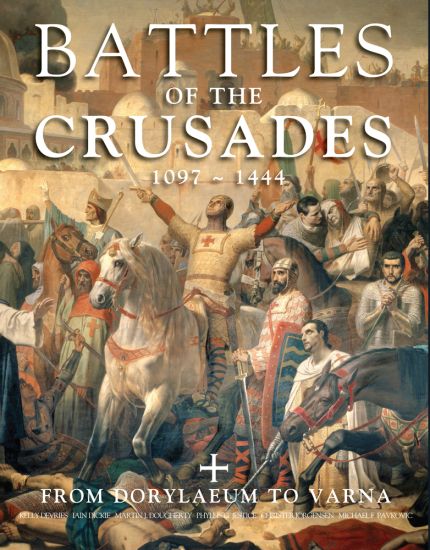
Battles of the Crusades

Battles of the Crusades

Kelly DeVries; Iain Dickie; Martin J Dougherty; Phyllis G Jestice; Christer Jorgensen; Michael F Pavkovic

Amber Books Ltd
2019
sidottu
When Pope Urban II called European Christianity to stem the expansion of Islamic states into Europe, he set off a train of events that would last many hundreds of years and have far reaching political and economic consequences. Battles of the Crusades introduces 20 key battles from this period of religiously inspired conflict in Europe and the Middle East. Beginning with the battle of Dorylaeum (1097) and finishing with the battle of Varna (1444), examples from every era and campaign are featured. Apart from such well-known encounters as Antioch, Jerusalem and Harran, battles between the Crusader states and their Muslim neighbours include Montgisard and Saladin’s destruction of the Crusader army at Hattin. Beyond the Middle East, featured battles include the Christian recapture of Lisbon and the massacre of the Albigensians at Beziers in France. Battles from the Reconquista of Spain and the expansion of the Teutonic Knights make this a rounded account of 500 years of religious conflict. Each entry includes a contextual introduction, a concise description of the action, and an analysis of the aftermath. A specially commissioned colour map illustrating movement of forces brings the subject to life and helps the reader to grasp the development of the battle. With more than 200 colour and black-and-white maps, artworks, and photographs, Battles of the Crusades provides an accessible introduction to key engagements of the Medieval era. Designed for both the general reader and enthusiast, the book is an essential companion for anyone interested in the warfare and tactics of the Middle Ages.
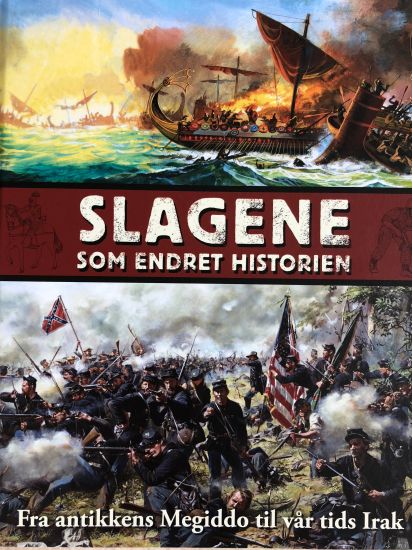
Slagene som endret historien

Slagene som endret historien

Michael F. Pavkovic; Chris McNab; Christer Jorgensen; Ian Dickie; Phyllis G. Jestice; Kelly DeVries; Rob S. Rice; Martin J. Dougherty

Vega forlag
2018
sidottu
Til alle tider har store slag endret verdensordenen. Da Cæsar beseiret gallerne ved Alesia i år 52, kunne Romerriket vokse og bli Europas viktigste politiske enhet. Etter at Nordstatene slo tilbake Sørstatene ved Gettysburg i 1863, ble slaveriet avskaffet på det nordamerikanske kontinentet. Og moderne krigføring endret seg drastisk da britene tok i bruk stridsvogner i stor skala ved Cambrai i 1917. Slagene som endret historien er en engasjerende guide til mer enn 45 av historiens viktigste slag, fra oldtidens Megiddo til vår tids Operation Iraqi Freedom. Du kan lese om store strateger som Aleksander den store, Hannibal, Napoleon og Lord Nelson, og om hvordan utviklingen av våpen og militær taktikk endret måten å gå til angrep - og forsvare seg - på. Boken er rikt illustrert, og hvert kapittel er utstyrt med detaljerte, taktiske kart som viser de stridende partenes stillinger og forflytninger.
Fighting Techniques of the Medieval World AD 500 to AD 1500

Fighting Techniques of the Medieval World AD 500 to AD 1500

Matthew Bennett; Jim Bradbury; Kelly DeVries; Iain Dickie; Phyllis G. Jestice

Spellmount Publishers Ltd
2005
sidottu
This informative book describes the fighting techniques of soldiers in what has been characterised as the 'age of chivalry' and it shows in detail the methods by which armies gained and lost ascendancy on the battlefield. Examined firstly are the individual components of the medieval army, the foot soldier and the mounted soldier and the equipment they wore and used and how they fought together as a unit. Certain types of unit are described - like Welsh longbowmen and Italian mercenaries - and why they were more effective than others, such as the French armoured knights at Agincourt. The third section discusses how these units were used together on the battlefield and the importance of a general correctly disposing his troops before the battle began - key battles such as Lincoln, Bannockburn and Crecy are examined - and also the contrasting tactics of both sides during crusades and the various shortcomings of the crusaders and their leaders. The fourth part looks at the specialist techniques and equipment developed for siege warfare - a common event in this era of fortification. The last section covers naval warfare, from the ships in which the men fought to the weapons they carried and the major battles of the period including the battle of Meloria in the Mediterranean.
1066

1066

Michael Livingston; Kelly DeVries

Pen Sword Military
2021
nidottu
The Battle of Hastings, fought on 14 October 1066, changed the course of English history. This most famous moment of the Norman Conquest was recorded in graphic detail in the threads of the Bayeux Tapestry, providing a priceless glimpse into a brutal conflict. In this fresh look at the battle and its surrounding campaigns, leading medieval military historians Michael Livingston and Kelly DeVries combine the imagery of the tapestry with the latest modern investigative research to reveal the story of Hastings as it has never been told and guide visitors around the battlefield today. This absorbing new account of the battle will be fascinating reading for anyone keen to find out what really happened in 1066: the journeys by which Harold Godwinson and William of Normandy came to the battlefield, and the latest reconstructions of the course of the fighting on that momentous day. It is also a practical, easy-to-use guide for visitors to the sites associated with the conquest as well as the Hastings battlefield itself.
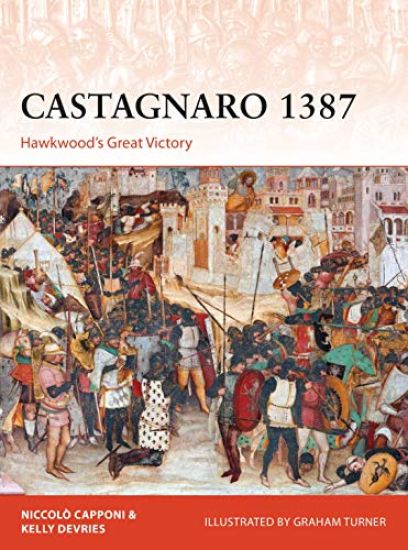
Castagnaro 1387

Castagnaro 1387

Kelly DeVries; Niccolò Capponi

Osprey Publishing
2019
nidottu
A highly illustrated study of the medieval Italian battle of Castagnaro, the famous English condottiere captain Sir John Hawkwood's greatest victory.The battle of Castagnaro, fought on 11 March 1387 between the Veronese and the Paduans, is one of the most famous Italian medieval conflicts in the English-speaking world. This is thanks in no small part to the exploits of the renowned English mercenary (or condottiero) captain, Sir John Hawkwood. Commanding the Paduan army, he led them to a stunning victory.This study challenges the conventional story of the battle, relocating it to the other side of the Adige River, and showing that Hawkwood was no mere disciple of his previous commander, the Black Prince–he was a highly talented and intelligent general in his own right.Using specially commissioned full-colour artwork, this fascinating book shows how Hawkwood used his own acumen, and the training, skills, and discipline of his very experienced condottieri, to defeat his opponents at Castagnaro.
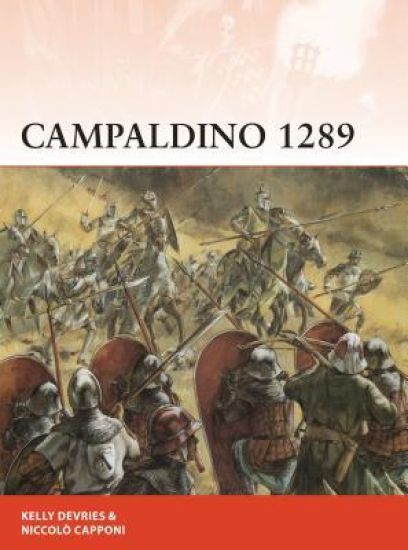
Campaldino 1289

Campaldino 1289

Kelly DeVries; Niccolò Capponi

Osprey Publishing
2018
nidottu
A highly illustrated account of one of the major battles of Italy's 13th century wars, immortalized in the Divine Comedy by Dante Alighieri who was one of the combatants.Campaldino is one of the important battles between the Guelphs and Ghibellines - the major political factions in the city states of central and northern Italy. It heralded the rise of Florence to a dominant position over the area of Tuscany and was one of the last occasions when the Italian city militias contested a battle, with the 14th century seeing the rise of the condottiere in Italy's Wars.In this study, renowned medieval historians Kelly De Vries and Niccolò Capponi have uncovered new material from the battlefield itself, as well as using all the available sources, to breathe new life into this colourful and fascinating battle.
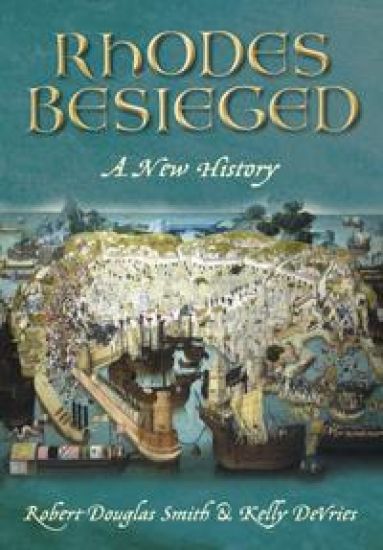
Rhodes Besieged

Rhodes Besieged

Kelly Devries; Robert Douglas Smith

The History Press Ltd
2011
nidottu
In 1480 the Ottoman Turkish army and artillery that had defeated the Byzantine Empire arrived on Rhodes to attack the walled headquarters of the Crusading military order, the Knights Hospitaller. After a siege of three months during which time the Turks bombarded the walls daily with gunpowder weapons they withdrew, defeated. In 1522 they returned and, after a six-month siege, captured Rhodes but were unable to defeat the Hospitallers who were allowed to leave with their lives, arms and religious emblems. This book uniquely uses the eyewitness accounts, surviving guns and extant walls to tell the story of these two sieges, and the efforts made by the Hospitallers to adapt their fortifications and artillery to defy the most powerful military power in the world. In doing so it rewrites the history of fortifications and gunpowder artillery during the Renaissance.
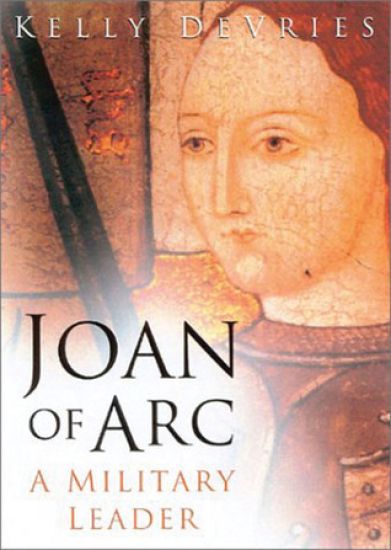
Joan of Arc: A Military Leader

Joan of Arc: A Military Leader

Kelly DeVries

The History Press Ltd
2011
nidottu
In 1428 a young girl from a small French village approached the royal castle of Vaucouleurs with a now famous tale. Heavenly voices, she said, had told her to seek out the Dauphin, Charles, so that he might give her an army with which to deliver France from its English occupiers. The ensuing tale of Joan’s military success is told here in a gripping and authoritative narrative. Previous works have concentrated on the religious and feminist aspects of Joan’s career; this is the first to address the vital issue of what it was that made her the heroine she became. Why did the soldiers of France follow a woman into battle when no troops of the Hundred Years War had done so before, and how was she able to win? This book is essential reading for anyone interested in the Middle Ages and the phenomenon of the girl warrior.
Warfare in the Dark Ages

Warfare in the Dark Ages

Kelly DeVries

Ashgate Publishing Limited
2008
sidottu
The articles in this volume explore the way in which military developments helped to sculpt, out of very strange and diverse components, our familiar Europe. The period studied covers the fall of the Western Roman Empire, the rise of the Carolingian Empire and its eventual collapse, leaving a vacuum in the heart of Europe into which flowed new forces: the Vikings from outside and the great lords from within.
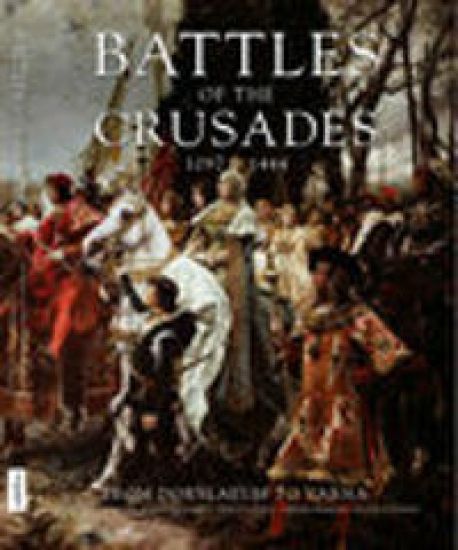
Battles of the Crusades 1097-1444

Battles of the Crusades 1097-1444

Kelly Devries

Spellmount Publishers Ltd
2007
nidottu
Introduces 20 key battles from this period of religiously-inspired conflict in Europe and the Middle East. This work describes each battle with a contextual introduction, a concise description of the action and an analysis of the aftermath. It also includes more than 200 colour maps, artworks and photographs.
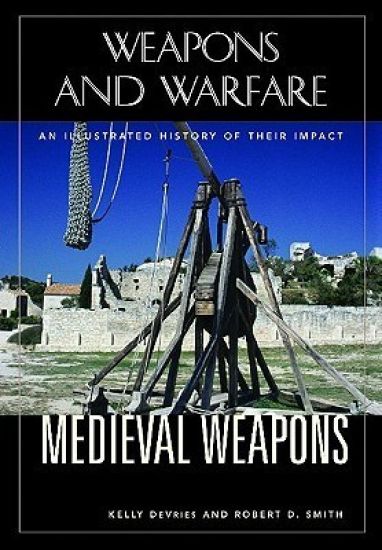
Medieval Weapons

Medieval Weapons

Robert D. Smith; Kelly DeVries

ABC-CLIO
2007
sidottu
This fascinating reference covers the weapons and armor used by warriors from the 4th to the 15th century and discusses how and why they changed over time. In the Middle Ages, the lack of standardized weapons meant that one warrior's arms were often quite different from another's, even when they were fighting on the same side. And with few major technological advances in that period, the evolution of those weapons over the centuries was incremental. But evolve they ultimately did, bringing arms, armor, and siege weapons to the threshold of the modern era. From the fall of the Roman Empire to the beginnings of the Renaissance, Medieval Weapons: An Illustrated History of Their Impact covers the inexorable transformation from warrior in the mail shirt to fully armored knight, from the days of spears and swords to the large-scale adoption of the handgun. Medieval Weapons covers this fascinating expanse of centuries in chapters devoted to the early medieval, Carolingian, Crusade, and late medieval periods. Within each period, the book details how weapons and armor were developed, what weapons were used for different types of battles, and how weapons and armor both influenced, and were influenced by, changing tactics in battles and sieges.
The Norwegian Invasion of England in 1066

The Norwegian Invasion of England in 1066

Kelly Devries

The Boydell Press
2003
pokkari
Three weeks before the battle of Hastings, Harold defeated an invading army of Norwegians at the battle of Stamford Bridge, a victory which was to cost him dear. The events surrounding the battle are discussed in detail. This very accessible narrative...tells the story of 'the first two important battles of 1066', Fulford Gate and Stamford Bridge, and of the leaders of the opposing English and Norwegian factions. CHOICE He places the invasion in a broad context. He outlines the Anglo-Scandinavian nature of the English kingdom in the eleventh century, traces the careers of the major leaders, and devotes a chapter each to the English and Norwegian military systems. JOURNAL OF MILITARY HISTORY William the Conqueror's invasion in 1066 was not the only attack on England that year. On September 25, 1066, less than three weeks before William defeated King Harold II Godwinson at the battle of Hastings, that same Harold had been victorious over his other opponent of 1066, King Haraldr Hardrádi of Norway at the battle of Stamford Bridge. It was an impressive victory, driving an invading army of Norwegians from theearldom of Northumbria; but it was to cost Harold dear. In telling the story of this neglected battle, Kelly DeVries traces the rise and fall of a family of English warlords, the Godwins, as well as that of the equally impressiveNorwegian warlord Hardrádi. KELLY DEVRIES is Associate Professor, Department of History, Loyola College in Maryland.
Guns and Men in Medieval Europe, 1200-1500
These articles are devoted to the two main aspects of medieval warfare: men and technology. Men fought, led, and ultimately killed in war, while the technology that they used facilitated these tasks. The first group of essays highlights human strengths in the fighting of medieval wars, with a focus on events of the 14th and 15th centuries, specifically the Anglo-French wars and wars against the Turks. A second group addresses the technological side of warfare, in particular the advent and proliferation of early gunpowder weapons which evolved rapidly during the late Middle Ages, although never replacing the role of men. The articles study various facets of this evolution, from the increased use and effectiveness of guns in battles, sieges, and naval warfare, to changes in their science and metallurgy, surgical treatment of wounds caused by them, and governmental centralization of the technology.
The Norwegian Invasion of England in 1066

The Norwegian Invasion of England in 1066

Kelly Devries

The Boydell Press
1999
sidottu
This very accessible narrative...tells the story of "the first two important battles of 1066", Fulford Gate and Stamford Bridge, and of the leaders of the opposing English and Norwegian factions. CHOICE The evidence of later 12th- and 13th-century Norse sagas, Snorri Sturlusson's Heimskringla, and the less well known Norwegian Kings Sagas present far more detail about the invasion and its battles than the more widely accepted sources could possibly allow... He places the invasion in a broad context. He outlines the Anglo-Scandinavian nature of the English kingdom in the eleventh century, traces the careers of the major leaders, and devotes a chapter each to the English and Norwegian military systems. JOURNAL OF MILITARY HISTORY [US] William the Conqueror's invasion in 1066 was not the only attack on England that year. On September 25, 1066, less than three weeks before William defeated King Harold II Godwinson at the battle of Hastings, that same Harold had been victorious over his other opponent of 1066, King Haraldr Hardrádi of Norway at the battle of Stamford Bridge. It was an impressive victory, driving an invading army of Norwegians from the earldom of Northumbria; but it was to cost Harold dear. In telling the story of this neglected battle, Kelly DeVries traces the rise and fall of a family of English warlords, the Godwins, as well as that of the equally impressive Norwegian warlord Hardrádi. KELLY DEVRIES is Associate Professor, Department of History, Loyola College in Maryland.
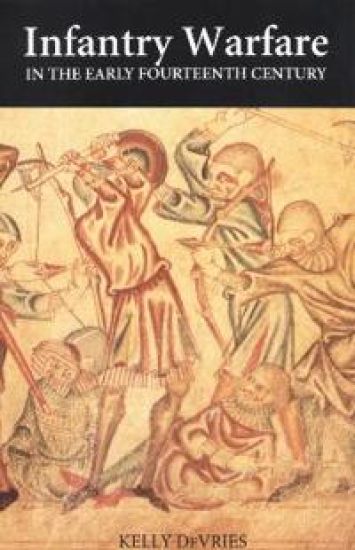
Infantry Warfare in the Early Fourteenth Century
DeVries has focused on an intriguing problem, and his detailed analysis of battles provides an important reassessment of the way in which infantry and dismounted cavalry achieved such striking successes. HISTORY His detailed analysis of battles provides an important reassessment of the way in which infantry and dismounted cavalry achieved such striking successes. HISTORY This remarkable study confirms [DeVries's] emergence as one of themajor scholars of his generation. JOURNAL OF MILITARY HISTORY This study departs from the conventional view of the dominance of cavalry in medieval warfare: its objective is to establish the often decisive importance of infantry. Kelly DeVries employs evidence from first-hand accounts - a major feature of this study - to examine the role of the infantry, and the nature of infantry tactics, in nineteen battles fought in England and Europe between 1302 and 1347, in most of which it was the infantry which secured victory. The battles analysed in detail are: Courtrai Arques Mons-en-Pevele Loudon Hill Kephissos Bannockburn Boroughbridge Cassel Dupplin Moor Halidon Hill Laupen Morlaix Staveren Vottem Crecy Neville's Cross, and the infantry ambushes: Morgarten Auberoche La Roche-Derrien.