Kirjojen hintavertailu. Mukana 12 595 353 kirjaa ja 12 kauppaa.

Kirjailija

Kelly Gates

Kirjat ja teokset yhdessä paikassa: 6 kirjaa, julkaisuja vuosilta 2011-2025, suosituimpien joukossa Targeted. Vertaile teosten hintoja ja tarkista saatavuus suomalaisista kirjakaupoista.

6 kirjaa

Kirjojen julkaisuhaarukka 2011-2025.

Targeted

Targeted

Kelly Gates

NEW YORK UNIVERSITY PRESS
2025
sidottu
How video transformed policing and security Video cameras are everywhere: attached to buildings, drones, and dashboards; embedded in smartphones, laptops, and doorbells; worn on police uniforms and sunglasses. In Targeted, Kelly Gates argues that the resulting avalanche of video has transformed the landscape of policing and security in the twenty-first century. Video production, analysis, and archival management are now central to the ways police power is exercised, criminal law enforced, and spaces of human habitation securitized. Gates examines the primacy of video in four key areas of policing and security: the field of digital multimedia forensics, private video surveillance infrastructure development, police body-worn camera systems, and video analytics for automated surveillance (Video AI). Case studies of two companies illustrate the role of corporations in these far-reaching media-technological changes. Target Corporation has integrated its retail security operations with law enforcement, expanding its surveillance beyond its stores and parking lots and into the criminal legal system. Axon Enterprise is leveraging the growing volume of police body-cam video to build a large-scale proprietary platform for policing. Targeted reveals the role of video infrastructure development in the increasingly entangled relationship between the modern police and the modern corporation, in the long wake and ruins of neoliberalism.

Targeted

Targeted

Kelly Gates

NEW YORK UNIVERSITY PRESS
2025
pokkari
How video transformed policing and security Video cameras are everywhere: attached to buildings, drones, and dashboards; embedded in smartphones, laptops, and doorbells; worn on police uniforms and sunglasses. In Targeted, Kelly Gates argues that the resulting avalanche of video has transformed the landscape of policing and security in the twenty-first century. Video production, analysis, and archival management are now central to the ways police power is exercised, criminal law enforced, and spaces of human habitation securitized. Gates examines the primacy of video in four key areas of policing and security: the field of digital multimedia forensics, private video surveillance infrastructure development, police body-worn camera systems, and video analytics for automated surveillance (Video AI). Case studies of two companies illustrate the role of corporations in these far-reaching media-technological changes. Target Corporation has integrated its retail security operations with law enforcement, expanding its surveillance beyond its stores and parking lots and into the criminal legal system. Axon Enterprise is leveraging the growing volume of police body-cam video to build a large-scale proprietary platform for policing. Targeted reveals the role of video infrastructure development in the increasingly entangled relationship between the modern police and the modern corporation, in the long wake and ruins of neoliberalism.

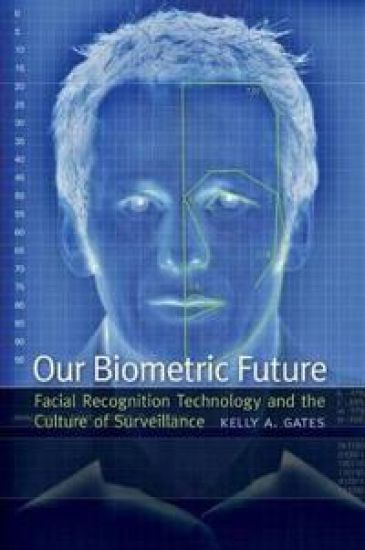
Our Biometric Future

Our Biometric Future

Kelly Gates

New York University Press
2011
pokkari
Since the 1960s, a significant effort has been underway to program computers to "see" the human face&#8212to develop automated systems for identifying faces and distinguishing them from one another—commonly known as Facial Recognition Technology. While computer scientists are developing FRT in order to design more intelligent and interactive machines, businesses and states agencies view the technology as uniquely suited for "smart" surveillance—systems that automate the labor of monitoring in order to increase their efficacy and spread their reach. Tracking this technological pursuit, Our Biometric Future identifies FRT as a prime example of the failed technocratic approach to governance, where new technologies are pursued as shortsighted solutions to complex social problems. Culling news stories, press releases, policy statements, PR kits and other materials, Kelly Gates provides evidence that, instead of providing more security for more people, the pursuit of FRT is being driven by the priorities of corporations, law enforcement and state security agencies, all convinced of the technology's necessity and unhindered by its complicated and potentially destructive social consequences. By focusing on the politics of developing and deploying these technologies, Our Biometric Future argues not for the inevitability of a particular technological future, but for its profound contingency and contestability.
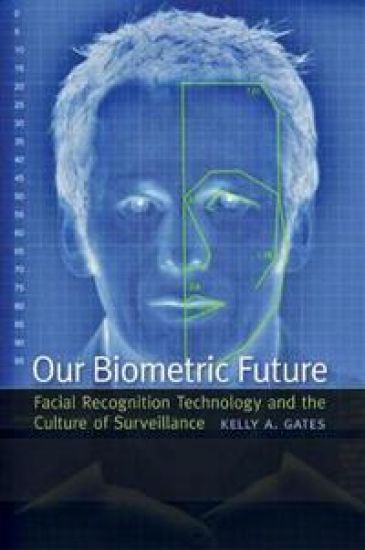
Our Biometric Future

Our Biometric Future

Kelly Gates

New York University Press
2011
sidottu
Since the 1960s, a significant effort has been underway to program computers to "see" the human face&#8212to develop automated systems for identifying faces and distinguishing them from one another—commonly known as Facial Recognition Technology. While computer scientists are developing FRT in order to design more intelligent and interactive machines, businesses and states agencies view the technology as uniquely suited for "smart" surveillance—systems that automate the labor of monitoring in order to increase their efficacy and spread their reach. Tracking this technological pursuit, Our Biometric Future identifies FRT as a prime example of the failed technocratic approach to governance, where new technologies are pursued as shortsighted solutions to complex social problems. Culling news stories, press releases, policy statements, PR kits and other materials, Kelly Gates provides evidence that, instead of providing more security for more people, the pursuit of FRT is being driven by the priorities of corporations, law enforcement and state security agencies, all convinced of the technology's necessity and unhindered by its complicated and potentially destructive social consequences. By focusing on the politics of developing and deploying these technologies, Our Biometric Future argues not for the inevitability of a particular technological future, but for its profound contingency and contestability.