Kirjojen hintavertailu. Mukana 12 595 353 kirjaa ja 12 kauppaa.
Kirjailija
Kelsey Osgood
Kirjat ja teokset yhdessä paikassa: 5 kirjaa, julkaisuja vuosilta 2021-2025, suosituimpien joukossa Plough Quarterly No. 33 – The Vows That Bind. Vertaile teosten hintoja ja tarkista saatavuus suomalaisista kirjakaupoista.
David Zahl; Malcolm Guite; Kelsey Osgood; Abraham Nussbaum; A. E. Stallings; Narine Abgaryan; John Swinton; Devan Stahl; James Mumford; Jessica T. Miskelly; Brewer Eberly; Aberdeen Livingstone; Terence Sweeney; Sam Tomlin; Hazel Thomson
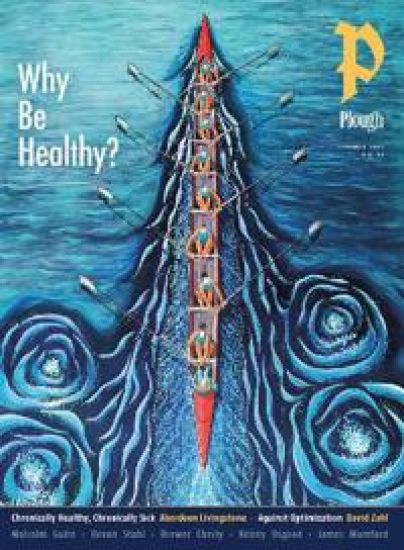
In an age of health care and wellness industries and near-religious pursuit of fitness and self-optimization, what does “health” mean for the chronically ill? For people with disabilities or mental health challenges or neurodiversity? For the aging and dying? This issue asks what it means to live well despite the limitations and frailties of our bodies, and what, beyond the scope of medicine, is needed for our flourishing. On this theme: Aberdeen Livingstone learns when to battle, and when to accept, chronic illness. Malcolm Guite defends the responsible use of pipe and pint. David Zahl calls out the wellness industry’s false promise of optimization. Abraham Nussbaum learns the limits of psychotherapy from his first patient. Cristiano Dennani photographs survivors of the Bhopal chemical spill in India. Heather M. Surls visits a tuberculosis hospital in Mafraq, Jordan. Brewer Eberly considers direct primary care, an attempt to reset the doctor-patient relationship. Devan Stahl considers what the wounds of the resurrected Christ mean for people with disabled bodies. Sam Tomlin wishes church and school weren’t such hurdles for children with autism. James Mumford finds the twelve steps of AA work when other approaches to addiction fail. Other articles in this issue: Jessica T. Miskelly, monitoring ocean currents on an icebreaker off Antarctica, feels the planet breathe. Kelsey Osgood visits a Jewish-Christian-Muslim interfaith center after October 7. Terence Sweeney profiles a repentant slaveholder, Bartolomé de las Casas. Plus: new poems by A. E. Stallings, short fiction by Narine Abgaryan, book reviews, and more. Plough Quarterly features stories, ideas, and culture for people eager to apply their faith to the challenges we face. Each issue includes in-depth articles, interviews, poetry, book reviews, and art.
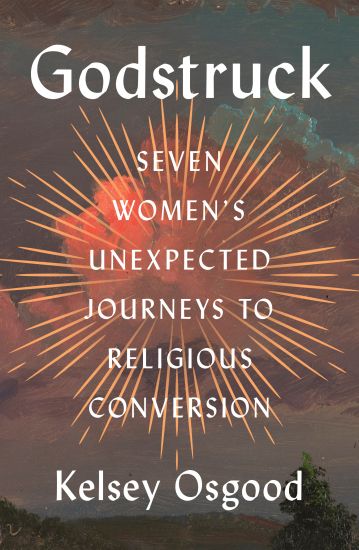
A candid, thought-provoking exploration of contemporary women's experiences of religious conversion and the relationship between faith and fulfillment in our time Religious involvement has been declining in the West for decades--and, though men have historically outnumbered women among the disaffiliated in the U.S., a greater share of the young adults leaving religion today are women. A young, secular Kelsey Osgood would have been surprised to hear that she would be among those moving in the opposite direction. And yet, after the conversion to Orthodox Judaism that transformed her life, she began to wonder about the other contemporary women who, like her, had been startled to find a home in organized religion. In Godstruck, she profiles six other converts--some raised firmly atheist, others agnostic or religious--navigating independent paths to religious devotion. From Angela, a data-driven writer and journalist who finds herself drawn to Quaker meetings, to Hana, whose conversion to Islam leads her halfway around the world, to Christina, whose Amish faith transforms her relationship to modernity, these women's unexpected revelations introduce them to new and sometimes radically different ways of living. Along the way, Osgood charts a fascinating course through a wide range of cultural references--from Saint Augustine, Simone Weil, and Tolstoy to desert hermits, Alcoholics Anonymous, and contemporary feminism--to explore some of our attempts to understand and cope with the mysteries of life and the human condition. Driven by a profound curiosity and anchored by intimate reporting, Godstruck is a provocative, insightful, and refreshingly nuanced exploration of both the joys and the challenges of faith that reveals what these seekers can teach all of us about modern life and our own searches for meaning.
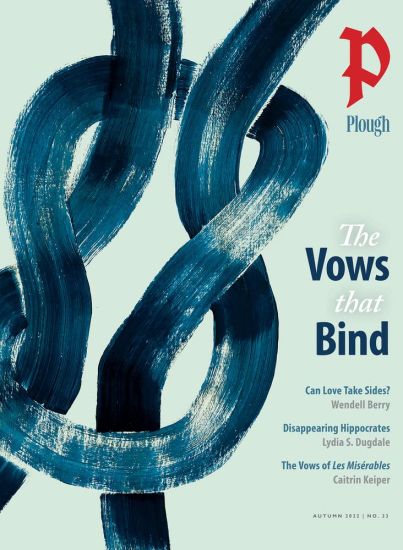
In a culture that prizes keeping one’s options open, making commitments offers something more valuable. The consumerism and instant gratification of “liquid modernity” feed a general reluctance to make commitments, a refusal to be pinned down for the long term. Consider the decline of three forms of commitment that involve giving up options: marriage, military service, and monastic life. Yet increasing numbers of people question whether unprecedented freedom might be leading to less flourishing, not more. They are dissatisfied with an atomized way of life that offers endless choices of goods, services, and experiences but undermines ties of solidarity and mutuality. They yearn for more heroic virtues, more sacrificial commitments, more comprehensive visions of the individual and common good. It turns out that the American Founders were right: the Creator did endow us with an unalienable right of liberty. But he has endowed us with something else as well, a gift that is equally unalienable: desire for unreserved commitment of all we have and are. Our liberty is given us so that we in turn can freely dedicate ourselves to something greater. Ultimately, to take a leap of commitment, even without knowing where one will land, is the way to a happiness worth everything. On this theme: - Lydia S. Dugdale asks what happened to the Hippocratic Oath in modern medicine. - Caitrin Keiper looks at competing vows in Victor Hugo’s Les Misérables. - Kelsey Osgood, an Orthodox Jew, asks why lifestyle discipline is admired in sports but not religion. - Wendell Berry says being on the side of love does not allow one to have enemies. - Phil Christman spoofs the New York Times Vows column. - Andreas Knapp tells why he chose poverty. - Norann Voll recounts the places a vow of obedience took her. - Carino Hodder says chastity is for everyone, not just nuns. - Dori Moody revisits her grandparents’ broken but faithful marriage. - Randall Gauger, a Bruderhof pastor, finds that lifelong vows make faithfulness possible. - King-Ho Leung looks at vows, oaths, promises, and covenants in the Bible. Also in the issue: - A young Black pastor reads Clarence Jordan today. - Activists discuss the pro-life movement after Roe and Dobbs. - Children learn from King Arthur, Robin Hood, and the occasional cowboy. - Original poetry by Ned Balbo - Reviews of Montgomery and Biklé’s What Your Food Ate, Mohsin Hamid’s The Last White Man, and Bonnie Kristian’s Untrustworthy - A profile of Sadhu Sundar Singh Plough Quarterly features stories, ideas, and culture for people eager to apply their faith to the challenges we face. Each issue includes in-depth articles, interviews, poetry, book reviews, and art.
Molly McCully Brown; Victoria Reynolds Farmer; Edwidge Danticat; Stephanie Saldaña; Kelsey Osgood; Christian Wiman; Amy Julia Becker; Ross Douthat; Eugene Vodolazkin; Sarah C. Williams; Isaac T. Soon; Leah Libresco Sargeant
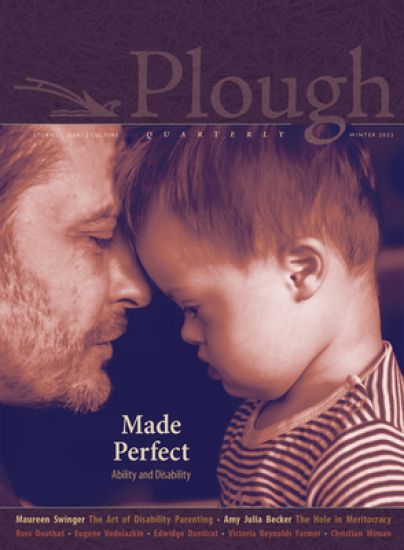
Whose lives count as fully human? The answer matters for everyone, disabled or not.The ancient Greek ideal linked physical wholeness to moral wholeness – the virtuous citizen was “beautiful and good.” It’s an ideal that has all too often turned deadly, casting those who do not measure up as less than human. In the pre-Christian era, infants with disabilities were left on the rocks; in modern times, they have been targeted by eugenics.Much has changed, thanks to the tenacious advocacy of the disability rights movement. Yesteryear’s hellish institutions have given way to customized educational programs and assisted living centers. Public spaces have been reconfigured to improve access. Therapies and medical technology have advanced rapidly in sophistication and effectiveness. Protections for people with disabilities have been enshrined in many countries’ antidiscrimination laws.But these victories, impressive as they are, mask other realities that collide awkwardly with society’s avowals of equality. Why are parents choosing to abort a baby likely to have a disability? Why does Belgian law allow for euthanasia in cases of disability, even absent a terminal diagnosis or physical pain? Why, when ventilators were in short supply during the first Covid wave, did some states list disability as a reason to deny care?On this theme: - Heonju Lee tells how his son with Down syndrome saved another child’s life.- Molly McCully Brown and Victoria Reynolds Farmer recount their personal experiences with disability.- Amy Julia Becker says meritocracies fail because they value the wrong things.- Maureen Swinger asks six mothers around the world about raising a child with disabilities.- Joe Keiderling documents the unfinished struggle for disability rights.- Isaac T. Soon wonders if Saint Paul’s “thorn in the flesh” was a disability.- Leah Libresco Sargeant reviews What Can a Body Do? and Making Disability Modern.- Sarah C. Williams says testing for fetal abnormalities is not a neutral practice.Also in the issue: - Ross Douthat is brought low by intractable Lyme disease.- Edwidge Danticat flees an active shooter in a packed mall.- Eugene Vodolazkin finds comic relief at funerals, including his own father’s.- Kelsey Osgood discovers that being an Orthodox Jew is strange, even in Brooklyn.- Christian Wiman pens three new poems.- Susannah Black profiles Flannery O’Conner.- Our writers review Eyal Press’s Dirty Work, Steve Coll’s Directorate S, and Millennial Nuns by the Daughters of Saint Paul.Plough Quarterly features stories, ideas, and culture for people eager to apply their faith to the challenges we face. Each issue includes in-depth articles, interviews, poetry, book reviews, and art.
Adam Nicolson; Gracy Olmstead; Christian Wiman; Kelsey Osgood; John Kempf; Leah Libresco Sargeant; Ian Marcus Corbin; Iván Bernal Marín; Phil Klay; Edmund Waldstein; Alfred Nicol
When we read the book of nature, what do we read there? “All things bright and beautiful, all creatures great and small, all things wise and wonderful, the Lord God made them all,” says a well-known hymn. This issue of Plough celebrates the creatures of our planet – plant, animal, and human – and the implications of humankind’s relationship to nature. But if nature can be read as a book that reveals the wisdom of its Creator, it also reveals things less lovely than stars and singing birds – a world of desperate competition for survival, mass extinctions, and deadly viruses. Is such a world a convincing argument for the Creator’s goodness? Turns out Christians and skeptics alike have been asking such questions since long before Darwin added a twist. Are we moderns out of practice at reading the book of nature? And if we forget how, will we fail to read human nature as well – what rights or purposes our Creator may have endowed us with? What then is there to limit the bounds of technological manipulation of humankind? This issue of Plough explores these and other fascinating questions about the natural world and our place in it. In this issue: - Sussex farmer Adam Nicholson evokes centuries of handwork that shaped the landscape of the Weald. - Gracy Olmstead revisits the land her forebears farmed in Idaho. - Ian Marcus Corbin tries walking phoneless to better note the beauty of the natural world. - Amish farmer John Kempf, a leader in regenerative agriculture, foresees a healthier future for farming. - Leah Libresco Sargeant offers a feminist critique of society’s war on women’s bodies. - Iván Bernal Marín visits Panama City’s traditional fishermen. - Maureen Swinger recalls to triumphs of second grade in forest school. - Edmund Waldstein questions head transplants and the limits of medical science. - Kelsey Osgood says it’s natural to fear death, and to transcend that fear through faith. - Tim Maendel lifts the veil on urban beekeeping along the Manhattan skyline. You’ll also find: - An essay by Christian Wiman on the poetry of doubt and faith - New poems by Alfred Nicol - A profile of Amazon activist nun Dorothy Stang - An appreciation of Keith Green’s songs - Insights on creation from Blaise Pascal, Julian of Norwich, Francis of Assisi, Mechthild of Magdeburg, Christopher Smart, Augustine of Hippo, The Book of Job, and Sadhu Sundar Singh - Reviews of The Opening of the American Mind, and Kazuo Ishiguro’s Klara and the Sun Plough Quarterly features stories, ideas, and culture for people eager to put their faith into action. Each issue brings you in-depth articles, interviews, poetry, book reviews, and art to help you put Jesus’ message into practice and find common cause with others.