Kirjojen hintavertailu. Mukana 12 595 353 kirjaa ja 12 kauppaa.

Kirjailija

Ken Booth

Kirjat ja teokset yhdessä paikassa: 15 kirjaa, julkaisuja vuosilta 1989-2022, suosituimpien joukossa Contemporary Strategy. Vertaile teosten hintoja ja tarkista saatavuus suomalaisista kirjakaupoista.

15 kirjaa

Kirjojen julkaisuhaarukka 1989-2022.

Contemporary Strategy

Contemporary Strategy

John Baylis; Ken Booth; John Garnett; Phil Williams

TAYLOR FRANCIS LTD
2022
nidottu
This book, first published in 1975, is a comprehensive examination of specialised strategic studies, and deals with the theoretical and policy aspects of the topic. It argues that military power is an intrinsic part of the international system, with strategy being the means by which military power may be used to achieve political objectives. Hence, given the destructiveness of modern weapons it is the prime aim of the strategic doctrines of the major powers not to wage war, but to use their military potential to further their interests by less catastrophic means. However, outside the Cold War superpower confrontation, strategy exhibits many of its traditional aspects. This book analyses both types of strategy variations.
Contemporary Strategy

Contemporary Strategy

John Baylis; Ken Booth; John Garnett; Phil Williams

Routledge
2021
sidottu
This book, first published in 1975, is a comprehensive examination of specialised strategic studies, and deals with the theoretical and policy aspects of the topic. It argues that military power is an intrinsic part of the international system, with strategy being the means by which military power may be used to achieve political objectives. Hence, given the destructiveness of modern weapons it is the prime aim of the strategic doctrines of the major powers not to wage war, but to use their military potential to further their interests by less catastrophic means. However, outside the Cold War superpower confrontation, strategy exhibits many of its traditional aspects. This book analyses both types of strategy variations.

Strategy and Ethnocentrism (Routledge Revivals)
Ken Booth’s study, first published in 1979, investigates the way in which cultural distortions have affected the theory and execution of strategy. Its aim is to illustrate the importance of ethnocentrism in all areas of the subject, to follow through its implications and to suggest approaches to the different problems it poses.Insights are offered into the character of a number of important issues in Cold War international politics, including the superpower arms race, détente, the Middle Eastern crisis, the Soviet arms build-up and the SALT talks. In light of the cost of modern warfare, it is all the more important to avoid strategic failures in the future. Strategy and Ethnocentrism aims to alert students of military and strategic studies to some ways of minimising the risks of failure in an age when war is increasingly characterised by racial, cultural and religious conflict.
Law, Force and Diplomacy at Sea (Routledge Revivals)
Law, Force and Diplomacy at Sea, first published in 1985, is one of the few comprehensive treatments on the subject from a strategic perspective. It offers a detailed strategic analysis of the background and outcome of the Third UN Conference on the Law of the Sea, and its naval implications.The interplay between the interest of the naval powers in freedom of navigation and the interest of coastal states in control provides the setting for the strategic problems. The sea is taking on more properties of the land: it is becoming ‘territorialised’, and this is presenting fresh challenges and opportunities to which navies and their national governments have to respond. This study is designed for students of naval strategy, for international lawyers and for students of international affairs who wish to think about the important security questions in the maritime environment.
Navies and Foreign Policy (Routledge Revivals)
First published in 1977, this study offers a comprehensive, systematic and integrated survey of the important relationship between navies and the making and execution of foreign policy. Ken Booth explains the functions navies can perform in both war and peace, the influence they have on particular situations, and how the relevant organisations can affect the character of naval actions. Ultimately, navies are regarded as indispensable instruments of the state by a number of countries, whilst all countries with a coast find some need to threaten a degree of force at sea. This book provides students and academics with the intellectual framework with which to assess the changing character of the navy.
International Relations: All That Matters

International Relations: All That Matters

Ken Booth

John Murray Learning
2014
nidottu
This is a short book about the biggest questions in politics. To paraphrase a famous dictum of Trotsky; you might not be interested (yet!) in international relations, but international relations are always interested in you.The practices of international relations critically shape who gets what and who is who across the world, and its theories inform how we live together globally. Decisive things take place at the international level, and they directly or indirectly affect all our lives: war, trade, and the provision of human rights for example. This book gives a comprehensive, accessible, and challenging overview of what is at stake, and what you need to know.
Law, Force and Diplomacy at Sea (Routledge Revivals)
Law, Force and Diplomacy at Sea, first published in 1985, is one of the few comprehensive treatments on the subject from a strategic perspective. It offers a detailed strategic analysis of the background and outcome of the Third UN Conference on the Law of the Sea, and its naval implications.The interplay between the interest of the naval powers in freedom of navigation and the interest of coastal states in control provides the setting for the strategic problems. The sea is taking on more properties of the land: it is becoming ‘territorialised’, and this is presenting fresh challenges and opportunities to which navies and their national governments have to respond. This study is designed for students of naval strategy, for international lawyers and for students of international affairs who wish to think about the important security questions in the maritime environment.
Navies and Foreign Policy (Routledge Revivals)
First published in 1977, this study offers a comprehensive, systematic and integrated survey of the important relationship between navies and the making and execution of foreign policy. Ken Booth explains the functions navies can perform in both war and peace, the influence they have on particular situations, and how the relevant organisations can affect the character of naval actions. Ultimately, navies are regarded as indispensable instruments of the state by a number of countries, whilst all countries with a coast find some need to threaten a degree of force at sea. This book provides students and academics with the intellectual framework with which to assess the changing character of the navy.
Strategy and Ethnocentrism (Routledge Revivals)
Ken Booth’s study, first published in 1979, investigates the way in which cultural distortions have affected the theory and execution of strategy. Its aim is to illustrate the importance of ethnocentrism in all areas of the subject, to follow through its implications and to suggest approaches to the different problems it poses.Insights are offered into the character of a number of important issues in Cold War international politics, including the superpower arms race, détente, the Middle Eastern crisis, the Soviet arms build-up and the SALT talks. In light of the cost of modern warfare, it is all the more important to avoid strategic failures in the future. Strategy and Ethnocentrism aims to alert students of military and strategic studies to some ways of minimising the risks of failure in an age when war is increasingly characterised by racial, cultural and religious conflict.
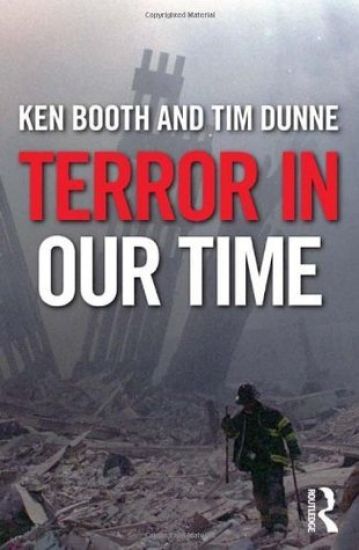
Terror in Our Time

Terror in Our Time

Ken Booth; Tim Dunne

Routledge
2011
nidottu
Written by two leading scholars, this book is an accessible overview of the global political consequences of the 9/11 terror attacks. The War on Terror has defined the first decade of this century. It has been marked by the deaths of thousands of people, political turmoil, massive destruction, and intense fear. Regardless of the name it goes under, the long war on terror will continue to affect lives across the world. Its catalyst, 9/11, did not have to happen, nor did the character of the responses. This book offers a set of novel interpretations of how we got here, where we are, and where we should be heading. It is organised around twelve penetrating and readable essays, full of novel interpretations and succinct summaries of complex ideas and events. In their examination of those aspects of global order touched by terror, the authors argue that the dangers of international terrorism are not overblown. Future 9/11s are possible: so is a more just and law-governed world. Terrorism cannot be disinvented, but with more intelligent policies than have been on show these past ten years, it can be overcome and made politically anachronistic.This book will be essential reading for all students of terrorism studies, international security, war and conflict studies and IR in general, as well as of much interest to well-informed lay readers.
Terror in Our Time

Terror in Our Time

Ken Booth; Tim Dunne

Routledge
2011
sidottu
Written by two leading scholars, this book is an accessible overview of the global political consequences of the 9/11 terror attacks. The War on Terror has defined the first decade of this century. It has been marked by the deaths of thousands of people, political turmoil, massive destruction, and intense fear. Regardless of the name it goes under, the long war on terror will continue to affect lives across the world. Its catalyst, 9/11, did not have to happen, nor did the character of the responses. This book offers a set of novel interpretations of how we got here, where we are, and where we should be heading. It is organised around twelve penetrating and readable essays, full of novel interpretations and succinct summaries of complex ideas and events. In their examination of those aspects of global order touched by terror, the authors argue that the dangers of international terrorism are not overblown. Future 9/11s are possible: so is a more just and law-governed world. Terrorism cannot be disinvented, but with more intelligent policies than have been on show these past ten years, it can be overcome and made politically anachronistic.This book will be essential reading for all students of terrorism studies, international security, war and conflict studies and IR in general, as well as of much interest to well-informed lay readers.
Theory of World Security

Theory of World Security

Ken Booth

Cambridge University Press
2007
sidottu
What is real? What can we know? How might we act? This book sets out to answer these fundamental philosophical questions in a radical and original theory of security for our times. Arguing that the concept of security in world politics has long been imprisoned by conservative thinking, Ken Booth explores security as a precious instrumental value which gives individuals and groups the opportunity to pursue the invention of humanity rather than live determined and diminished lives. Booth suggests that human society globally is facing a set of converging historical crises. He looks to critical social theory and radical international theory to develop a comprehensive framework for understanding the historical challenges facing global business-as-usual and for planning to reconstruct a more cosmopolitan future. Theory of World Security is a challenge both to well-established ways of thinking about security and alternative approaches within critical security studies.
Theory of World Security

Theory of World Security

Ken Booth

Cambridge University Press
2007
pokkari
What is real? What can we know? How might we act? This book sets out to answer these fundamental philosophical questions in a radical and original theory of security for our times. Arguing that the concept of security in world politics has long been imprisoned by conservative thinking, Ken Booth explores security as a precious instrumental value which gives individuals and groups the opportunity to pursue the invention of humanity rather than live determined and diminished lives. Booth suggests that human society globally is facing a set of converging historical crises. He looks to critical social theory and radical international theory to develop a comprehensive framework for understanding the historical challenges facing global business-as-usual and for planning to reconstruct a more cosmopolitan future. Theory of World Security is a challenge both to well-established ways of thinking about security and alternative approaches within critical security studies.
The Security Dilemma

The Security Dilemma

Ken Booth; Nicholas Wheeler

Red Globe Press
2007
nidottu
This provides the first comprehensive analysis of the concept of the 'security dilemma'. By exploring the theory and practice of the security dilemma through the prisms of fear, cooperation and trust, it considers whether the security dilemma can be mitigated or even transcended analysing a wide range of historical and contemporary cases.
Britain, NATO and Nuclear Weapons

Britain, NATO and Nuclear Weapons

Ken Booth; John Baylis

Palgrave Macmillan
1989
nidottu
An examination of nuclear arms control and defence containing papers that present opposing sides of the debate. Nuclear deterrence, Britain's defence budget, the state of Anglo-American relations, NATO strategies and Mr Gorbachev's security arrangements in Europe proposals are discussed.