Kirjojen hintavertailu. Mukana 12 390 323 kirjaa ja 12 kauppaa.

Kirjailija

Ken Jowitt

Kirjat ja teokset yhdessä paikassa: 4 kirjaa, julkaisuja vuosilta 1992-2021, suosituimpien joukossa Revolutionary Breakthroughs and National Development. Vertaile teosten hintoja ja tarkista saatavuus suomalaisista kirjakaupoista.

4 kirjaa

Kirjojen julkaisuhaarukka 1992-2021.

Revolutionary Breakthroughs and National Development

Revolutionary Breakthroughs and National Development

Ken Jowitt

University of California Press
2021
pokkari
This title is part of UC Press's Voices Revived program, which commemorates University of California Press’s mission to seek out and cultivate the brightest minds and give them voice, reach, and impact. Drawing on a backlist dating to 1893, Voices Revived makes high-quality, peer-reviewed scholarship accessible once again using print-on-demand technology. This title was originally published in 1971.
Revolutionary Breakthroughs and National Development

Revolutionary Breakthroughs and National Development

Ken Jowitt

University of California Press
2021
sidottu
This title is part of UC Press's Voices Revived program, which commemorates University of California Press’s mission to seek out and cultivate the brightest minds and give them voice, reach, and impact. Drawing on a backlist dating to 1893, Voices Revived makes high-quality, peer-reviewed scholarship accessible once again using print-on-demand technology. This title was originally published in 1971.
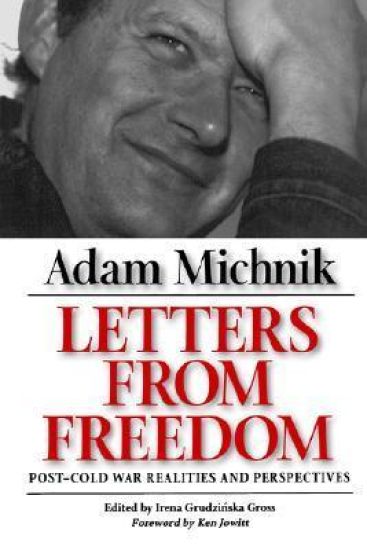
Letters from Freedom

Letters from Freedom

Adam Michnik; Ken Jowitt

University of California Press
1998
pokkari
A hero to many, Polish writer Adam Michnik ranks among today's most fearless and persuasive public figures. His imprisonment by Poland's military regime in the 1980s did nothing to quench his outpouring of writings, many of which were published in English as "Letters from Prison". Beginning where that volume ended, "Letters from Freedom" finds Michnik briefly in prison at the height of the 'cold civil war' between authorities and citizens in Poland, then released. Through his continuing essays, articles, and interviews, the reader can follow all the momentous changes of the last decade in Poland and East-Central Europe. Some of the writings have appeared in English in various publications; most are translated here for the first time. Michnik is never detached. His belief that people can get what they want without hatred and violence has always translated into action, and his actions, particularly the activity of writing, have required his contemporaries to think seriously about what it is they want. His commitment to freedom is absolute, but neither wild-eyed nor humorless; with a characteristic combination of idealism and pragmatism, Michnik says, 'In the end, politics is the art of foreseeing and implementing the possible'. Michnik's blend of conviction and political acumen is perhaps most vividly revealed in the interviews transcribed in the book, whether he is the subject of the interview or is conducting a conversation with Czeslaw Milosz, Vaclav Havel, or Wojciech Jaruzelski. These face-to-face exchanges tell more about the forces at work in contemporary Eastern Europe than could any textbook. Sharing Michnik's intellectual journey through a tumultuous era, we touch on all the subjects important to him in this wide-ranging collection and find they have importance for everyone who values conscience and responsibility. In the words of Jonathan Schell, 'Michnik is one of those who bring honor to the last two decades of the twentieth century'.
New World Disorder

New World Disorder

Ken Jowitt

University of California Press
1992
pokkari
Communism, or as Ken Jowitt prefers, Leninism, has attracted, repelled, mystified, and terrified millions for nearly a century. In his brilliant, timely, and controversial study, "New World Disorder", Jowitt identifies and interprets the extraordinary character of Leninist regimes, their political corruption, extinction, and highly unsettling legacy. Earlier attempts to grasp the essence of Leninism have treated the Soviet experience as either a variant of or alien to Western history, an approach that robs Leninism of much of its intriguing novelty. Jowitt instead takes a 'polytheist' approach, Weberian in tenor and terms, comparing the Leninist to the liberal experience in the West, rather than assimilating it or alienating it. Approaching the Leninist phenomenon in these terms and spirit emphasizes how powerful the imperatives set by the West for the rest of the world are as sources of emulation, assimilation, rejection, and adaptation; how unyielding premodern forms of identification, organization, and action are; how novel, powerful, and dangerous charisma as a mode of organized identity and action can be. The progression from essay to essay is lucid and coherent. The first six essays reject the fundamental assumptions about social change that inform the work of modernization theorists. Written between 1974 and 1990, they are, we know now, startlingly prescient. The last three essays, written in early 1991, are the most controversial: they will be called alarmist, pessimistic, apocalyptic. They challenge the complacent, optimistic, and self-serving belief that the world is being decisively shaped in the image of the West - that the end of history is at hand.