

Kirjailija
Ken Reid
Kirjat ja teokset yhdessä paikassa: 20 kirjaa, julkaisuja vuosilta 1999-2025, suosituimpien joukossa One to Remember: Stories from 39 Members of the Nhl's One Goal Club. Vertaile teosten hintoja ja tarkista saatavuus suomalaisista kirjakaupoista.
20 kirjaa
Kirjojen julkaisuhaarukka 1999-2025.

From Sportsnet Central host and broadcaster Ken Reid comes an inspiring and entertaining new collection of hockey stories about local legends who define the game and its values. In many communities across Canada, hockey lives in the nearby arenas and leagues that forge both decades-long rivalries and unbreakable friendships. Fans show up to cheer not for distant NHL superstars, but for the homegrown heroes who define their town. These players don't always make it to the big leagues, but they inevitably become legends. In this entertaining collection, Canadian broadcaster and Sportsnet Central host Ken Reid tells their uplifting stories, from Pictou, Nova Scotia, to Kimberley, British Columbia--and everywhere in between. There's Robbie Forbes, who arrived in Newfoundland in the mid-eighties still dreaming of the pros and ended up giving the town a dream of its own when he led the Corner Brook Royals to a Canadian Senior Hockey title. He also happens to be Sidney Crosby's uncle. In a legendary Ontario community, the name Paul Polillo is spoken in the same reverential breath as Wayne Gretzky in their shared hometown of Brantford. There's also the tragic story of George Pelawa, who may have been the inspiration for Tom Cochrane & Red Rider's famous song "Big League." And Tyson Wuttunee, an Indigenous player in Saskatchewan who, through hockey, found the family and home he'd always longed for. Featuring heartwarming stories of grit, leadership, and lifelong bonds, Ken Reid's Hometown Hockey Heroes celebrates how hockey, and the values the game teaches, can shape our communities for the better.
First Published in 2004. This pack on tackling truancy in schools is specifically written for use by teachers and for other caring professionals in the field, such as, education welfare officers, education social workers and educational psychologists. It brings together in twenty-four concise units the latest knowledge and good practice in the prevention and combating of truancy and other forms of non-attendance at school. Some units focus on understanding the causes and issues involved in truancy while others focus on the Government’s latest initiatives. The ideas contained in the units are specifically designed to help schools, LEAs and other caring professionals meet the Government’s new targets for reducing truancy. In order to help readers make the best use of the pack and its materials: each unit begins by providing a summary of its contents; each unit ends with a range of professional development questions or tasks which can be undertaken during training events. The pack can be read alongside Ken Reid’s book Truancy and Schools, also published by Routledge.

Hilarious face-changing adventures by one of the greats of British comics!

From the national bestselling author of One Night Only come 39 new stories about what a big-league goal can mean to an NHLer Including interviews with Billy Smith, Chris Mason, Damian Rhodes, Christian Thomas, and Slap Shot's Dave Hanson. This follow-up to Reid's national bestseller One Night Only: Conversations with the NHL's One-Game Wonders unearths the blood, sweat, tears, and laughs of the journey to and from a single big-league goal. If you've ever picked up a hockey stick, chances are you've dreamed of scoring in the National Hockey League. Ken Reid interviews and profiles 39 men who did just that: they bulged the twine in the best hockey league in the world ... but only once. From minor league call-ups to season-long mainstays and even a Hall of Famer, One to Remember answers all the questions ... What did that one tally mean? Was it enough to satisfy a lifelong ambition, or was it just the smallest taste of success? Is the achievement still cherished years later? Or is it bittersweet, a distant reminder of what could have been?

101 Things You Have Wondered about Someone in a Wheelchair
Ken Reid
Independently Published
2019
nidottu
Just like the title says, I wrote this book due to all of the questions I've gotten from living some thirty years in a wheelchair. So here it is folks. It's the good, the bad, and the ugly...and maybe a little toilet humor along the way.

The 10th March 1973 saw the first issue of Shiver and Shake released on the newsstands in Great Britain. Like its stablemate Whizzer and Chips, it was two comics in one, with Shiver mainly consisting of horror-themed comedy strips. On the back page of the comic, readers were treated to ‘A crazy “Monster Piece” for you to cut out and collect!’, and thus the Creepy Creations were born! That first gloriously gruesome entry from Ken Reid was titled ‘The One-Eyed Wonk of Wigan’. Readers were invited to send in their sketches for further instalments. Winners would receive a pound note for their work and see their creation brought to full-colour life by various Shiver and Shake artists (mainly by Reid). The Creepy Creations were a grand triumph. Seventy-nine appeared in total, with further entries appearing in annuals and specials. The success of this feature led to both the Wanted posters and WorldWide Weirdies being created for Whoopee!.

Truancy: Short and Long-term Solutions is a practical and accessible guide to dealing with the problem of truancy and non-attendance. It is the first book on the issue to actively focus on solutions to the problem, rather than the causes. Full of practical examples of the latest ways in which schools, teachers, education welfare officers and LEAs try to overcome their attendance difficulties. Ken Reid identifies nearly 120 short-term solutions as well as several long-term strategic approaches. The book also considers parental-condoned absenteeism, alternative curriculum schemes and mentoring, while the final chapter presents some strategic issues which policy-makers and politicians need to overcome. This book provides all teachers, deputy heads, head teachers, education welfare staff, social workers, learning mentors and other caring professionals with a repository of up-to-date ideas and solutions. It is essential reading for anyone involved in addressing the challenge of truancy.
At present about one million pupils truant from their schools on a daily basis and this book examines why they do it. The numerous reasons for truanting discussed are: disadvantageous home backgrounds problems with settling in socially at school poor performance in school experiencing bullying in school not coping with the transition from primary to secondary schooling. This book focuses on the social, psychological and educational causes of truancy. It examines recent research and gives many examples of good practice while also detailing the latest solutions for tackling this problem. The text is for teachers, heads of year and department heads, senior school managers, education welfare officers, social workers, educational psychologists, parents and all those with an interest in educational policy and practice.
In this engaging book Professor Ken Reid focuses on the needs of school professionals and leaders, providing them with workable, achievable solutions to radically reducing their truancy rates. As well as discussing the importance of regular attendance and the importance of sound leadership, Professor Reid provides: A highly effective whole school strategy for use in both primary and secondary schools Checklists on good practice Early intervention strategies Advice on using attendance panels Guidance on effective monitoring schemesSupporting throughout with case-studies, sample letters, reports, attendance calendars and action plans, this book will be an essential staff-room resource for head teachers, deputy head teachers, teachers and any educational professional eager to raise standards for all.
In this engaging book Professor Ken Reid focuses on the needs of school professionals and leaders, providing them with workable, achievable solutions to radically reducing their truancy rates. As well as discussing the importance of regular attendance and the importance of sound leadership, Professor Reid provides: A highly effective whole school strategy for use in both primary and secondary schools Checklists on good practice Early intervention strategies Advice on using attendance panels Guidance on effective monitoring schemesSupporting throughout with case-studies, sample letters, reports, attendance calendars and action plans, this book will be an essential staff-room resource for head teachers, deputy head teachers, teachers and any educational professional eager to raise standards for all.
Teachers and governments all agree that if you wish to raise educational standards then it’s imperative to improve school attendance, and yet an average of around ten per cent of secondary pupils are missing school on a daily basis. Despite governments around the globe trying to address this situation, any improvements have been negligible and improvements in school attendance have been stubbornly hard to achieve.As an internationally recognised expert on this topic, Professor Ken Reid offers workable, practical solutions to help schools improve attendance and to reduce non-attendance and truancy at government level, school and local authority level, individual pupil level and at the family level. Underpinned by the very latest research, but expanded upon with an accessible, practitioner focus, the issues covered by this topical text include: The causes of non-attendance and truancy Successful interventions and the evidence from research Reflections on the attempts to find national solutions Implementing home-school solutions An agenda for the futureSupporting throughout with case-studies and workable solutions to the most demanding of situations, this book will be essential reading for head teachers, deputy head teachers, teachers and any educational professional eager to raise standards for all.
Teachers and governments all agree that if you wish to raise educational standards then it’s imperative to improve school attendance, and yet an average of around ten per cent of secondary pupils are missing school on a daily basis. Despite governments around the globe trying to address this situation, any improvements have been negligible and improvements in school attendance have been stubbornly hard to achieve.As an internationally recognised expert on this topic, Professor Ken Reid offers workable, practical solutions to help schools improve attendance and to reduce non-attendance and truancy at government level, school and local authority level, individual pupil level and at the family level. Underpinned by the very latest research, but expanded upon with an accessible, practitioner focus, the issues covered by this topical text include: The causes of non-attendance and truancy Successful interventions and the evidence from research Reflections on the attempts to find national solutions Implementing home-school solutions An agenda for the futureSupporting throughout with case-studies and workable solutions to the most demanding of situations, this book will be essential reading for head teachers, deputy head teachers, teachers and any educational professional eager to raise standards for all.
Better Behaviour through Home-School Relations
Gill Ellis; Nicola S. Morgan; Ken Reid
Routledge
2013
nidottu
How can we create effective partnerships between home, school and the community? How can the relationships and communication between families and school be strengthened? How can families help schools to improve behaviour in their children, both at home and at school? Using a tried and tested framework that has been successfully implemented throughout a wide variety of very different schools and settings, ‘Family Values’ is a Scheme which engages and empowers families to work in close collaboration with schools and organisations, and which results in long-term improvements in behaviour, communication, pupil achievement and relationships. The ‘Family Values’ Scheme has been proven to: Help pupils to be more academically diligentHelp schools to assume a calmer, more peaceful ambienceForge better pupil-teacher relationshipsImprove Pupil and teacher wellbeingHelp parents to be more engaged with the schoolImprove children’s literacy, behaviour and attendanceProvide head teachers and their staff with an effective whole-school strategy.The authors’ award-winning ‘Family Values’ Scheme is underpinned by sound theoretical principles, and they show here how it has been successfully put into practice through case studies in real school settings. The book explores how the Scheme promotes social, emotional and family system theories, and, in linking effectively to SEAL (social and emotional aspects of learning), the Scheme compliments existing personal and social education programmes in all schools. Showing schools and organisations how to create effective partnerships with families and the community in a fun, exciting and sustainable way, Better Behaviour through Home-School Relations will be of huge benefit to all school staff, as well as local authorities, support groups, parents, charities and services.
Better Behaviour through Home-School Relations
Gill Ellis; Nicola S. Morgan; Ken Reid
Routledge
2013
sidottu
How can we create effective partnerships between home, school and the community? How can the relationships and communication between families and school be strengthened? How can families help schools to improve behaviour in their children, both at home and at school? Using a tried and tested framework that has been successfully implemented throughout a wide variety of very different schools and settings, ‘Family Values’ is a Scheme which engages and empowers families to work in close collaboration with schools and organisations, and which results in long-term improvements in behaviour, communication, pupil achievement and relationships. The ‘Family Values’ Scheme has been proven to: Help pupils to be more academically diligentHelp schools to assume a calmer, more peaceful ambienceForge better pupil-teacher relationshipsImprove Pupil and teacher wellbeingHelp parents to be more engaged with the schoolImprove children’s literacy, behaviour and attendanceProvide head teachers and their staff with an effective whole-school strategy.The authors’ award-winning ‘Family Values’ Scheme is underpinned by sound theoretical principles, and they show here how it has been successfully put into practice through case studies in real school settings. The book explores how the Scheme promotes social, emotional and family system theories, and, in linking effectively to SEAL (social and emotional aspects of learning), the Scheme compliments existing personal and social education programmes in all schools. Showing schools and organisations how to create effective partnerships with families and the community in a fun, exciting and sustainable way, Better Behaviour through Home-School Relations will be of huge benefit to all school staff, as well as local authorities, support groups, parents, charities and services.
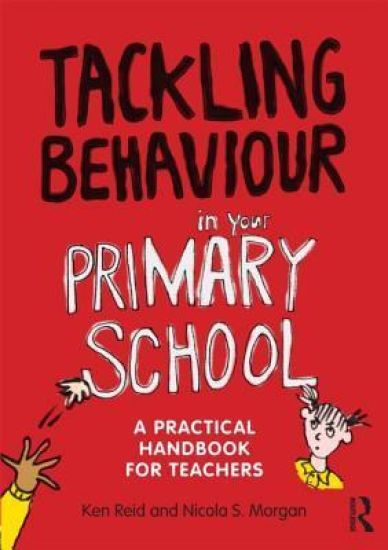
Tackling Behaviour in the Primary School provides ready-made advice and support for classroom professionals and can be used, read and adapted to suit the busy everyday lives of teachers working in primary schools today. This valuable text sets the scene for managing behaviour in the primary classroom in the context of the Children Act 2004 agenda, making it highly relevant to trainee primary teachers, learning school mentors, classroom assistants, behaviour specialists and senior management teams. As experts in the field of behaviour management, the authors draw on their many years of experience to provide evidenced whole-school strategies, extensively-researched concepts and step-by-step behaviour programmes. Topics covered include: Understanding behaviour How to measure behaviour and why this can be an effective approach Using and implementing whole-school behaviour policies Honing your classroom management skills Managing bullying Dealing with specific classroom difficulties Working effectively and supportively with parents.Drawing on case-studies throughout, this handbook will help you to understand and deal with the most confrontational of classroom behaviour. Tackling Behaviour in the Primary School provides all staff, parents and carers engaged in health, education and social services with a ready-made resource packed full of strategies, ideas, activities and solutions to help manage behaviour in even the toughest of classrooms.

DIGITAL ELECTRONICS is your all-in-one guide to the exciting world of digital electronics, from basic electrical theory and digital logic to hands-on, high-tech applications. Designed to support Project Lead the Way®'s (PLTW) innovative DE course, this dynamic text prepares you for college and career success in STEM, (Science, Technology, Engineering, and Math. The text introduces key concepts such as electrical shop practices and electrical theory, lets you build confidence by exploring key principles and applying what you learn, and helps you develop strong skills in circuit analysis, design, and troubleshooting. A wealth of examples and exercises are included to support your learning, and many feature Multisim™ integration to help you visualize and analyze circuits—including combinational and sequential circuits—before you construct them. Other proven learning tools are provided to make mastering the material easier, including self-check problems in every chapter, "Bring it Home" questions covering the basics, and challenging "Extra Mile" problems to help you deepen your understanding and hone your skills. DIGITAL ELECTRONICS is an ideal choice to support your STEM success!
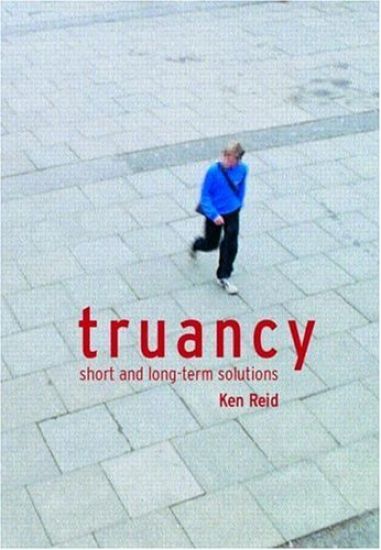
Truancy: Short and Long-term Solutions is a practical and accessible guide to dealing with the problem of truancy and non-attendance. It is the first book on the issue to actively focus on solutions to the problem, rather than the causes.Full of practical examples of the latest ways in which schools, teachers, education welfare officers and LEAs try to overcome their attendance difficulties. Ken Reid identifies nearly 120 short-term solutions as well as several long-term strategic approaches. The book also considers parental-condoned absenteeism, alternative curriculum schemes and mentoring, while the final chapter presents some strategic issues which policy-makers and politicians need to overcome.This book provides all teachers, deputy heads, head teachers, education welfare staff, social workers, learning mentors and other caring professionals with a repository of up-to-date ideas and solutions. It is essential reading for anyone involved in addressing the challenge of truancy.
First Published in 2004. This pack on tackling truancy in schools is specifically written for use by teachers and for other caring professionals in the field, such as, education welfare officers, education social workers and educational psychologists. It brings together in twenty-four concise units the latest knowledge and good practice in the prevention and combating of truancy and other forms of non-attendance at school. Some units focus on understanding the causes and issues involved in truancy while others focus on the Government’s latest initiatives. The ideas contained in the units are specifically designed to help schools, LEAs and other caring professionals meet the Government’s new targets for reducing truancy. In order to help readers make the best use of the pack and its materials: each unit begins by providing a summary of its contents; each unit ends with a range of professional development questions or tasks which can be undertaken during training events. The pack can be read alongside Ken Reid’s book Truancy and Schools, also published by Routledge.
At present about one million pupils truant from their schools on a daily basis and this book examines why they do it. The numerous reasons for truanting discussed are: * disadvantageous home backgrounds * problems with settling in socially at school * poor performance in school * experiencing bullying in school * not coping with the transition from primary to secondary schooling. This book focuses on the social, psychological and educational causes of truancy. It examines recent research and gives many examples of good practice while also detailing the latest solutions for tackling this problem. The text is for teachers, heads of year and department heads, senior school managers, education welfare officers, social workers, educational psychologists, parents and all those with an interest in educational policy and practice.