
Kirjojen hintavertailu. Mukana 12 222 480 kirjaa ja 12 kauppaa.

Kirjailija

Kenjiro Tokutomi

Kirjat ja teokset yhdessä paikassa: 4 kirjaa, julkaisuja vuosilta 2008-2026, suosituimpien joukossa Footprints in the Snow. Vertaile teosten hintoja ja tarkista saatavuus suomalaisista kirjakaupoista.

4 kirjaa

Kirjojen julkaisuhaarukka 2008-2026.

Footprints in the Snow

Footprints in the Snow

Kenjiro Tokutomi

TAYLOR FRANCIS LTD
2026
nidottu
First published in 1901 and this English translation in 1970, Footprints in the Snow is one of the most popular novels in modern Japan. It is the story of the struggle of a penniless Japanese boy Shintaro Kikuchi, for education and emancipation. Determined to rebuild the family fortunes after his father's bankruptcy, Shintaro runs away from home in a remote corner of Kyushu, in the hope of making his way in the world. Robbed by pickpockets, he nearly dies of hunger and exhaustion, then after slaving for months as a money-lender’s boy eventually succeeds in reaching a Christian College in Kyoto. A brilliant student, he accepts Christianity enthusiastically, but is also repelled by the arrogance of the Western missionary teachers towards a Japanese colleague that he walks out in protest. At last, four years after leaving home, Shintaro arrives in Tokyo. Yet even in the city of his dreams his life is far from peaceful- Shintaro has to struggle to keep himself at University, to pursue his career as a writer and journalist and in order to marry the girl he loves. The original Japanese title of Footprints in the Snow is Omoide no Ki. Kenjiro Tokutomi ‘s novel is still read in Japan today and more than any other novel conveys what it felt like to be young in the days of Japan’s great transformation from feudal to modern state. This is an interesting read for students of Japanese literature, Asian literature, and literature in general
Footprints in the Snow

Footprints in the Snow

Kenjiro Tokutomi

TAYLOR FRANCIS LTD
2024
sidottu
First published in 1901 and this English translation in 1970, Footprints in the Snow is one of the most popular novels in modern Japan. It is the story of the struggle of a penniless Japanese boy Shintaro Kikuchi, for education and emancipation. Determined to rebuild the family fortunes after his father's bankruptcy, Shintaro runs away from home in a remote corner of Kyushu, in the hope of making his way in the world. Robbed by pickpockets, he nearly dies of hunger and exhaustion, then after slaving for months as a money-lender’s boy eventually succeeds in reaching a Christian College in Kyoto. A brilliant student, he accepts Christianity enthusiastically, but is also repelled by the arrogance of the Western missionary teachers towards a Japanese colleague that he walks out in protest. At last, four years after leaving home, Shintaro arrives in Tokyo. Yet even in the city of his dreams his life is far from peaceful- Shintaro has to struggle to keep himself at University, to pursue his career as a writer and journalist and in order to marry the girl he loves.The original Japanese title of Footprints in the Snow is Omoide no Ki. Kenjiro Tokutomi ‘s novel is still read in Japan today and more than any other novel conveys what it felt like to be young in the days of Japan’s great transformation from feudal to modern state. This is an interesting read for students of Japanese literature, Asian literature, and literature in general
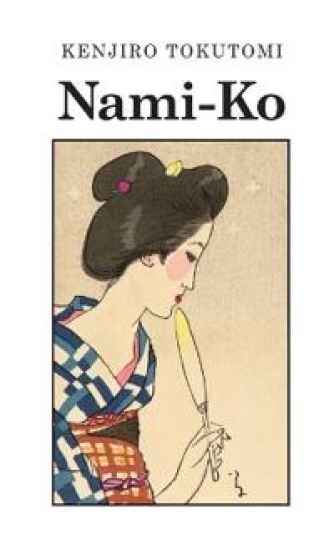
Nami-Ko

Nami-Ko

Kenjiro Tokutomi

University of Nebraska-Lincoln Libraries
2022
pokkari
Nami-Ko, also called The Cuckoo (不如帰, Hototogisu), is a tragic story of love and devotion, through sickness, war, oppression, and vengeance. Eighteen-year-old Nami Kataoka hoped her marriage to Baron Takeo Kawashima would bring freedom from her overbearing stepmother. But the couple's happiness is spoiled by her illness, her mother-in-law's jealousy, and the schemes of Chijiwa, her husband's cousin and her own disappointed suitor. Takeo's naval career takes him away for long periods, and when war breaks out between Japan and China (in 1894), his mother takes advantage of his absence to break up the marriage, sending Nami back to her father, the General Kataoka. Despite his love for Nami, Takeo- who is fearless and resolute in facing Chinese naval bombardment-is hesitant and seemingly helpless in the face of his mother's interference. More than a love story, the novel is a reflection on the systemic oppression of women-even among the wealthy classes-as well as the contrast between traditional samurai values and emergent commercial interests, and, moreover, the awakening of Japanese nationalism as expressed through military expansion.