Kirjojen hintavertailu. Mukana 12 595 353 kirjaa ja 12 kauppaa.

Kirjailija

Kennan Ferguson

Kirjat ja teokset yhdessä paikassa: 6 kirjaa, julkaisuja vuosilta 2007-2020, suosituimpien joukossa Cookbook Politics. Vertaile teosten hintoja ja tarkista saatavuus suomalaisista kirjakaupoista.

6 kirjaa

Kirjojen julkaisuhaarukka 2007-2020.

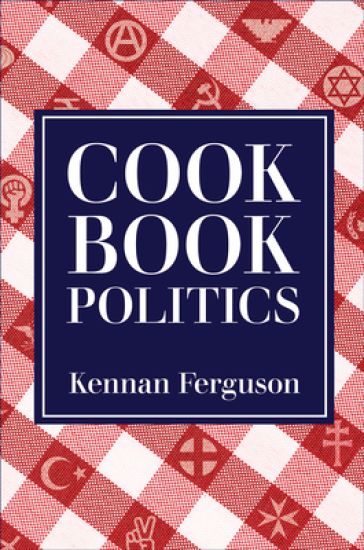
Cookbook Politics

Cookbook Politics

Kennan Ferguson

University of Pennsylvania Press
2020
sidottu
An original and eclectic view of cookbooks as political acts Cookbooks are not political in conventional ways. They neither proclaim, as do manifestos, nor do they forbid, as do laws. They do not command agreement, as do arguments, and their stipulations often lack specificity - cook "until browned." Yet, as repositories of human taste, cookbooks transmit specific blends of flavor, texture, and nutrition across space and time. Cookbooks both form and reflect who we are. In Cookbook Politics, Kennan Ferguson explores the sensual and political implications of these repositories, demonstrating how they create nations, establish ideologies, shape international relations, and structure communities. Cookbook Politics argues that cookbooks highlight aspects of our lives we rarely recognize as political-taste, production, domesticity, collectivity, and imagination-and considers the ways in which cookbooks have or do politics, from the most overt to the most subtle. Cookbooks turn regional diversity into national unity, as Pellegrino Artusi's Science in the Kitchen and the Art of Eating Well did for Italy in 1891. Politically affiliated organizations compile and sell cookbooks-for example, the early United Nations published The World's Favorite Recipes. From the First Baptist Church of Midland, Tennessee's community cookbook, to Julia Child's Mastering the Art of French Cooking, to the Italian Futurists' proto-fascist guide to food preparation, Ferguson demonstrates how cookbooks mark desires and reveal social commitments: your table becomes a representation of who you are. Authoritative, yet flexible; collective, yet individualized; cooperative, yet personal-cookbooks invite participation, editing, and transformation. Created to convey flavor and taste across generations, communities, and nations, they enact the continuities and changes of social lives. Their functioning in the name of creativity and preparation-with readers happily consuming them in similar ways-makes cookbooks an exemplary model for democratic politics.
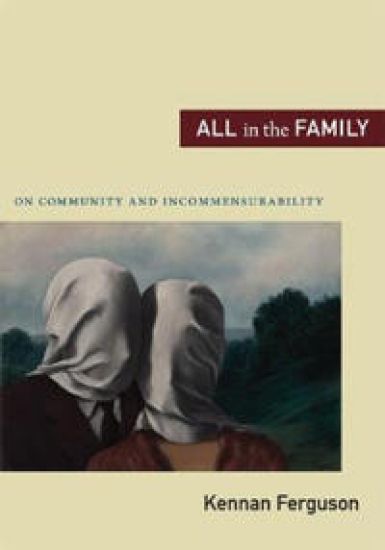
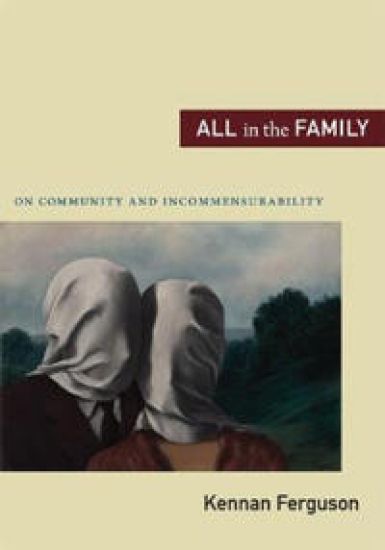
All in the Family

All in the Family

Kennan Ferguson

Duke University Press
2012
sidottu
Western political philosophers since Plato have used the family as a model for harmonious political and social relations. Yet, far from being an uncontentious domain for shared interests and common values, the family is often the scene of intense interpersonal conflict and disagreement. In All in the Family, the political theorist Kennan Ferguson reconsiders the family, in its varied forms, as an exemplar of democratic politics and suggests how real rather than idealized family dynamics can help us to better understand and navigate political conflict. By closely observing the attachments that arise in families despite profound disagreements and incommensurabilities, Ferguson argues, we can imagine a political engagement that accommodates radical differences without sacrificing community. After examining how the concept of the family has been deployed and misused in political philosophy, Ferguson turns to the ways in which families actually operate: the macropolitical significance of family coping strategies such as silence and the impact that disability and caregiving have on conceptions of spatiality, sameness, and disparity. He also considers the emotional attachment between humans and their pets as an acknowledgment that compassion and community can exist even under conditions of profound difference.
All in the Family

All in the Family

Kennan Ferguson

Duke University Press
2012
pokkari
Western political philosophers since Plato have used the family as a model for harmonious political and social relations. Yet, far from being an uncontentious domain for shared interests and common values, the family is often the scene of intense interpersonal conflict and disagreement. In All in the Family, the political theorist Kennan Ferguson reconsiders the family, in its varied forms, as an exemplar of democratic politics and suggests how real rather than idealized family dynamics can help us to better understand and navigate political conflict. By closely observing the attachments that arise in families despite profound disagreements and incommensurabilities, Ferguson argues, we can imagine a political engagement that accommodates radical differences without sacrificing community. After examining how the concept of the family has been deployed and misused in political philosophy, Ferguson turns to the ways in which families actually operate: the macropolitical significance of family coping strategies such as silence and the impact that disability and caregiving have on conceptions of spatiality, sameness, and disparity. He also considers the emotional attachment between humans and their pets as an acknowledgment that compassion and community can exist even under conditions of profound difference.
William James

William James

Kennan Ferguson

Rowman Littlefield Publishers
2007
nidottu
William James is known today strictly as a philosopher of pragmatism. Williams James: Politics in the Pluriverse challenges this understanding. Kennan Ferguson argues that James should instead be known as the progenitor of pluralism, one of the most influential and durable American political philosophies of the twentieth century. James contended that engagement with the foreign, the difficult, and the uncomfortable makes us who we are. Rather than mitigating differences or attempting to resolve conflicts, he embraced them, wholeheartedly advocating the opportunity to be transformed. Pluralism, in the mind of the thinker who popularized the term, led to a more complex, more contentious, and far more interesting world. Ferguson traces the historical importance and contemporary possibilities of pluralism's original political insight. In this important work he examines the trajectory of pluralism in the United States and England, the mutual influences of turn-of-the-century American and European philosophical traditions, and the relationship between pluralism and James's active anti-imperialism. James's unexpected political concepts and commitments both illuminate political philosophy of the 20th century and challenge contemporary assumptions about the desirability of unanimity. Pluralism, not unity, should be the goal of both politics and philosophy.
William James

William James

Kennan Ferguson

Rowman Littlefield Publishers
2007
sidottu
William James is known today strictly as a philosopher of pragmatism. Williams James: Politics in the Pluriverse challenges this understanding. Kennan Ferguson argues that James should instead be known as the progenitor of pluralism, one of the most influential and durable American political philosophies of the twentieth century. James contended that engagement with the foreign, the difficult, and the uncomfortable makes us who we are. Rather than mitigating differences or attempting to resolve conflicts, he embraced them, wholeheartedly advocating the opportunity to be transformed. Pluralism, in the mind of the thinker who popularized the term, led to a more complex, more contentious, and far more interesting world. Ferguson traces the historical importance and contemporary possibilities of pluralism's original political insight. In this important work he examines the trajectory of pluralism in the United States and England, the mutual influences of turn-of-the-century American and European philosophical traditions, and the relationship between pluralism and James's active anti-imperialism. James's unexpected political concepts and commitments both illuminate political philosophy of the 20th century and challenge contemporary assumptions about the desirability of unanimity. Pluralism, not unity, should be the goal of both politics and philosophy.
The Politics of Judgment

The Politics of Judgment

Kennan Ferguson

Lexington Books
2007
nidottu
This innovative and theoretically sophisticated book investigates how aesthetic judgment forms the groundwork for understanding political identities. It posits aesthetics as central to conceptions of politics that are based on how people understand the relationship between themselves and larger communities. Ferguson focuses not only on how different theoretical conceptions of political judgment relate to one another, but also on their historical development and potential meaning for contemporary scholarship across the humanities and social sciences. Drawing on recent contributions to philosophy, economics, cultural studies, feminism, psychology, and anthropology, The Politics of Judgment demonstrates how modern political identities depend upon and are formed by aesthetic judgment. Political theorists, social scientists, philosophers and cultural critics will find this book especially useful, though general readers will also be attracted by the author's keen insight into contemporary political questions.