Kirjojen hintavertailu. Mukana 12 595 353 kirjaa ja 12 kauppaa.

Kirjailija

Kenneth A. Dodge

Kirjat ja teokset yhdessä paikassa: 5 kirjaa, julkaisuja vuosilta 2010-2024, suosituimpien joukossa The Fast Track Program for Children at Risk. Vertaile teosten hintoja ja tarkista saatavuus suomalaisista kirjakaupoista.

5 kirjaa

Kirjojen julkaisuhaarukka 2010-2024.

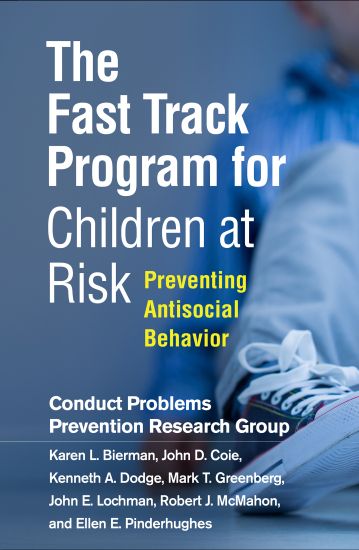
The Fast Track Program for Children at Risk

The Fast Track Program for Children at Risk

Karen L. Bierman; John D. Coie; Kenneth A. Dodge; Mark T. Greenberg; John E. Lochman; Robert J. McMahon; Ellen E. Pinderhughes

Guilford Press
2019
sidottu
This unique volume reports on the largest long-term preventive intervention study ever conducted with children at risk for serious violence and poor life outcomes. From first through 10th grade, Fast Track provided multicomponent interventions to support children, families, and schools in achieving positive social, emotional, and academic outcomes. The book explores the developmental processes associated with early aggression, describes how each component of FastTrack was developed and implemented, and summarizes outcomes up to 20 years later. Vivid case studies track the impact of comprehensive school- and family-based programming on children's pathways through the elementary and high school years. The concluding chapter offers recommendations for using Fast Track components in future violence prevention initiatives. See also the authors' Social and Emotional Skills Training for Children: The Fast Track Friendship Group Manual, a step-by-step guide to implementing one of the core components of Fast Track.
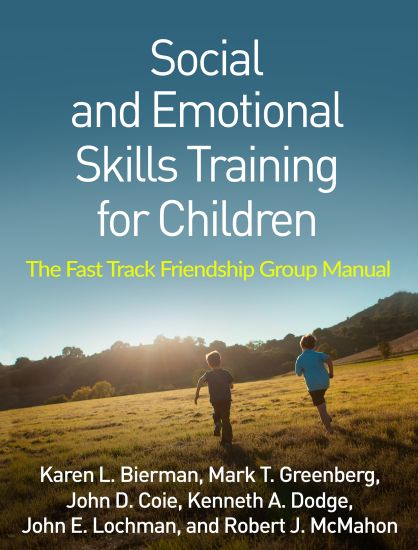
Social and Emotional Skills Training for Children

Social and Emotional Skills Training for Children

Karen L. Bierman; Mark T. Greenberg; John D. Coie; Kenneth A. Dodge; John E. Lochman

Guilford Press
2017
nidottu
From leading authorities, this volume presents a unique evidence-based group intervention for the 10–15% of children who are challenged by peer difficulties in elementary school. The book features 145 engaging full-color reproducible handouts, posters, and other tools. In addition to teaching core social skills (participation, communication, cooperation, good sportsmanship, conflict resolution), Friendship Group promotes emotional understanding and empathy, self-control, and effective coping with social stressors. Two complete sets of sessions are provided (grades K-2 and 3–5), including step-by-step implementation guidelines. The large-size format facilitates photocopying; purchasers also get access to a Web page where they can download and print the reproducible materials. See also the authors' Fast Track Program for Children at Risk: Preventing Antisocial Behavior, which describes the landmark study that used Friendship Group in tandem with other school- and family-based interventions.
Children's Defensive Mindset

Children's Defensive Mindset

Kenneth A. Dodge

Cambridge University Press
2024
sidottu
The primary psychological process leading aggressive children to grow into dysfunctional adults is a defensive mindset, which encompasses a pattern of deviant social information processing steps, including hypervigilance to threat; hostile attributional biases; psychophysiological reactivity, experience of rage and testosterone release (in males); aggressive problem-solving styles; aggressogenic decision-making biases; and deficient behavioral skills. These processes are acquired in childhood and predict adult maladjustment outcomes, including incarceration and premature death. The antecedents of defensive mindset lie in early childhood experiences of trauma and threat. The Fast Track (FT) intervention was designed to improve social competence in aggressive children. A randomized controlled trial demonstrated that FT is effective in preventing externalizing psychopathology; the primary mediating factor is the reduction of defensive mindset processes. This Element concludes with insights that defensive mindset might also explain dysfunction in other realms, including school culture, parenting, marriage, the workplace, intergroup relationships, politics, and international relations.
Children's Defensive Mindset

Children's Defensive Mindset

Kenneth A. Dodge

Cambridge University Press
2024
pokkari
The primary psychological process leading aggressive children to grow into dysfunctional adults is a defensive mindset, which encompasses a pattern of deviant social information processing steps, including hypervigilance to threat; hostile attributional biases; psychophysiological reactivity, experience of rage and testosterone release (in males); aggressive problem-solving styles; aggressogenic decision-making biases; and deficient behavioral skills. These processes are acquired in childhood and predict adult maladjustment outcomes, including incarceration and premature death. The antecedents of defensive mindset lie in early childhood experiences of trauma and threat. The Fast Track (FT) intervention was designed to improve social competence in aggressive children. A randomized controlled trial demonstrated that FT is effective in preventing externalizing psychopathology; the primary mediating factor is the reduction of defensive mindset processes. This Element concludes with insights that defensive mindset might also explain dysfunction in other realms, including school culture, parenting, marriage, the workplace, intergroup relationships, politics, and international relations.
A Dynamic Cascade Model of the Development of Substance - Use Onset

A Dynamic Cascade Model of the Development of Substance - Use Onset

Kenneth A. Dodge; Patrick S. Malone; Jennifer E. Lansford; Shari Miller; Gregory S. Pettit; John E. Bates

Wiley-Blackwell (an imprint of John Wiley Sons Ltd)
2010
nidottu
The book offers an extensive exploration of the childhood factors that can lead to substance abuse. Puts forward a dynamic cascade model of the development of adolescent substance-use onsetModel is based on broad sampling of children from prekindergarten through to Grade 12The results offer practical suggestions for interventions, public policies, and economics of substance-use and future inquiry