
Kirjailija
Kenneth A. Schultz
Kirjat ja teokset yhdessä paikassa: 4 kirjaa, julkaisuja vuosilta 2001-2025, suosituimpien joukossa World Politics. Vertaile teosten hintoja ja tarkista saatavuus suomalaisista kirjakaupoista.
4 kirjaa
Kirjojen julkaisuhaarukka 2001-2025.
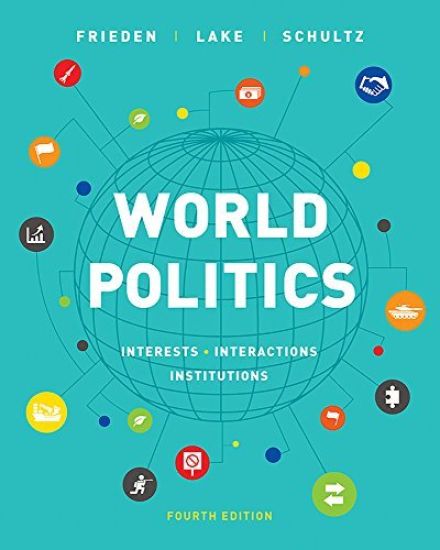
World Politics: Interests, Interactions, Institutions
Jeffry A. Frieden; David A. Lake; Kenneth A. Schultz
W. W. Norton Company
2018
nidottu
With a framework based on interests, interactions, and institutions, World Politics gives students the tools to understand international relations. In the thoroughly updated Fourth Edition, new Controversy units provide models for applying the concepts in each chapter to real-world issues and events. New InQuizitive activities--created and tested by instructors who teach with World Politics--then invite students to practice applying the analytical tools from the text to alternative examples and cases.
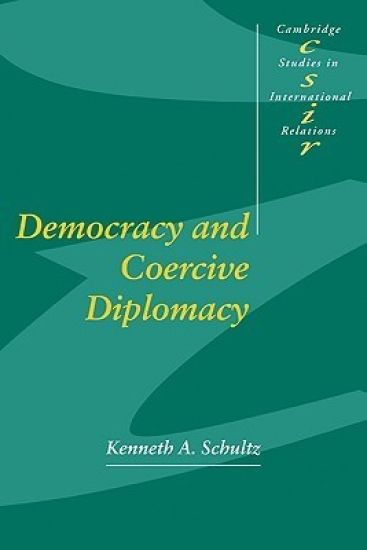
Kenneth Schultz explores the effects of democratic politics on the use and success of coercive diplomacy. He argues that open political competition between the government and opposition parties influences the decision to use threats in international crises, how rival states interpret those threats, and whether or not crises can be settled short of war. The relative transparency of their political processes means that, while democratic governments cannot easily conceal domestic constraints against using force, they can also credibly demonstrate resolve when their threats enjoy strong domestic support. As a result, compared to their non-democratic counterparts, democracies are more selective about making threats, but those they do make are more likely to be successful - that is, to gain a favorable outcome without resort to war. Schultz develops his argument through a series of game-theoretic models and tests the resulting hypothesis using both statistical analyses and historical case studies.

In this book, first published in 2001, Kenneth Schultz explores the effects of democratic politics on the use and success of coercive diplomacy. He argues that open political competition between the government and opposition parties influences the decision to use threats in international crises, how rival states interpret those threats, and whether or not crises can be settled short of war. The relative transparency of their political processes means that, while democratic governments cannot easily conceal domestic constraints against using force, they can also credibly demonstrate resolve when their threats enjoy strong domestic support. As a result, compared to their non-democratic counterparts, democracies are more selective about making threats, but those they do make are more likely to be successful - that is, to gain a favorable outcome without resort to war. Schultz develops his argument through a series of game-theoretic models and tests the resulting hypothesis using both statistical analyses and historical case studies.