

Kirjailija
Kenneth Burke
Kirjat ja teokset yhdessä paikassa: 30 kirjaa, julkaisuja vuosilta 1968-2026, suosituimpien joukossa Death in Venice. Vertaile teosten hintoja ja tarkista saatavuus suomalaisista kirjakaupoista.
30 kirjaa
Kirjojen julkaisuhaarukka 1968-2026.



When Kenneth Burke conceived his celebrated “Motivorum” project in the 1940s and 1950s, he envisioned it in three parts. Whereas the third part, A Symbolic of Motives, was never finished, A Grammar of Motives (1945) and A Rhetoric of Motives (1950) have become canonical theoretical documents. A Rhetoric of Motives was originally intended to be a two-part book. Here, at last, is the second volume, the until-now unpublished War of Words, where Burke brilliantly exposes the rhetorical devices that sponsor war in the name of peace. Discouraging militarism during the Cold War even as it catalogues belligerent persuasive strategies and tactics that remain in use today, The War of Words reveals how popular news media outlets can, wittingly or not, foment international tensions and armaments during tumultuous political periods. This authoritative edition includes an introduction from the editors explaining the compositional history and cultural contexts of both The War of Words and A Rhetoric of Motives. The War of Words illuminates the study of modern rhetoric even as it deepens our understanding of post–World War II politics.

When Kenneth Burke conceived his celebrated “Motivorum” project in the 1940s and 1950s, he envisioned it in three parts. Whereas the third part, A Symbolic of Motives, was never finished, A Grammar of Motives (1945) and A Rhetoric of Motives (1950) have become canonical theoretical documents. A Rhetoric of Motives was originally intended to be a two-part book. Here, at last, is the second volume, the until-now unpublished War of Words, where Burke brilliantly exposes the rhetorical devices that sponsor war in the name of peace. Discouraging militarism during the Cold War even as it catalogues belligerent persuasive strategies and tactics that remain in use today, The War of Words reveals how popular news media outlets can, wittingly or not, foment international tensions and armaments during tumultuous political periods. This authoritative edition includes an introduction from the editors explaining the compositional history and cultural contexts of both The War of Words and A Rhetoric of Motives. The War of Words illuminates the study of modern rhetoric even as it deepens our understanding of post–World War II politics.
Attitudes Toward History is a two-volume work by the renowned literary critic and philosopher, Kenneth Burke. The book is an exploration of the various attitudes that people hold towards history, and how these attitudes shape our understanding of the past. Burke argues that our attitudes towards history are not objective or neutral, but are shaped by our individual experiences, biases, and cultural backgrounds. The first volume of the book focuses on the theoretical framework for understanding attitudes towards history, while the second volume provides case studies of specific historical events and how different attitudes towards these events have shaped our understanding of them. Throughout the book, Burke emphasizes the importance of understanding our own attitudes towards history in order to better understand the perspectives of others, and to develop a more nuanced and complex understanding of the past. Attitudes Toward History is a seminal work in the field of literary criticism and has had a significant impact on the study of history and historiography.Two Volumes In One Book.This scarce antiquarian book is a facsimile reprint of the old original and may contain some imperfections such as library marks and notations. Because we believe this work is culturally important, we have made it available as part of our commitment for protecting, preserving, and promoting the world's literature in affordable, high quality, modern editions, that are true to their original work.

Permanence and Change: An Anatomy of Purpose is a philosophical and rhetorical exploration of the concepts of permanence and change in human life and society, written by American literary theorist and philosopher Kenneth Burke. The book is divided into three parts, each of which examines a different aspect of the relationship between permanence and change.In the first part, Burke explores the ways in which human beings seek permanence and stability in a world that is constantly changing. He argues that our desire for permanence is rooted in our need for identity and meaning, and that we often create symbolic systems and institutions to give us a sense of stability and continuity.The second part of the book focuses on the ways in which social and cultural change occurs, and the role that language and rhetoric play in shaping our perceptions of the world. Burke argues that language is not just a tool for communication, but also a means of shaping our understanding of reality and influencing our behavior.Finally, in the third part of the book, Burke examines the relationship between permanence and change in the context of art and literature. He argues that art and literature are uniquely positioned to explore the tension between these two concepts, and that they can help us to better understand our own relationship to the world around us.Overall, Permanence and Change is a thought-provoking and insightful exploration of some of the most fundamental questions of human existence, and an important contribution to the fields of philosophy, rhetoric, and literary theory.This scarce antiquarian book is a facsimile reprint of the old original and may contain some imperfections such as library marks and notations. Because we believe this work is culturally important, we have made it available as part of our commitment for protecting, preserving, and promoting the world's literature in affordable, high quality, modern editions, that are true to their original work.


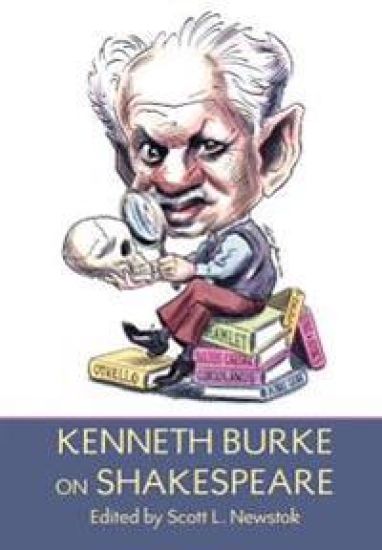

Kenneth Burke continued to write poetry after the 1968 publication of his Collected Poems, but until now the poetry from the last quarter century of his life has remained largely unpublished, hiding in the mass of papers at his farmhouse in Andover, New Jersey. Suggesting that the Burke canon is not complete without these works, Julie Whitaker and David Blakesley here assemble the poems that the celebrated critic wrote between 1968 and his death. The collection of more than 150 poems provides new evidence that Burke continued ""dancing an attitude"" until the end of his life. In his introduction, Blakesley lays out the relationship between the poems and Burkean theory, including the evolution of both during the writer's last three decades. Although some of these poems clearly resonate best in light of Burke's more prominent works on rhetoric and literary criticism, Blakesley argues that it would be a disservice to attribute the poetry's value strictly to what it says about Burkean theory. These poems reveal much about the man himself: an accomplished scholar reflecting on the richness of a life fully lived, a husband eloquently struggling with the death of his wife, a voracious thinker looking eagerly to the future. The poems take to heart Burke's pronouncement made in The Philosophy of Literary Form, that the poet enacts literature as equipment for living. In her preface, Whitaker explains the principles she employed in sifting through the vast quantity of articles, papers, and letters to uncover Burke's later poems. She also discloses Burke's intent to collect and publish another volume of poetry, touches on her personal relationship with him, and offers her observations on the place poetry held in his life and thought.
The gorgeous, brilliant essay-stories of Kenneth Burke were unlike any other fiction of the 1920s. Here & Elsewhere gathers, for the first time, all of Burke’s fiction: 23 short stories and Towards a Better Life, which Denis Donoghue calls “one of my favorite novels, full of sentences so luminous that I could be easily persuaded that style is everything.”
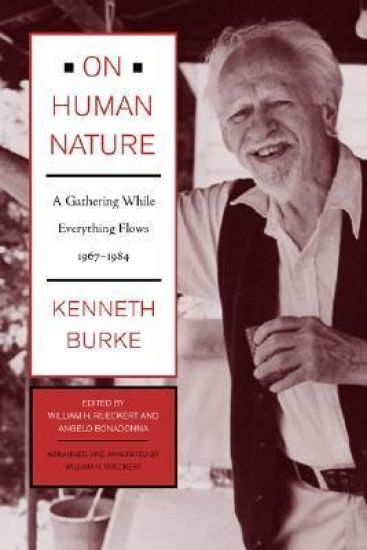
On Human Nature: A Gathering While Everything Flows brings together the late essays, autobiographical reflections, an interview, and a poem by the eminent literary theorist and cultural critic Kenneth Burke (1897-1993). Burke, author of Language as Symbolic Action, A Grammar of Motives, and Rhetoric of Motives, among other works, was an innovative and original thinker who worked at the intersection of sociology, psychology, literary theory, and semiotics. This book, a selection of fourteen representative pieces of his productive later years, addresses many important themes Burke tackled throughout his career such as logology (his attempt to find a universal language theory and methodology), technology, and ecology. The essays also elaborate Burke's notions about creativity and its relation to stress, language and its literary uses, the relation of mind and body, and more. Provocative, idiosyncratic, and erudite, On Human Nature makes a significant statement about cultural linguistics and is an important rounding-out of the Burkean corpus.
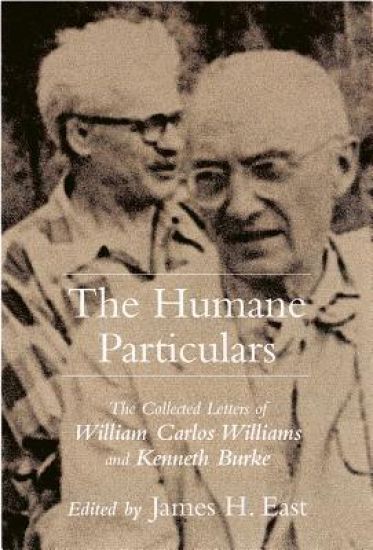
The Humane Particulars
William Carlos Williams; Kenneth Burke
University of South Carolina Press
2003
sidottu
Significantly deepening our understanding of two key figures from the modernist period, The Humane Particulars collects the letters between William Carlos Williams and Kenneth Burke. Written during forty-two years of close friendship and literary debate, these nearly 250 letters span two long lives, two complicated personalities, and two brilliantly productive careers. The animated exchange between a canonical poet and the leading American rhetorical critic of the twentieth century offers a more complete vision of their outlooks and their contributions to the shape and tenor of the modernist scene. Set in context by James H. East's introduction and explanatory notes, the letters begin just after Burke and Williams's initial meeting in 1921 during a tramp through a New Jersey swamp and surrounding meadowlands. Their written exchange follows the maturing of their friendship and professional regard. The correspondence shows that Williams and Burke were fast friends during the experimental twenties, preoccupied by individual and divergent projects in the thirties and early forties, and reunited as enthusiastic correspondents after the Second World War. The letters refer to happy times spent together - walks in the woods, picnics and swimming, and visits to Burke's farm in Andover, New Jersey. They reveal, among other interesting personal matters, Burke's fascination with Williams's double life as physician and poet, Burke's hypochondria, and Williams's at times chastising medical advice to Burke. But, more important, the letters preserve the continual wrangling over the origin and nature of literary form that enlightened the pair's many disagreements. Of particular interest, the correspondence documents a largely unexplored aspect of Burke's career - his reciprocally influential relationship with the writers of the late modern and midcentury periods.
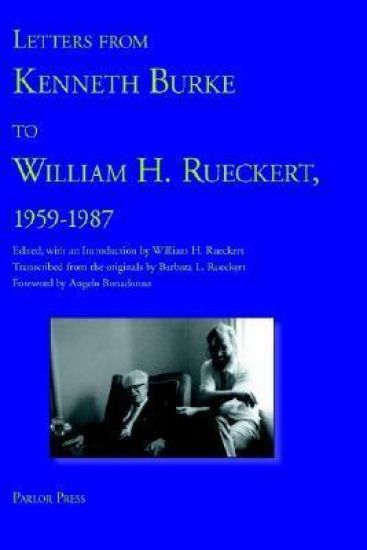
Letters from Kenneth Burke to William H. Rueckert, 1959-1987
Kenneth Burke; Bonadonna Angelo
Parlor Press
2002
pokkari