Kirjojen hintavertailu. Mukana 12 595 353 kirjaa ja 12 kauppaa.

Kirjailija

Kenneth Cmiel

Kirjat ja teokset yhdessä paikassa: 2 kirjaa, julkaisuja vuosilta 2001-2019, suosituimpien joukossa The Ladies' Etiquette Handbook. Vertaile teosten hintoja ja tarkista saatavuus suomalaisista kirjakaupoista.

2 kirjaa

Kirjojen julkaisuhaarukka 2001-2019.

Promiscuous Knowledge

Promiscuous Knowledge

Kenneth Cmiel; John Durham Peters

University of Chicago Press
2019
sidottu
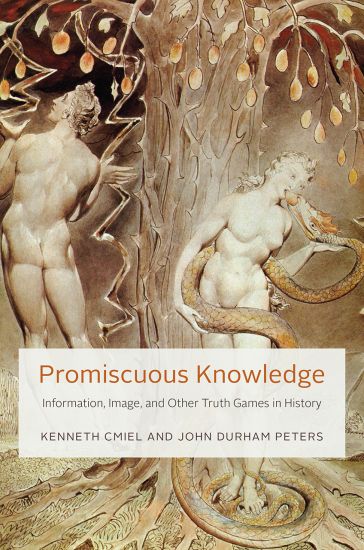
Sergey Brin, a cofounder of Google, once compared the perfect search engine to the "mind of God." As the modern face of promiscuous knowledge, however, Google's divine omniscience traffics indifferently in news, maps, weather, and porn. This book, begun by the late Kenneth Cmiel and completed by his close friend John Durham Peters, provides a genealogy of the information age from its early origins up to the reign of Google. It examines how we think about fact, image, and knowledge, centering on the different ways that claims of truth are complicated when they pass to a larger public. To explore these ideas, Cmiel and Peters focus on three main time periods--the late nineteenth century, 1925 to 1945, and 1975 to 2000, with constant reference to the present. Cmiel's original text examines the collapse he saw in the growing gulf between politics and aesthetics in postmodern architecture, the distancing of images from everyday life in magical realist cinema, the waning support for national betterment through taxation, and the inability of a single presentational strategy to contain the social whole. Peters brings Cmiel's study into the present moment, providing the backstory to current controversies over filter-bubbles, echo chambers, and "fake news." A hybrid work from two innovative thinkers, Promiscuous Knowledge is an enlightening contribution to our understanding of the internet and the profuse visual culture of our time.
The Ladies' Etiquette Handbook

The Ladies' Etiquette Handbook

Kenneth Cmiel

University of Iowa Press
2001
sidottu
Prior to the late 19th century, most Americans viewed dining as a unitarian duty characterized by common ""meat and potato"" dishes and complemented by little, if any, polite conversation. With the boom in industrialism and the sudden growth of the middle class in the 1880s, America's interest in social etiquette rose dramatically. Consisting of two separate publications - ""The Ladies' Handbook and Household Assistant"" (1886) and ""Short Hints on Social Etiquette"" (1887) - ""The Ladies' Etiquette Handbook"" can be read as a testament to the growing division between social classes and, at the same time, as a reflection of the middle class' overwhelming desire to cross social lines through the graces of fine etiquette. Written by a Methodist women's church group in Manchester, New Hampshire, ""The Ladies' Handbook and Household Assistant"" provides advice on subjects such as church etiquette and the proper handling of cutlery as well as recipes for the socially active household. ""Short Hints on Social Etiquette"", published as a promotional piece by a Philadelphia soap manufacturer - including descriptions of lavish meals, advice on proper word pronunciation, and illustrations of tasteful calling cards - strives to bring ""aristocratic"" values into the ""republican"" home. The foreword by Kenneth Cmiel, professor of history at the University of Iowa, provides an overview of the historic and social trends leading up to the publication of both handbooks and traces the creation and ultimate development of modern social etiquette.