Kirjojen hintavertailu. Mukana 12 595 353 kirjaa ja 12 kauppaa.
Kirjailija
Kenneth Cushner
Kirjat ja teokset yhdessä paikassa: 9 kirjaa, julkaisuja vuosilta 1995-2024, suosituimpien joukossa Teacher as Traveler. Vertaile teosten hintoja ja tarkista saatavuus suomalaisista kirjakaupoista.
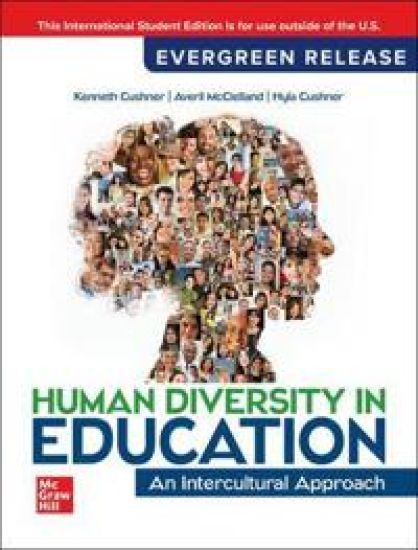
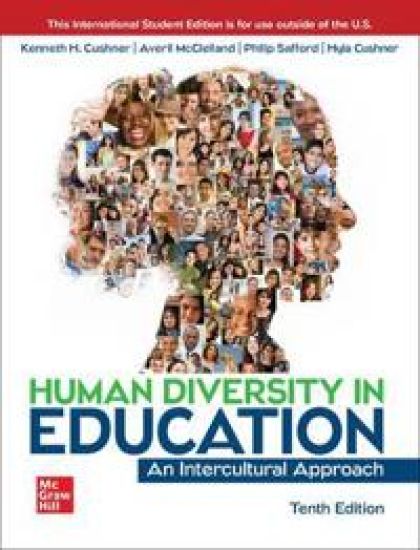
Human Diversity in Education: An Intercultural Approach prepares new teachers for the certainty of change and the wide range of diversity found in today’s classrooms. It guides future teachers to help diverse young people develop the skills needed to take their places as responsible, reflective, and active citizens in a global society. The chapters’ Case Studies introduce students to an array of international and intercultural opportunities that will enhance their own global perspectives and exposure, while preparing them for situations they may encounter in the workplace and community. Accompanying questions and critical incidents assist students in exploring how they would react when faced with similar situations and challenges. Human Diversity in Education incorporates coverage of current events and relevant legislation throughout the book to ensure students are familiar with the landscape and issues teachers face in today's classrooms.
This new edition of Human Diversity in Education provides coverage of current events and relevant legislation is incorporated throughout the book to ensure students are educated on the most critical issues teachers are faced with in today's classroom. It prepares new teachers for the certainty of change as well as the challenge of new thinking that is required for young people to take their place as responsible, reflective, and active citizens in an increasingly interdependent society. Case Studies in each chapter present students with situations they may encounter in the workplace, and accompanying questions ask them to determine how they would react when faced with the same situation.
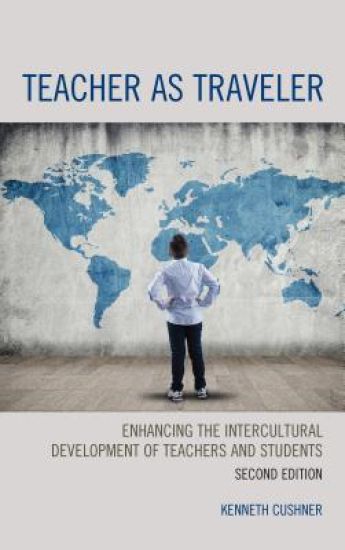
The essence of this second edition, under the revised title Teacher as Traveler: Enhancing the Intercultural Development of Teachers and Students, is to examine the development of intercultural competence through various dimensions of student travel, study abroad and intercultural encounters. Cushner, who has traveled with students and teachers to all seven continents for more than 40 years, uses his firsthand experiences as the foundation to introduce essential concepts related to cross-cultural communication and intercultural interaction and to point out strategies educators can employ to enhance intercultural learning. This second edition reflects the considerable research that has occurred in recent years that has helped us better understand the impact and design of international travel experiences that have the potential to enhance intercultural development. In addition to updated research, the chapters examine new study abroad initiatives while looking closely at the critical role that guided teacher-led experience plays in facilitating intercultural growth and development.
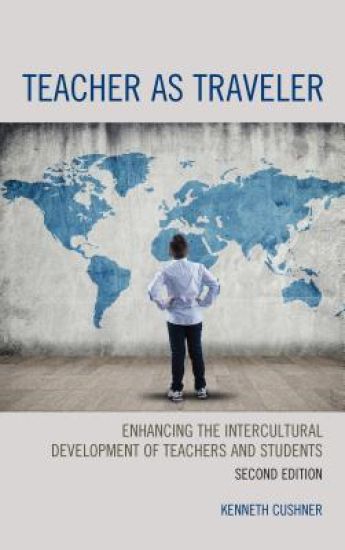
The essence of this second edition, under the revised title Teacher as Traveler: Enhancing the Intercultural Development of Teachers and Students, is to examine the development of intercultural competence through various dimensions of student travel, study abroad and intercultural encounters. Cushner, who has traveled with students and teachers to all seven continents for more than 40 years, uses his firsthand experiences as the foundation to introduce essential concepts related to cross-cultural communication and intercultural interaction and to point out strategies educators can employ to enhance intercultural learning. This second edition reflects the considerable research that has occurred in recent years that has helped us better understand the impact and design of international travel experiences that have the potential to enhance intercultural development. In addition to updated research, the chapters examine new study abroad initiatives while looking closely at the critical role that guided teacher-led experience plays in facilitating intercultural growth and development.
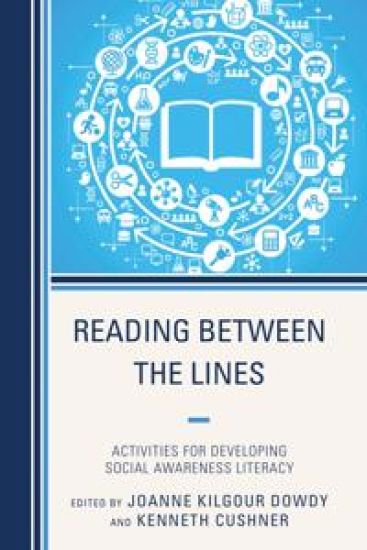
This book presents the work from a selection of contributors who aim to provide educators with hands-on activities to encourage reflection, awareness, and dialogue related to social justice issues. Highlighting the need for teachers to intentionally create spaces where students from all backgrounds can work together and appreciate their differences, teachers and teacher educators showcase hands-on literacy strategies that all educators can adapt and use in their own classrooms to enhance social justice awareness.
This book presents the work from a selection of contributors who aim to provide educators with hands-on activities to encourage reflection, awareness, and dialogue related to social justice issues. Highlighting the need for teachers to intentionally create spaces where students from all backgrounds can work together and appreciate their differences, teachers and teacher educators showcase hands-on literacy strategies that all educators can adapt and use in their own classrooms to enhance social justice awareness.
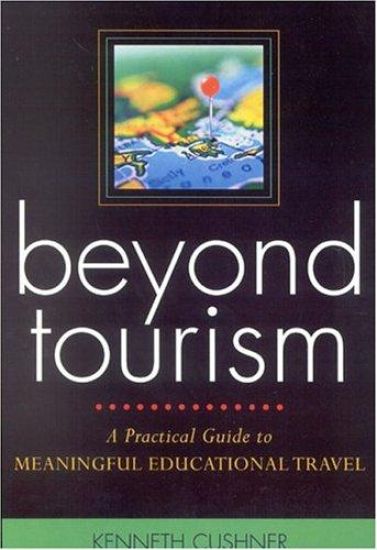
If young people are to be adequately prepared for a complex and interdependent global society, educational experiences must consider the broader world in which teachers and their students live. Teachers can be central to the process of intercultural development, and must encourage and model an intercultural orientation for their young students as well as for their communities. A critical dimension of achieving intercultural understanding and competence is personal experience. In Beyond Tourism, Kenneth Cushner examines the development of intercultural competence through various dimensions of student travel and intercultural encounters, both for the classroom teacher conducting group travel as well as individuals embarking upon student exchange programs, intensive summer experiences, and international student teaching. The author examines: aspects of cross-cultural orientation, trip planning and preparation, intercultural adjustment, in-country experience and post-experience impact through his experiences of organizing and leading international and intercultural educational programs for children, pre-service, and in-service teachers on all seven continents. Cushner integrates current research on the intercultural experience and relates it to his personal travel experiences while providing guidelines to enable educators to integrate reflective travel as an active part of the educational experience of young people. Multicultural, social studies, and foreign language teachers, international educators and study abroad officers, and those interested in experiential education will find this book invaluable.
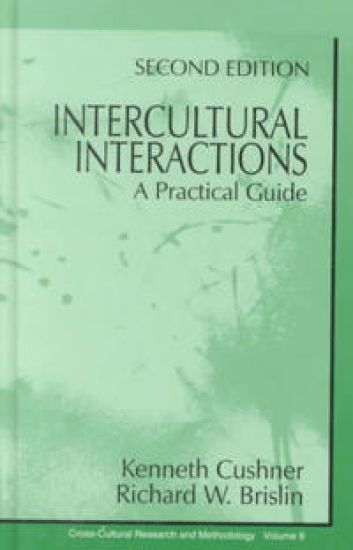
The first edition of Intercultural Interactions pioneered the 18-theme "culture-general" framework that has become the basis of work and research with a diverse array of populations, from interpreters for the deaf to helping professionals in multicultural settings and businesspeople around the world. Even more comprehensive in its scope and now with a practical new user's guide, the second edition expands coverage to draw the reader in--with more vivid scenarios and examples reflecting changing world events and social milieu. Updated essays integrate these critical incidents, incorporating the most current developments in the field of cross-cultural training. A special chapter, the user's guide provides practical, time-saving suggestions for using the book in a variety of training programs as well as preparing for the cross-cultural experience. Across the spectrum of professional, educational, and personal settings, the second edition of Intercultural Interactions offers a key framework for living, interpreting, and assimilating cross-cultural experiences. This book is integral for use in culture-centered training and research programs, college coursework in psychology and global management, programs for overseas business people and study abroad students, and multicultural health care and mental health settings. [all the quotes here are:] Praise for the first edition . . . "Brislin and his coauthors have developed a most interesting training device designed to aid sojourners, executives, teachers, and others during the inevitable adjustment period they will face whenever they go to another culture or country. The book will primarily be seen as a helpful aid to anyone who is interested in training and evaluating those who are preparing for 'close encounters of the other-culture kind.' However, it will also be welcomed by many academicians as a useful way in which to discuss certain social psychological principles, such as attribution processes or dimensions of interpersonal attraction." --from the Preface by Walter J. Lonner & John W. Berry "The appearance of Intercultural Interactions is a major event for researchers and trainers in the field of cross-cultural communication. The critical incidents and essays presented are intensely practical in their orientation, broad in their coverage of the main problem areas, and deep in the insights they provide." --Geert Hofstede, University of Limburg at Maastricht, The Netherlands "This admirable volume is addressed to the lay person. The purpose of the educational materials in this book is to assist people when they must adjust to life in another country, or to assist them when they are to interact extensively with people from other cultural backgrounds." --Contributions to Indian Sociology "The authors carefully describe the process they used to develop the training materials, giving convincing empirical evidence of their validity. Those who prepare sojourners will find the result of their work to be a highly useful resource." --Review and Expositor
The first edition of Intercultural Interactions pioneered the 18-theme "culture-general" framework that has become the basis of work and research with a diverse array of populations, from interpreters for the deaf to helping professionals in multicultural settings and businesspeople around the world. Even more comprehensive in its scope and now with a practical new user's guide, the second edition expands coverage to draw the reader in--with more vivid scenarios and examples reflecting changing world events and social milieu. Updated essays integrate these critical incidents, incorporating the most current developments in the field of cross-cultural training. A special chapter, the user's guide provides practical, time-saving suggestions for using the book in a variety of training programs as well as preparing for the cross-cultural experience. Across the spectrum of professional, educational, and personal settings, the second edition of Intercultural Interactions offers a key framework for living, interpreting, and assimilating cross-cultural experiences. This book is integral for use in culture-centered training and research programs, college coursework in psychology and global management, programs for overseas business people and study abroad students, and multicultural health care and mental health settings. [all the quotes here are:] Praise for the first edition . . . "Brislin and his coauthors have developed a most interesting training device designed to aid sojourners, executives, teachers, and others during the inevitable adjustment period they will face whenever they go to another culture or country. The book will primarily be seen as a helpful aid to anyone who is interested in training and evaluating those who are preparing for 'close encounters of the other-culture kind.' However, it will also be welcomed by many academicians as a useful way in which to discuss certain social psychological principles, such as attribution processes or dimensions of interpersonal attraction." --from the Preface by Walter J. Lonner & John W. Berry "The appearance of Intercultural Interactions is a major event for researchers and trainers in the field of cross-cultural communication. The critical incidents and essays presented are intensely practical in their orientation, broad in their coverage of the main problem areas, and deep in the insights they provide." --Geert Hofstede, University of Limburg at Maastricht, The Netherlands "This admirable volume is addressed to the lay person. The purpose of the educational materials in this book is to assist people when they must adjust to life in another country, or to assist them when they are to interact extensively with people from other cultural backgrounds." --Contributions to Indian Sociology "The authors carefully describe the process they used to develop the training materials, giving convincing empirical evidence of their validity. Those who prepare sojourners will find the result of their work to be a highly useful resource." --Review and Expositor