Kirjojen hintavertailu. Mukana 12 390 323 kirjaa ja 12 kauppaa.

Kirjailija

Kenneth Dawson-Howe

Kirjat ja teokset yhdessä paikassa: 3 kirjaa, julkaisuja vuosilta 2001-2014, suosituimpien joukossa A Practical Introduction to Computer Vision with OpenCV. Vertaile teosten hintoja ja tarkista saatavuus suomalaisista kirjakaupoista.

3 kirjaa

Kirjojen julkaisuhaarukka 2001-2014.

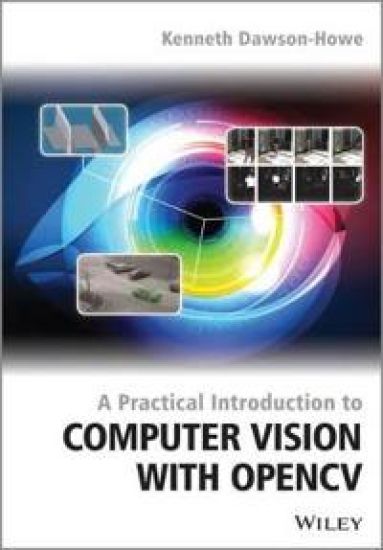
A Practical Introduction to Computer Vision with OpenCV

A Practical Introduction to Computer Vision with OpenCV

Kenneth Dawson-Howe

John Wiley Sons Inc
2014
nidottu
Explains the theory behind basic computer vision and provides a bridge from the theory to practical implementation using the industry standard OpenCV libraries Computer Vision is a rapidly expanding area and it is becoming progressively easier for developers to make use of this field due to the ready availability of high quality libraries (such as OpenCV 2). This text is intended to facilitate the practical use of computer vision with the goal being to bridge the gap between the theory and the practical implementation of computer vision. The book will explain how to use the relevant OpenCV library routines and will be accompanied by a full working program including the code snippets from the text. This textbook is a heavily illustrated, practical introduction to an exciting field, the applications of which are becoming almost ubiquitous. We are now surrounded by cameras, for example cameras on computers & tablets/ cameras built into our mobile phones/ cameras in games consoles; cameras imaging difficult modalities (such as ultrasound, X-ray, MRI) in hospitals, and surveillance cameras. This book is concerned with helping the next generation of computer developers to make use of all these images in order to develop systems which are more intuitive and interact with us in more intelligent ways. Explains the theory behind basic computer vision and provides a bridge from the theory to practical implementation using the industry standard OpenCV librariesOffers an introduction to computer vision, with enough theory to make clear how the various algorithms work but with an emphasis on practical programming issuesProvides enough material for a one semester course in computer vision at senior undergraduate and Masters levels Includes the basics of cameras and images and image processing to remove noise, before moving on to topics such as image histogramming; binary imaging; video processing to detect and model moving objects; geometric operations & camera models; edge detection; features detection; recognition in imagesContains a large number of vision application problems to provide students with the opportunity to solve real problems. Images or videos for these problems are provided in the resources associated with this book which include an enhanced eBook
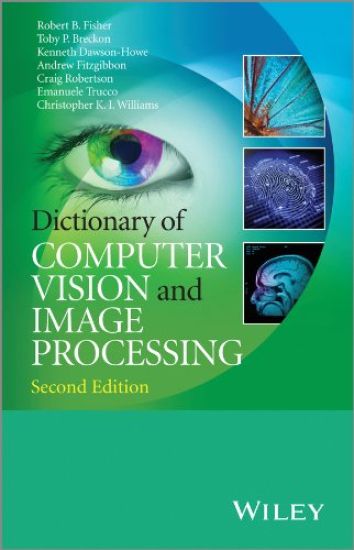
Dictionary of Computer Vision and Image Processing

Dictionary of Computer Vision and Image Processing

Robert B. Fisher; Toby P. Breckon; Kenneth Dawson-Howe; Andrew Fitzgibbon; Craig Robertson; Emanuele Trucco; Christopher K. I. Williams

Wiley-Blackwell
2013
nidottu
Written by leading researchers, the 2nd Edition of the Dictionary of Computer Vision & Image Processing is a comprehensive and reliable resource which now provides explanations of over 3500 of the most commonly used terms across image processing, computer vision and related fields including machine vision. It offers clear and concise definitions with short examples or mathematical precision where necessary for clarity that ultimately makes it a very usable reference for new entrants to these fields at senior undergraduate and graduate level, through to early career researchers to help build up knowledge of key concepts. As the book is a useful source for recent terminology and concepts, experienced professionals will also find it a valuable resource for keeping up to date with the latest advances. New features of the 2nd Edition: Contains more than 1000 new terms, notably an increased focus on image processing and machine vision terms;Includes the addition of reference links across the majority of terms pointing readers to further information about the concept under discussion so that they can continue to expand their understanding;Now available as an eBook with enhanced content: approximately 50 videos to further illustrate specific terms; active cross-linking between terms so that readers can easily navigate from one related term to another and build up a full picture of the topic in question; and hyperlinked references to fully embed the text in the current literature.
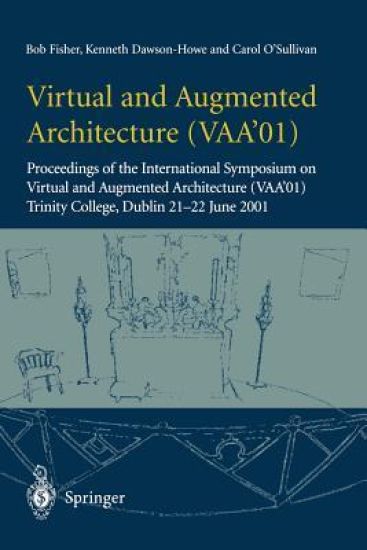
Virtual and Augmented Architecture (VAA’01)

Virtual and Augmented Architecture (VAA’01)

Bob Fisher; Kenneth Dawson-Howe; Carol O'Sullivan

Springer London Ltd
2001
nidottu
This book focuseson the use of computer visionand graphics in architecture. It arose from a convergenceof several hot topics: 1. visualization of built environments for engineering, historical and other purposes, 2. virtual reconstruction of architecture from visual data of existing struc­ tures, whether via photogrammetric or range sensing techniques, and 3. augmentation of video data of architecture with useful information. The focus here is on architecture and howto present it, enhance it's abilities, make it easier to understand and make it accessibleto a larger public. Collective interest in this topic led to the International Symposium on Virtual and Augmented Architecture, whose papers are contained in this book. As editors, we were very pleased about how well the different papers chosen gavea nice focus to the topic and conference.It is clear that there are many different research approaches still active in this area - this makes it an exciting time. Wehope that this book captures that excitement and succeeds in bringing it to you.