Kirjojen hintavertailu. Mukana 12 390 323 kirjaa ja 12 kauppaa.
Kirjailija
Kenneth E. Sassaman
Kirjat ja teokset yhdessä paikassa: 8 kirjaa, julkaisuja vuosilta 1993-2020, suosituimpien joukossa Archaeology of the Mid-Holocene Southeast. Vertaile teosten hintoja ja tarkista saatavuus suomalaisista kirjakaupoista.
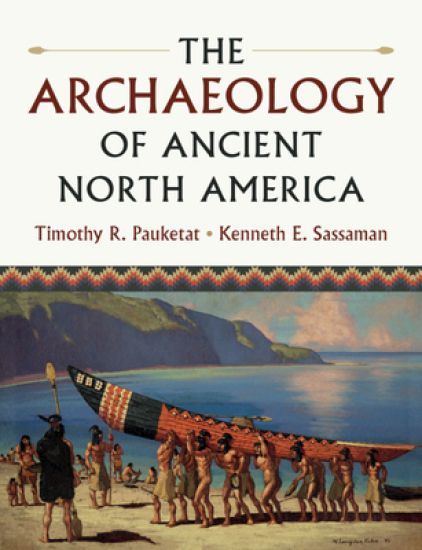
This volume surveys the archaeology of Native North Americans from their arrival on the continent 15,000 years ago up to contact with European colonizers. Offering rich descriptions of monumental structures, domestic architecture, vibrant objects, and spiritual forces, Timothy R. Pauketat and Kenneth E. Sassaman show how indigenous people shaped both their history and North America's many varied environments. They place the student in the past as they trace how Native Americans dealt with challenges such as climate change, the rise of social hierarchies and political power, and ethnic conflict. Written in a clear and engaging style with a compelling narrative, The Archaeology of Ancient North America presents the grand historical themes and intimate stories of ancient Americans in full, living color.
This volume surveys the archaeology of Native North Americans from their arrival on the continent 15,000 years ago up to contact with European colonizers. Offering rich descriptions of monumental structures, domestic architecture, vibrant objects, and spiritual forces, Timothy R. Pauketat and Kenneth E. Sassaman show how indigenous people shaped both their history and North America's many varied environments. They place the student in the past as they trace how Native Americans dealt with challenges such as climate change, the rise of social hierarchies and political power, and ethnic conflict. Written in a clear and engaging style with a compelling narrative, The Archaeology of Ancient North America presents the grand historical themes and intimate stories of ancient Americans in full, living color.
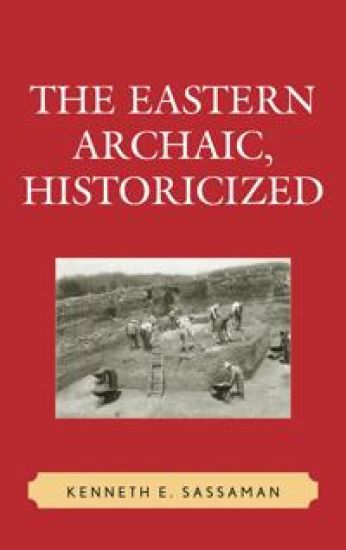
The Eastern Archaic, Historicized offers an alternative perspective on the genesis and transformation of cultural diversity over eight millennia of hunter-gatherer dwelling in eastern North America. For many decades, archaeological understanding of Archaic diversity has been dominated by perspectives that emphasize localized relationships between humans and environment. The evidence, shows, however that Archaic people routinely associated with other groups throughout eastern North America and expressed themselves materially in ways that reveal historical links to other places and times. Starting with the colonization of eastern North America by two distinct ancestral lines, the Eastern Archaic was an era of migrations, ethnogenesis, and coalescence—an 8,200-year era of making histories through interactions and expressing them culturally in ritual and performance.
The Eastern Archaic, Historicized offers an alternative perspective on the genesis and transformation of cultural diversity over eight millennia of hunter-gatherer dwelling in eastern North America. For many decades, archaeological understanding of Archaic diversity has been dominated by perspectives that emphasize localized relationships between humans and environment. The evidence, shows, however that Archaic people routinely associated with other groups throughout eastern North America and expressed themselves materially in ways that reveal historical links to other places and times. Starting with the colonization of eastern North America by two distinct ancestral lines, the Eastern Archaic was an era of migrations, ethnogenesis, and coalescence—an 8,200-year era of making histories through interactions and expressing them culturally in ritual and performance.
Despite the advances made in archaeology over the past generation, the Northeast remains the most misunderstood of all the archaeological regions of North America. With a complex environmental history shaped by ice sheets from the last glaciation, and highly acidic soils characteristic of the area, the kinds of organic artifacts found in other areas have been destroyed in the Northeast. The result is a sometimes evasive, particularly complicated, and always fragmentary archaeological record. As the chapters in this volume demonstrate, the Northeast is a region that inspires the development of innovative research designs and thoughtful and relevant questions. Each author has been a graduate student of Dena Dincauze, who has done much to foster understanding of the prehistory of Northeastern North America.
Despite the advances made in archaeology over the past generation, the Northeast remains the most misunderstood of all the archaeological regions of North America. With a complex environmental history shaped by ice sheets from the last glaciation, and highly acidic soils characteristic of the area, the kinds of organic artifacts found in other areas have been destroyed in the Northeast. The result is a sometimes evasive, particularly complicated, and always fragmentary archaeological record. As the chapters in this volume demonstrate, the Northeast is a region that inspires the development of innovative research designs and thoughtful and relevant questions. Each author has been a graduate student of Dena Dincauze, who has done much to foster understanding of the prehistory of Northeastern North America.
From the foreword: "With this important volume, the editors serve notice that old characterizations of the cultures of the Archaic period have been buried under the back dirt of new excavations and new interpretations. . . . It places the Archaic cultures squarely at the forefront of archaeological theory."This volume summarizes our archaeological knowledge of natives who inhabited the American Southeast from 8,000 to 3,000 years ago and examines evidence of many of the native cultural expressions observed by early European explorers, including long-distance exchange, plant domestication, mound building, social ranking, and warfare. ContentsSection I. Mid-Holocene Environments1. Geoarchaeology and the Mid-Holocene Landscape History of the Greater Southeast, by Joseph Schuldenrein2. Mid-Holocene Forest History of Florida and the Coastal Plain of Georgia and South Carolina, by William A. Watts, Eric C. Grimm, and T. C. HusseySection II. Technology3. Changing Strategies of Lithic Technological Organization, by Daniel S. Amick and Philip J. Carr4. Technological Innovations in Economic and Social Contexts, by Kenneth E. Sassaman5. Middle and Late Archaic Architecture, by Kenneth E. Sassaman and R. Jerald LedbetterSection III. Subsistence and Health6. The Paleoethnobotanical Record for the Mid-Holocene Southeast, by Kristen J. Gremillion7. Mid-Holocene Faunal Exploitation in the Southeastern United States, by Bonnie W. Styles and Walter E. Klippel8. Biocultural Inquiry into Archaic Period Populations of the Southeast: Trauma and Occupational Stress, by Maria O. SmithSection IV. Regional Settlement Variation9. Approaches to Modeling Regional Settlement in the Archaic Period Southeast, by David G. Anderson10. Southeastern Mid-Holocene Coastal Settlements, by Michael Russo11. Accounting for Submerged Mid-Holocene Archaeological Sites in the Southeast: A Case Study from the Chesapeake Bay Estuary, Virginia, by Dennis B. BlantonSection V. Regional Integration and Organization12. The Emergence of Long-Distance Exchange Networks in the Southeastern United States, by Richard W. Jefferies13. A Consideration of the Social Organization of the Shell Mound Archaic, by Cheryl P. Claassen14. Southeastern Archaic Mounds, by Michael Russo15. Poverty Point and Greater Southeastern Prehistory: The Culture That Did Not Fit, by Jon L. GibsonKenneth E. Sassaman is archaeologist with the Savannah River Archaeological Research Program, South Carolina Institute of Archaeology and Anthropology, and instructor in the Department of History and Anthropology at Augusta College, Augusta, Georgia. He is the author of Early Pottery in the Southeast: Tradition and Innovation in Cooking Technology. David G. Anderson is archaeologist with the Southeast Archaeological Center, National Park Service, Tallahassee, Florida. He is the author of The Savannah River Chiefdoms: Political Change in the Late Prehistoric Southeast. They are coeditors of The Paleoindian and Early Archaic Southeast.
Among Southeastern Indians, pottery was an innovation that enhanced the economic value of native foods and the efficiency of food preparation. But even though pottery was available in the Southeast as early as 4500 years ago, it took nearly two millennia before it was widely used. Why would an innovation of such economic value take so long to be adopted? The answer lies in the social and political contexts of traditional cooking technology. Sassaman's book questions the value of using technological traits alone to mark temporal and spatial boundaries of prehistoric cultures and shows how social process shapes the prehistoric archaeological record. This is a Dan Josselyn memorial publication.