Kirjojen hintavertailu. Mukana 12 252 599 kirjaa ja 12 kauppaa.
Kirjailija
Kenneth Frampton
Kirjat ja teokset yhdessä paikassa: 36 kirjaa, julkaisuja vuosilta 1997-2026, suosituimpien joukossa Renzo Piano: The Complete Logbook. Vertaile teosten hintoja ja tarkista saatavuus suomalaisista kirjakaupoista.
Wright's Writings traces the discursive work of Frank Lloyd Wright through a set of essays by Kenneth Frampton. Originally written as a series of introductions to the five-volume collection of Wright's writing published in 1992, the essays are gathered here as a critical survey of the architect's written and spoken work-a body of text that testifies to Wright's staggering prolificacy, pleasure in argument, diversity of interests, and desire to engage with timely political debates. Alongside these five essays, Wright's Writings provides a visual record of Wright's literary output, demonstrating the range of media he employed in the act of making architecture. Read together, it presents a history of the architect through the essays, books, letters, lectures, and speeches he wrote as well as the material and social cultures he navigated.
Can an architect pass through walls? Can the city permeate a house? In The Dissolution of Buildings, architect Angelo Bucci presents projects in his native Sao Paulo and abroad. Advocating an architecture that is "the opposite of global action," his work responds to the topography of the city and to its urban environment. In a lecture delivered at Columbia University's Graduate School of Architecture, Planning and Preservation, Bucci discusses work designed with his firm SPBR, projects that span from the scale of the house to the city. His built work is here accompanied by an excerpt from his doctoral dissertation, which explores how the devices available to architecture-and the sectional manipulation of groundplanes in particular-can mitigate some of the inequities and exclusions built in to the fabric of the contemporary city. An essay by Kenneth Frampton frames these projects within the rich lineage of Brazilian house design and members of the Paulista school such as Paulo Mendes da Rocha and Joao Batista Vilanova Artigas.
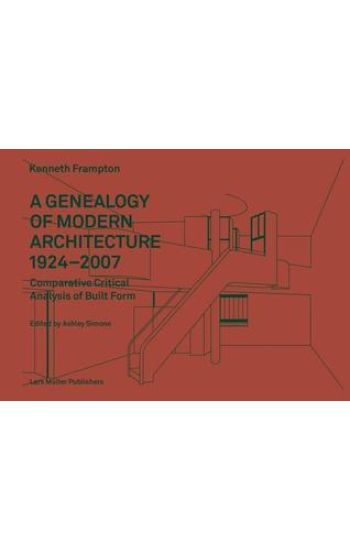
Genealogy of Modern Architecture is a reference work on modern architecture by Kenneth Frampton, one of today's leading architectural theorists. Conceived as a genealogy of twentieth century architecture from 1924 to 2000, it compiles some sixteen comparative analyses of canonical modern buildings ranging from exhibition pavilions and private houses to office buildings and various kinds of public institutions. The buildings are compared in terms of their hierarchical spatial order, circulation structure and referential details. The analyses are organized so as to show what is similar and different between two paired types, thus revealing how modern tradition has been diversely inflected. Richly illustrated, Genealogy of Modern Architecture is a new standard work in architectural education.
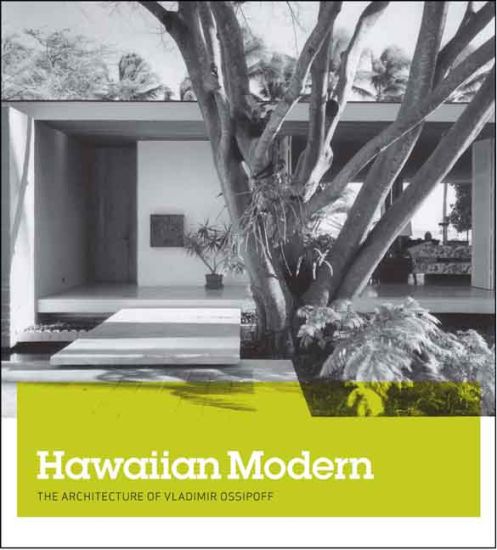
An illuminating study of the architecture of one of the 20th century’s most important tropical modernists Vladimir Ossipoff (1907–1998), known as the “master of Hawaiian architecture,” was at the forefront of the postwar phenomenon known as tropical modernism. Although he practiced at a time of rapid growth and social change in Hawai`i, Ossipoff criticized large-scale development and advocated environmentally sensitive designs, developing a distinctive form of architecture appropriate to the lush topography, microclimates, and vernacular traditions of the Hawaiian islands. This stunning book, now available for the first time in paperback, surveys Ossipoff’s buildings, which demonstrate a striking interplay of indoor and outdoor space, as well as a vibrant and glamorous architectural style that has proven delightfully particular to its place and durable over time. Published in association with the Honolulu Museum of Art Exhibition Schedule: Honolulu Academy of Arts, Hawaii (November 29, 2007 – January 27, 2008) Yale School of Architecture, New Haven (Fall 2008) Deutsches Architekturmuseum, Frankfurt (Spring 2009)
Inspired by his experiences and encounters as Co-Editor of the Italian architecture and design magazine Domus, the Lugano-based architect Luca Gazzaniga finds a way of elevating the design to a higher level, even in pragmatic tasks, leading it to a powerful, impressive result - as can be seen in the residential development in Agno (2008). Text in English and German.
Architecture with and Without Le Corbusier documents two architectural masterpieces: the Church at Firminy and The Miller House. The church is a late work by Le Corbusier that was left unfinished for 40 years. José Oubrerie, a protégé of the great master who had worked on the project from its inception, completed and built the canonical work, adapting it to current needs and standards while respecting the integrity of the original design. The Miller House, Oubrerie’s own late masterpiece from the 90s, is a landmark in Lexington where the architect devotes his mature years to academic leadership at the University of Kentucky. It is firmly on its way to securing a permanent place in the modernist canon. The thorough documentation of the two buildings with an extensive collection of previously unpublished drawings, documents and photographs builds a precise and vivid testimony of Oubrerie’s unique architectural trajectory with Le Corbusier’s formidable legacy as a formative and creative influence. The two seminal works, presented side by side with commentary by George Ranalli and Kenneth Frampton yield insight into the evolution and current resonance of modernist architecture in a story that spans two worlds and two distinguished careers. A collaboration between the City College of New York • Bernard and Anne Spitzer School of Architecture and Oscar Riera Ojeda Publishers
Set against the backdrop of global architectural production, the work of the Lebanese architect Nabil Gholam and his associates defies easy classification. On the one hand it can be regarded as a competent, modern, global practice for which the legendary SOM is still a model. On the other, NGA are capable of creating works that possess a uniquely grounded, local character at a variety of scales, from one-off luxury villas to the occasional monumental project at an urban scale, as in their entry for the Jabal Omar International Design Competition, planned for Mecca in Saudi Arabia at the turn of the millennium. It is paradoxical that this prosperous, sophisticated practice should be located in what is still, despite its prosperity, the unstable and often violent environment of Beirut.
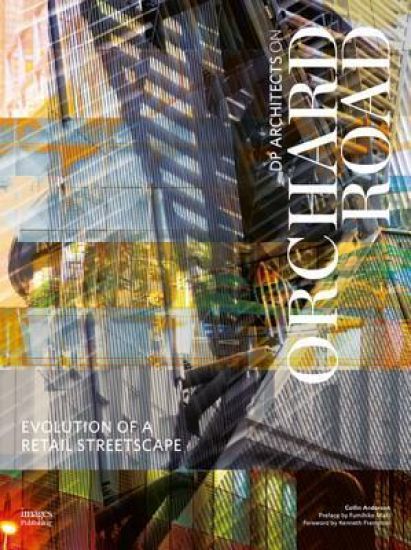
Singapore's Orchard Road sits alongside New York's Fifth Avenue and Paris' Champs Elysees in the pantheon of prestigious retail districts. For more than 40 years, DP Architects has contributed to the development of Orchard Road's architectural typography, the regionalism of which is flavoured with a uniqueness born of inventiveness and an accommodation of contextual forces. Evolution of a Retail Streetscape is much more than simply a lush visual and textual narrative showcasing DP Architects' extensive contribution to the character, growth and personality of the famous Singapore shopping and entertainment precinct. It also explores the concept of retail architectural typology generally, provides a brief contextual history of Singapore from British colonisation onwards, outlines the development and evolution of Orchard Road in particular, and explores some of the world's other famous shopping streets.
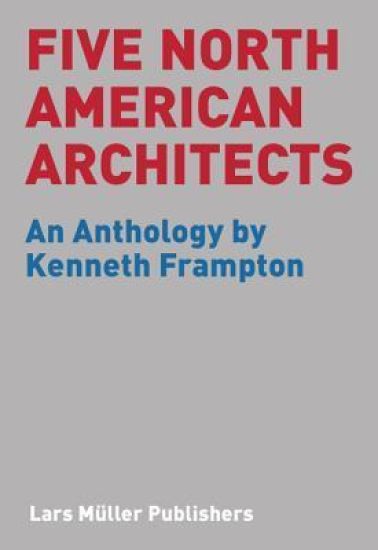
Five North American Architects - An Anthology brings together five architectural practices which, while all distinct, share a particularly sensitive feeling for the impact of craftsmanship and climate on the generation of form, as well as an equally shared concern for the expressive tactility of material and the articulation of structure under the impact of light. The book is an in depth survey of recent work by Steven Holl (New York), Rick Joy (Tucson) John and Patricia Patkau (Vancouver), Stanley Saitowitz (San Francisco), and Brigitte Shim and Howard Sutcliffe (Toronto). The regional specificity of the work is considered against a larger North American context, allowing one to assess the practice of architecture across the continent today.
This monograph, second in the collection featuring artists and architects who maintain a critical view of the contemporary world, is devoted to the distinguished Hungarian architect, living and working in Paris, Yona Friedman. Yona Friedman's work spans urban models, theoretical texts and animated films. He has participated in several biennial art exhibitions, including Shanghai, Venice and Documenta 11. His visionary, ground-breaking ideas have been at the forefront for several generations of architects and urban planners, and have clearly influenced the likes of Kenzo Tange, Arata Isozaki or Bernard Tschumi. While Friedman is still active and remains socially committed, his most important ideas stem from the fifties and sixties. In 1956, he published his "Manifeste de l'architecture Mobile," which set an urban structure on piles suitable for areas where building had not been not possible. This text was in turn used as the founding document of the Groupe d'etude d'architecture mobile (GEAM). He developed urban concepts such as La ville spatiale-the Spatial City where dwellings are freely distributed by the citizens thanks to low-cost, reusable mobile models.In 1965, along with Ionel Schein, Walter Jonas and others, he founded the Groupe International d'Architecture Prospective (GIAP).
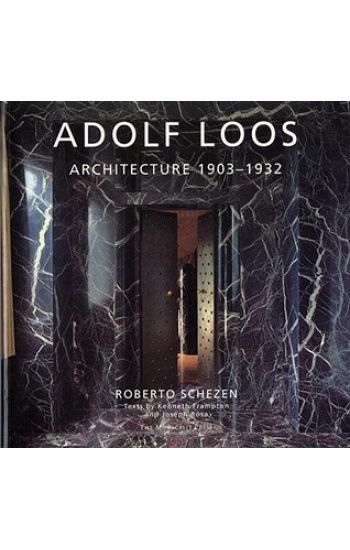
Adolf Loos not only was part of the first wave of modern architecture but also served as an important source of inspiration for all architects who followed. He is emblematic of the turn-of-the-century generation that was torn between the traditional culture of the nineteenth century and the innovative modernism of the twentieth. Loos’s masterful “astylistic architecture” is captured in this volume by the esteemed photographer Roberto Schezen in over one hundred exceptional photographs.Starting with the refurbishment of his own apartment in 1903, twenty of Loos’s most significant buildings are beautifully displayed: Villa Karma, the Kärntner Bar, the Goldman & Salatsch Michaelerplatz Building, the Zentralsparkasse Bank, and the Steiner, Scheu, Moller, and Müller houses. Schezen’s vivid color and luminous black-and-white photographs display each building in detail, showing both the formal characteristics and the rich textures and materials Loos most frequently used.Complementing this remarkable visual material is Kenneth Frampton’s perceptive essay, which places Loos within the context of Viennese intellectuals of the time. His circle, which included Arnold Schönberg, Ludwig Wittgenstein, and at the center, Karl Kraus, explored the essential nature of architecture, and the other arts and sciences, through linguistic structures. Frampton identifies the hallmarks that Loos derived from these structures and with which he created his work: the blank, “degree-zero” exterior with its luxurious interior; his commentary on architecture’s position between art and function, plus subtle recollections of both the classic and the vernacular. All these ploys were to subvert typical architectural expectations. Joseph Rosa’s accompanying descriptions comprehensively discuss each building, from the circumstances surrounding the realization of the projects to the use of Loos’s architectural conventions.
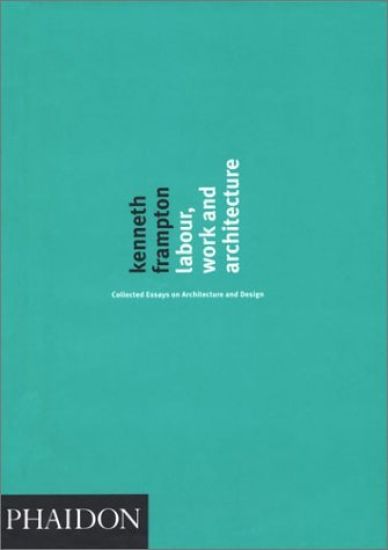
This anthology of writings by the architectural critic Kenneth Frampton brings together his most influential essays from the last 35 years. The essays focus on twentieth-century architecture, dealing with diverse themes and movements, built works and the architects responsible for these buildings.The writings are presented in clear chronological order within three sections - Theory, History, and Criticism - which together serve to identify modern architecture in its broader cultural and historical context. The compilation assimilates early critical reviews from the 1960s and 70s analysing contemporary buildings, as well as lengthier pieces covering architecture and the ideological circumstances in which buildings are produced.As a collection, Labour, Work and Architecture is an essential document in the historiography of twentieth-century architecture, composed by a highly respected and readable scholar committed to the nuanced understanding and real improvement of our built environment.
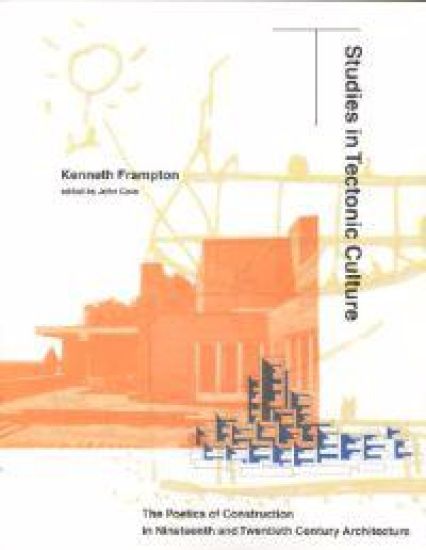
Composed of ten essays and an epilogue that trace the history of contemporary form as an evolving poetic of structure and construction, the book's analytical framework rests on Frampton's close readings of key French and German, and English sources from the eighteenth century to the present.Kenneth Frampton's long-awaited follow-up to his classic A Critical History of Modern Architecture is certain to influence any future debate on the evolution of modern architecture. Studies in Tectonic Culture is nothing less than a rethinking of the entire modern architectural tradition. The notion of tectonics as employed by Frampton—the focus on architecture as a constructional craft—constitutes a direct challenge to current mainstream thinking on the artistic limits of postmodernism, and suggests a convincing alternative. Indeed, Frampton argues, modern architecture is invariably as much about structure and construction as it is about space and abstract form.Composed of ten essays and an epilogue that trace the history of contemporary form as an evolving poetic of structure and construction, the book's analytical framework rests on Frampton's close readings of key French and German, and English sources from the eighteenth century to the present. He clarifies the various turns that structural engineering and tectonic imagination have taken in the work of such architects as Perret, Wright, Kahn, Scarpa, and Mies, and shows how both constructional form and material character were integral to an evolving architectural expression of their work. Frampton also demonstrates that the way in which these elements are articulated from one work to the next provides a basis upon which to evaluate the works as a whole. This is especially evident in his consideration of the work of Perret, Mies, and Kahn and the continuities in their thought and attitudes that linked them to the past.Frampton considers the conscious cultivation of the tectonic tradition in architecture as an essential element in the future development of architectural form, casting a critical new light on the entire issue of modernity and on the place of much work that has passed as "avant-garde."A copublication of the Graham Foundation for Advanced Studies and The MIT Press.
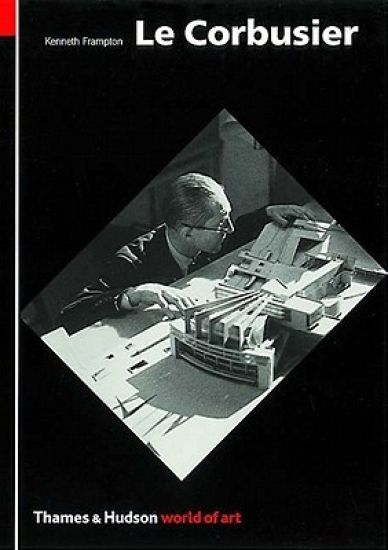
Le Corbusier is probably the most famous architect of the 20th century. The richness and variety of his work and his passionately expressed philosophy of architecture have had a gigantic impact on the urban fabric and the way we live. Weaving through his long and prolific life are certain recurrent themes – his perennial drive towards new types of dwelling, from the early white villas to the Unité d’Habitation at Marseilles; his evolving concepts of urban form, including the Plan Voisin of 1925 with its cruciform towers imposed on the city of Paris and his work at Chandigarh in India; and his belief in a new technocratic order. The distinguished critic and historian Kenneth Frampton re-examines all the facets of his artistic and philosophical world-view in light of recent thinking, and presents us with a Le Corbusier for the 21st century.
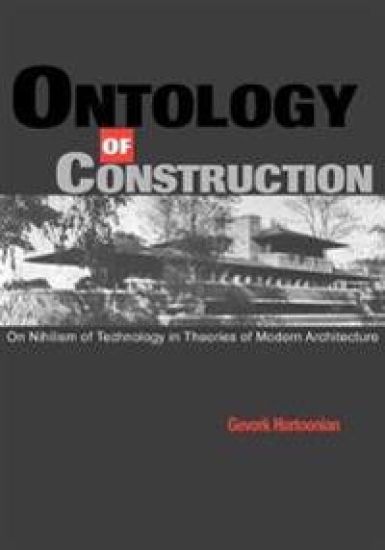
Ontology of Construction explores theories of construction in modern architecture, with a particular focus on the relationship between nihilism of technology and architecture. Providing an historical context to the concept of making, the essays collected in this volume articulate the implications of technology in works by such architects as Le Corbusier, Frank Lloyd Wright, Adolf Loos, and Mies van der Rohe. Also provided is an interpretation of Gottfried Semper’s discourse on the Tectonic and the relationship between architecture and other crafts. Emphasising ‘fabrication’ as a critical theme for contemporary architectural theory and practice, Ontology of Construction is a provocative contribution to the current debate in these areas.