Kirjojen hintavertailu. Mukana 12 595 353 kirjaa ja 12 kauppaa.

Kirjailija

Kenneth Gilhooly

Kirjat ja teokset yhdessä paikassa: 4 kirjaa, julkaisuja vuosilta 1998-2026, suosituimpien joukossa Cognitive Psychology, 3e. Vertaile teosten hintoja ja tarkista saatavuus suomalaisista kirjakaupoista.

4 kirjaa

Kirjojen julkaisuhaarukka 1998-2026.

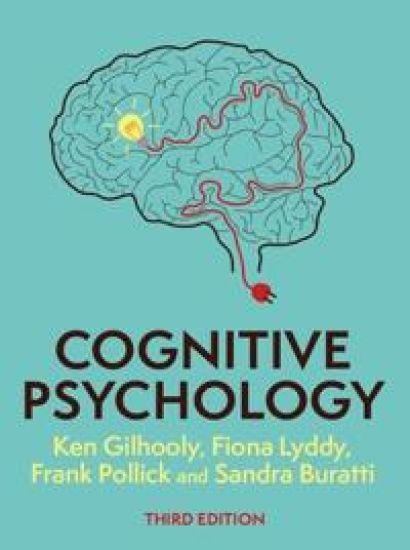
Cognitive Psychology, 3e

Cognitive Psychology, 3e

Kenneth Gilhooly; Fiona Lyddy; Frank Pollick; Sandra Buratti

McGraw-Hill
2026
nidottu
From making everyday decisions to solving complex problems, our ability to understand situations and choose the right actions is at the heart of how society works. But how do we actually process information, and why do we sometimes get it wrong? These are the questions at the core of the dynamic field of cognitive psychology. The new, third edition of Cognitive Psychology is accessible and comprehensive, bridging the gap between everyday experiences and laboratory studies, and striking a balance between research and application. This new edition enables students to not just understand cognitive psychology, but to gain the tools to critically evaluate laboratory studies and to develop a lasting interest in the discipline. Key Features: Expanded coverage of perception and attention and memory Fully updated pedagogy, including When Things Go Wrong and Research Close Up boxes Research Methods boxes to provide extra explanation on specialized methods used in specific areas of research Recent case studies to enhance student understanding and engagement Discussion Questions at the end of every chapter to encourage reflection and critical thinking Chapter links to demonstrate topic connections and signpost readers A retained emphasis on the critical evaluation of research Cognitive Psychology is available as an eBook through McGraw Hill’s Connect® learning platform with AI Reader functionality, alongside a wealth of ready-made course content for teaching, learning, practice and assessment. With a variety of tools to help with course management, insight and tracking, Connect helps faculty and institutions improve student outcomes and deliver courses more efficiently. To learn more, visit mheducation.co.uk/connect. Key Connect® features for this edition include: Writing Assignment prompts to test higher levels of cognitive skills (application, synthesis, and evaluation) on the central ideas discussed in the text Question banks to test understanding of key concepts covered in the book Critical Thinking Assignments enable students to develop a more applied and critical understanding of cognitive psychology Professor Ken Gilhooly is Emeritus Professor of Psychology at the University of Hertfordshire. He previously served as Chair of the Cognitive Section of the British Psychological Society. Professor Fiona Lyddy is based at Maynooth University, where she has held the positions of Head of the Department of Psychology and Dean of the Faculty of Science and Engineering. Professor Frank Pollick is a Professor at the University of Glasgow and previously worked and studied at leading institutions in the USA and Japan. Dr Sandra Buratti is Senior Lecturer in Psychology and holds the position of Deputy Head of the Department of Psychology at the University of Gothenburg.
Cognitive Psychology 2e

Cognitive Psychology 2e

Kenneth Gilhooly; Fiona Lyddy; Frank Pollick; Sandra Buratti

McGraw-Hill
2020
nidottu
Societies have always depended upon humanitys ability to correctly perceive situations and determine suitable subsequent actions. Since this requires us to accurately deal with information, it is important to understand not only how we (mostly) do this, but also how errors may arise. This is the focus of the new, second edition of Cognitive Psychology, one of the most dynamic areas in its field. Accessible yet comprehensive, this text aims to overcome the gap that arises between real life and laboratory studies, by providing an appropriate balance of research versus application. Key Features: A new structure to better reflect the content and align with teaching A brand-new standalone chapter on Consciousness Fully updated pedagogy, including When Things Go Wrong and Research Close Up Practical Application boxes to highlight the real-world implications of discoveries Discussion Questions at the end of every chapter to encourage reflection and critical thinking New chapter links to demonstrate topic connections and signpost readers A retained emphasis on the critical evaluation of research Cognitive Psychology is available with McGraw Hills Connect, the powerful online learning platform which features our award-winning adaptive reading experience, as well as resources to help faculty and institutions improve student outcomes and course delivery efficiency. To learn more, visit our website.
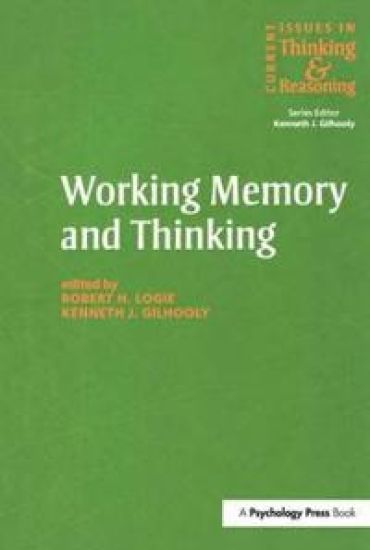
Working Memory and Thinking

Working Memory and Thinking

Kenneth Gilhooly; Robert H. Logie

Routledge
2019
nidottu
Thinking and memory are inextricably linked. However, a "divide and rule" approach has led cognitive psychologists to study these two areas in relative isolation. With contributions from some of the leading international researchers on working memory and thinking, the present volume aims to break down the scientific divisions and foster scientific integration in the connections between these two core functions of cognition. Broadly defined, thinking comprises mentally driven change in current representations. The processes involved in such change include application of logical rules, heuristics, problem solving strategies, decision making, planning and comprehension of complex material. Memory involves the encoding, retention and retrieval of information, and the retention may be temporary or in a long-term knowledge base.; Thinking cannot occur in a vacuum; it relies on the long-term memory base and a temporary mental workspace. Despite the apparent limitations on mental workspace, humans can drive a car and hold a conversation, or store partial solutions while tackling other aspects of a problem. So too, some aspects of thinking are relatively resilient in the face of quite extensive brain damage, yet other aspects are remarkably vulnerable to neuroanatomical insults. Humans can solve complex problems with many alternative choice points and yet seem to be able to consider only a few hypotheses at any one time. These apparent paradoxes present significant scientific challenges as to how humans can be such successful thinkers despite their very limited working memory. The chapters herein represent a diversity of views as regards the nature or working memory and forms of human thinking. The links between working memory and thinking are directly addressed and made explicit, and in so doing this volume offers an increasingly integrated understanding of human thinking and memory.
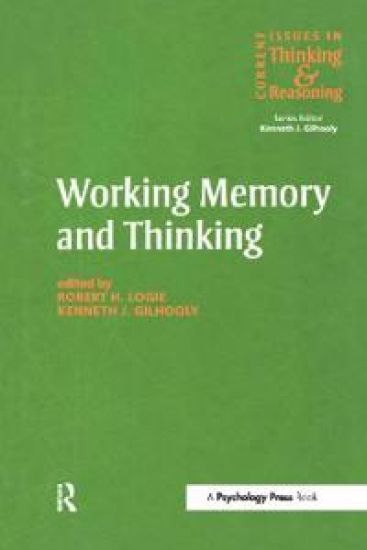
Working Memory and Thinking

Working Memory and Thinking

Kenneth Gilhooly; Robert H. Logie

Psychology Press Ltd
1998
sidottu
Thinking and memory are inextricably linked. However, a "divide and rule" approach has led cognitive psychologists to study these two areas in relative isolation. With contributions from some of the leading international researchers on working memory and thinking, the present volume aims to break down the scientific divisions and foster scientific integration in the connections between these two core functions of cognition. Broadly defined, thinking comprises mentally driven change in current representations. The processes involved in such change include application of logical rules, heuristics, problem solving strategies, decision making, planning and comprehension of complex material. Memory involves the encoding, retention and retrieval of information, and the retention may be temporary or in a long-term knowledge base.; Thinking cannot occur in a vacuum; it relies on the long-term memory base and a temporary mental workspace. Despite the apparent limitations on mental workspace, humans can drive a car and hold a conversation, or store partial solutions while tackling other aspects of a problem. So too, some aspects of thinking are relatively resilient in the face of quite extensive brain damage, yet other aspects are remarkably vulnerable to neuroanatomical insults. Humans can solve complex problems with many alternative choice points and yet seem to be able to consider only a few hypotheses at any one time. These apparent paradoxes present significant scientific challenges as to how humans can be such successful thinkers despite their very limited working memory. The chapters herein represent a diversity of views as regards the nature or working memory and forms of human thinking. The links between working memory and thinking are directly addressed and made explicit, and in so doing this volume offers an increasingly integrated understanding of human thinking and memory.