

Kirjailija
Kenneth J. Doka
Kirjat ja teokset yhdessä paikassa: 11 kirjaa, julkaisuja vuosilta 1997-2025, suosituimpien joukossa Grief Is a Journey: Finding Your Path Through Loss. Vertaile teosten hintoja ja tarkista saatavuus suomalaisista kirjakaupoista.
11 kirjaa
Kirjojen julkaisuhaarukka 1997-2025.

The third edition of Grieving Beyond Gender explores the different ways that individuals grieve, noting that gender is only one factor that affects an individual’s style or pattern of grief.Inherent in the concept of grieving styles is a notion that gender is fluid and that traditional binary views of gender are belied by the concept of grieving styles, and this is highlighted and explored in more depth in the new edition. Doka and Martin present a model firmly grounded in social science theory and research, and place special emphasis on the model’s clinical implications. Clinicians will come away from this book with concrete tools for supporting different types of grievers through individual counseling or group support.

The third edition of Grieving Beyond Gender explores the different ways that individuals grieve, noting that gender is only one factor that affects an individual’s style or pattern of grief.Inherent in the concept of grieving styles is a notion that gender is fluid and that traditional binary views of gender are belied by the concept of grieving styles, and this is highlighted and explored in more depth in the new edition. Doka and Martin present a model firmly grounded in social science theory and research, and place special emphasis on the model’s clinical implications. Clinicians will come away from this book with concrete tools for supporting different types of grievers through individual counseling or group support.
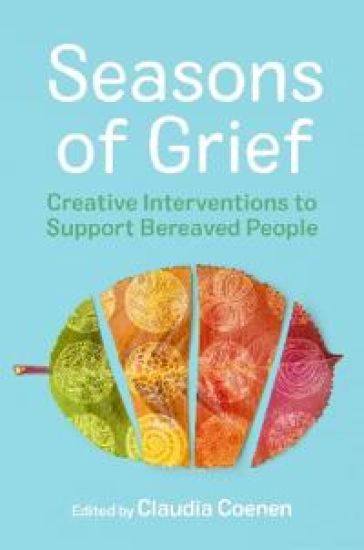
The quiet letting go of Autumn, the reflective stillness of Winter, the bright rebirth of Spring, and the flourishing warmth of Summer trace the natural path of grief as it grows and changes to fit the spaces left behind by those we love. Easy-to-use exercise guides and activities invite readers to explore the changeable nature of grief through the ebb and flow of the seasons.As well as contributions from diverse creative practitioners, poems from Dr. Robert Neimeyer and reflections from Claudia Coenen create a starting point to delve into the emotional context of each chapter, encouraging the reader to view each personal account and case study through the lens of a different phase of grief. This heart-centred, compassionate approach infuses bereavement therapy with much-needed warmth, supporting clinically-proven techniques to guide users towards practical, healthy ways of processing their loss. Bringing together voices and art from across the spectrum of creative grief therapy, Coenen provides an accessible, compassionate guide to supporting those coping with bereavement throughout their journey.
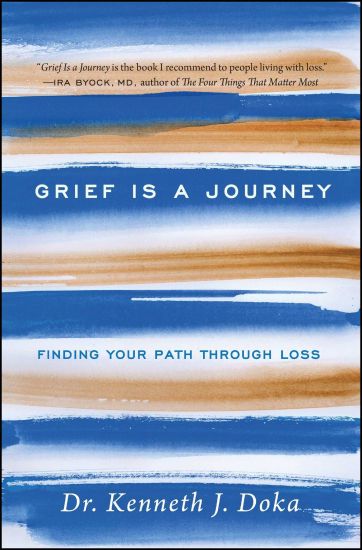
In this "volume of rare sensitivity, penetrating understanding, and profound insights" (Rabbi Earl A. Grollman, author of Living When a Loved One Has Died), Dr. Kenneth Doka explores a new, compassionate way to grieve, explaining that grief is not an illness to get over but an individual and ongoing journey.There is no "one-size-fits-all" way to cope with loss. The vital bonds that we form with those we love in life continue long after death--in very different ways. Grief Is a Journey is the first book to overturn prevailing, often judgmental, ideas about grief and replace them with a hopeful, inclusive, personalized, and research-backed approach. New science and studies behind Dr. Doka's teaching upend the dominant but incorrect view that grief proceeds by stages. Dr. Doka helps us realize that our experiences following a death are far more individual and much less predictable than the conventional "five stages" model would have us believe. Common patterns of experiencing and expressing grief still prevail, yet many other life changes accompany a primary loss. For example, the deaths of parents, even for adults, modify family patterns, change relationships, and alter old family rituals. Unique to this book, Dr. Doka also explains how to cope with disenfranchised grief--the types of loss that are not so readily recognized or supported by society. These include the death of ex-spouses, as well as non-fatal losses such as divorce, the end of a friendship, job loss, or infertility. In addition, Dr. Doka considers losses that might be stigmatized, including death by suicide or from disease or self-destructive behaviors such as smoking or alcoholism. And finally, Dr. Doka reminds us that, however painful, grief provides opportunities for growth.

Counseling Individuals with Life Threatening Illness
Kenneth J. Doka
Springer Publishing Co Inc
2013
nidottu
Counseling Individuals with Life-Threatening Illness provides a practical guide for counselors who work with clients and families impacted by life-threatening illness. The language and content are appropriate for undergraduate and graduate courses, as well as workshops and trainings for professionals....As the healthcare system continues to evolve, Counseling Individuals with Life-Threatening Illness is a valuable resource for counselors as they find themselves working on interdisciplinary teams with individuals and families impacted by life-threatening illness."--The Professional Counselor Journal With characteristic clarity, Doka draws on the classic and contemporary literature as well as his own pedagogy and practice in death and dying to offer orienting concepts for the whole spectrum of care people may require when illness intrudes into their lives. For each phase of the illness trajectory...he offers intelligent attention to the problems and prospects people confront, and in countless examples of actual clinical situations he brings to life the concepts that inform compassionate care. From the Foreword by Robert A. Neimeyer, PhD University of Memphis This book would provide a very good introduction to the psychosocial and spiritual domains for any doctor or nurse coming into palliative care. It provides a lot of information, mixed with some distilled wisdom, as well as a solid grounding about how to relate to these patients and their families in a patient-centered way."--IAHPC Newsletter (International Association for Hospice and Palliative Care) This holistic, family-centered guide to counseling individuals with life-threatening illness considers not only the physical manifestations of the illness, but its psychological, social, economic, and spiritual implications. Revised and updated to reflect the most current research and enhanced theoretical development, this second edition encompasses new therapies that enhance meaning-making at life's end, and offers expanded sections on counseling families during the illness and as they grieve. One of the book's most significant changes involves the adaptation of a model of concurrent care. This model of care has great implications for end-of-life care, bridging the divide between treatment that is primarily palliative and treatment that seeks to cure or extend life. Comprehensive and practical, the book discusses such social and psychological factors as gender, race, ethnicity, social class, education, and intelligence, and how they inform the experience of gravely ill people. The initial crisis of diagnosis is addressed along with unique considerations for those who live with chronic illness, those who are terminally ill, and those who recover. New to This Edition: Generational differences as a source of diversity Expanded sections involving meaning-making strategies (dignity-enhancement therapy, living eulogies, reminiscence therapy, life review, meaning-centered therapy, moral/ethical issues, and heart wills) Discussion of end-of-life phenomena and ways to assist patient and family in interpreting and responding to them Enhanced coverage of caregiver issues Expanded discussion of spirituality Additional behavioral strategies to assist pain management Anticipatory mourning Post-death grief for family members Chronic care and rehabilitation Incorporates Rand Study on Concurrent Care and other new models
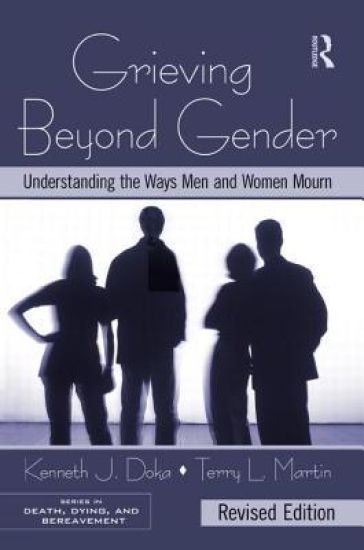
Grieving Beyond Gender: Understanding the Ways Men and Women Mourn is a revision of Men Don’t Cry, Women Do: Transcending Gender Stereotypes of Grief. In this work, Doka and Martin elaborate on their conceptual model of "styles or patterns of grieving" – a model that has generated both research and acceptance since the publication of the first edition in 1999. In that book, as well as in this revision, Doka and Martin explore the different ways that individuals grieve, noting that gender is only one factor that affects an individual’s style or pattern of grief. The book differentiates intuitive grievers, where the pattern is more affective, from instrumental grievers, who grieve in a more cognitive and behavioral way, while noting other patterns that might be more blended or dissonant. The model is firmly grounded in social science theory and research. A particular strength of the work is the emphasis placed on the clinical implications of the model on the ways that different types of grievers might best be supported through individual counseling or group support.
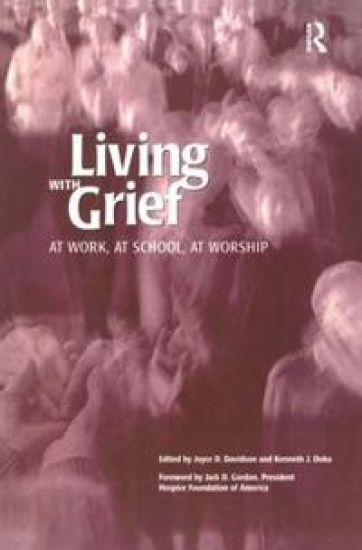
While we often discuss how we grieve, rarely do we consider the places where we grieve. Yet whether at work, at school, at worship or at home, grief not only affects our moods and motivation but our ability to function and our relationships as well. This book considers the ways that grief influences us in varied settings, offering humane and practical suggestions to organizations such as workplaces, schools or places of worship as to how they can assist grievers in their midst struggling with illness and loss.

A hands-on guide for patients, families, and caregivers on how to live an affirming existence while facing the physical and spiritual traumas of life-threatening illness. Every page of this book reveals the author's keen awareness of the challenges faced by patients, families, and caregivers dealing with life threatening illnesses. In page after page readers will discover clear, practical, and wise suggestions that are well grounded in personal experience. Don't we all know somebody who needs this book now?--Robert Kastenbaum, Ph.D., Editor, Omega Journal of Death and Dying

Historically, AIDS is just one of a series of dreaded diseases that have aroused both great fear and irrational actions. The previous diseases, including bubonic plague, syphilis, tuberculosis, leprosy and cancer, have evoked such a sense of dread that rational moves to halt the disease have become compromised.; This text examines the deep sense of fear that AIDS evokes, stigmatizing those who suffer from the disease, as well as their families and caregivers. Until AIDS can be seen for what it actually is - a life-threatening disease - policies providing for humane treatment will not evolve. The book also emphasizes that diseases are more than biological phenomena or individual catastrophes - they are profoundly social events. The ways in which diseases are spread and treated are strongly influenced by larger sociological considerations, and they may have the capacity to change social institutions or society Itself. Rooting Aids In The History Of Diseases, The First Part Of The book reviews the nature, history and responses of earlier dreaded diseases. The next section examines AIDS itself, proposed as the archetypal dreaded disease. Already creating a sense of panic, AIDS is also shown to be a social disease, likely to have significant effects on the social order. Thus, only by containing the epidemic of fear and controlling the resulting irrationality, can the AIDS epidemic be halted.

Historically, AIDS is just one of a series of dreaded diseases that have aroused both great fear and irrational actions. The previous diseases, including bubonic plague, syphilis, tuberculosis, leprosy and cancer, have evoked such a sense of dread that rational moves to halt the disease have become compromised.; This text examines the deep sense of fear that AIDS evokes, stigmatizing those who suffer from the disease, as well as their families and caregivers. Until AIDS can be seen for what it actually is - a life-threatening disease - policies providing for humane treatment will not evolve. The book also emphasizes that diseases are more than biological phenomena or individual catastrophes - they are profoundly social events. The ways in which diseases are spread and treated are strongly influenced by larger sociological considerations, and they may have the capacity to change social institutions or society Itself. Rooting Aids In The History Of Diseases, The First Part Of The book reviews the nature, history and responses of earlier dreaded diseases. The next section examines AIDS itself, proposed as the archetypal dreaded disease. Already creating a sense of panic, AIDS is also shown to be a social disease, likely to have significant effects on the social order. Thus, only by containing the epidemic of fear and controlling the resulting irrationality, can the AIDS epidemic be halted.