Kirjojen hintavertailu. Mukana 12 390 323 kirjaa ja 12 kauppaa.

Kirjailija

Kenneth L. Pearce

Kirjat ja teokset yhdessä paikassa: 3 kirjaa, julkaisuja vuosilta 2017-2021, suosituimpien joukossa Language and the Structure of Berkeley's World. Vertaile teosten hintoja ja tarkista saatavuus suomalaisista kirjakaupoista.

3 kirjaa

Kirjojen julkaisuhaarukka 2017-2021.

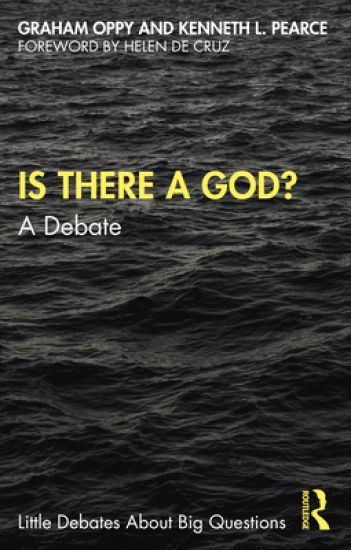
Is There a God?

Is There a God?

Graham Oppy; Kenneth L. Pearce

Routledge
2021
nidottu
Bertrand Russell famously quipped that he didn’t believe in God for the same reason that he didn’t believe in a teapot in orbit between the earth and Mars: it is a bizarre assertion for which no evidence can be provided. Is belief in God really like belief in Russell’s teapot? Kenneth L. Pearce argues that God is no teapot. God is a real answer to the deepest question of all: why is there something rather than nothing? Graham Oppy argues that we should believe that there are none but natural causal entities with none but natural causal properties—and hence should believe that there are no gods. Beginning from this basic disagreement, the authors proceed to discuss and debate a wide range of philosophical questions, including questions about explanation, necessity, rationality, religious experience, mathematical objects, the foundations of ethics, and the methodology of philosophy. Each author first presents his own side, and then they interact through two rounds of objections and replies. Pedagogical features include standard form arguments, section summaries, bolded key terms and principles, a glossary, and annotated reading lists. In the volume foreword, Helen De Cruz calls the debate "both edifying and a joy," and sums up what’s at stake: "Here you have two carefully formulated positive proposals for worldviews that explain all that is: classical theism, or naturalistic atheism. You can follow along with the authors and deliberate: which one do you find more plausible?"Though written with beginning students in mind, this debate will be of interest to philosophers at all levels and to anyone who values careful, rational thought about the nature of reality and our place in it.
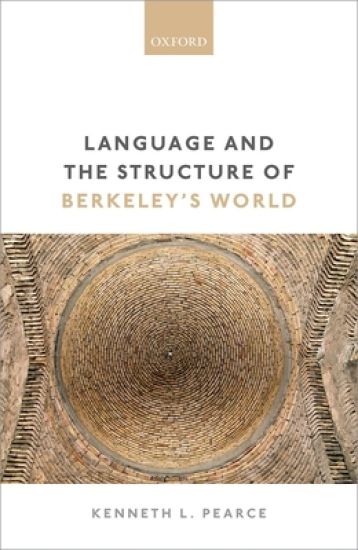
Language and the Structure of Berkeley's World

Language and the Structure of Berkeley's World

Kenneth L. Pearce

Oxford University Press
2017
sidottu
According to George Berkeley (1685-1753), there is fundamentally nothing in the world but minds and their ideas. Ideas are understood as pure phenomenal 'feels' which are momentarily had by a single perceiver, then vanish. Surprisingly, Berkeley tries to sell this idealistic philosophical system as a defense of common-sense and an aid to science. However, both common-sense and Newtonian science take the perceived world to be highly structured in a way that Berkeley's system does not appear to allow. Kenneth L. Pearce argues that Berkeley's solution to this problem lies in his innovative philosophy of language. The solution works at two levels. At the first level, it is by means of our conventions for the use of physical object talk that we impose structure on the world. At a deeper level, the orderliness of the world is explained by the fact that, according to Berkeley, the world itself is a discourse 'spoken' by God - the world is literally an object of linguistic interpretation. The structure that our physical object talk - in common-sense and in Newtonian physics - aims to capture is the grammatical structure of this divine discourse. This approach yields surprising consequences for some of the most discussed issues in Berkeley's metaphysics. Most notably, it is argued that, in Berkeley's view, physical objects are neither ideas nor collections of ideas. Rather, physical objects, like forces, are mere quasi-entities brought into being by our linguistic practices.
Is There a God?

Is There a God?

Graham Oppy; Kenneth L. Pearce

Routledge
2021
sidottu
Bertrand Russell famously quipped that he didn’t believe in God for the same reason that he didn’t believe in a teapot in orbit between the earth and Mars: it is a bizarre assertion for which no evidence can be provided. Is belief in God really like belief in Russell’s teapot? Kenneth L. Pearce argues that God is no teapot. God is a real answer to the deepest question of all: why is there something rather than nothing? Graham Oppy argues that we should believe that there are none but natural causal entities with none but natural causal properties—and hence should believe that there are no gods. Beginning from this basic disagreement, the authors proceed to discuss and debate a wide range of philosophical questions, including questions about explanation, necessity, rationality, religious experience, mathematical objects, the foundations of ethics, and the methodology of philosophy. Each author first presents his own side, and then they interact through two rounds of objections and replies. Pedagogical features include standard form arguments, section summaries, bolded key terms and principles, a glossary, and annotated reading lists. In the volume foreword, Helen De Cruz calls the debate "both edifying and a joy," and sums up what’s at stake: "Here you have two carefully formulated positive proposals for worldviews that explain all that is: classical theism, or naturalistic atheism. You can follow along with the authors and deliberate: which one do you find more plausible?"Though written with beginning students in mind, this debate will be of interest to philosophers at all levels and to anyone who values careful, rational thought about the nature of reality and our place in it.