Kirjailija
Kenneth L Vaux
Kirjat ja teokset yhdessä paikassa: 22 kirjaa, julkaisuja vuosilta 2002-2020, suosituimpien joukossa The Ministry of Vincent Van Gogh in Religion and Art. Vertaile teosten hintoja ja tarkista saatavuus suomalaisista kirjakaupoista.
Mukana myös kirjoitusasut: Kenneth L. Vaux
22 kirjaa
Kirjojen julkaisuhaarukka 2002-2020.
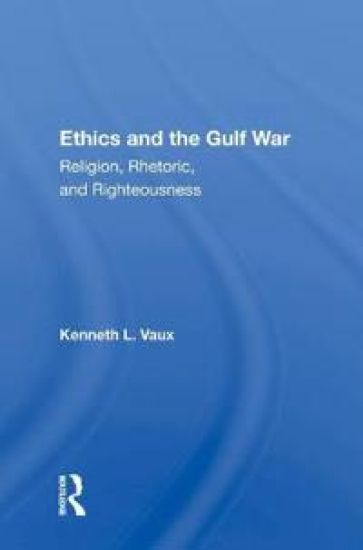
This book elucidates the great just war traditions of Judaism, Christianity, and Islam, evaluating the key events of the war in light of the religious rhetoric. It is fascinating for scholars and laypersons coming to this subject from almost any area of interest.
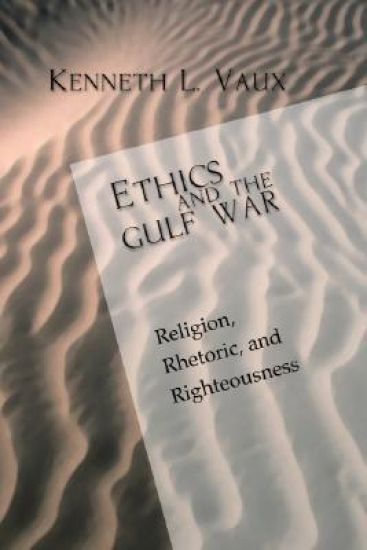
The war on the ground and in the air over Kuwait and Iraq was not the only Gulf War being fought in early 1990. George Bush and Saddam Hussein were also battling for public opinion and for the perception of legitimacy for their actions. In this effort, both men as well as their spokespersons appealed to the just war theory of their religious traditions. In this perceptive and wide-ranging book, Kenneth Vaux elucidates the great just war traditions of Judaism, Christianity, and Islam, evaluating the key events of the war in light of the religious rhetoric used by both sides. From the first stirrings of conflict to its uncertain aftermath, religious and ethical traditions played a major role in winning support not just for the U.S. and Iraqi peoples but of public opinion worldwide. Throughout Vaux demonstrates the wide gaps between religious rhetoric and the political-military action it has been called on to support. Ethics and the Gulf War is not a typical ethical treatise; Vaux understands ethical reflection to encompass history, philosophy, psychology, ecology, theology, and eschatology. His book is a valuable contribution to the understanding of the Gulf War, and it is fascinating for scholars and laypersons coming to this subject from almost any area of interest.
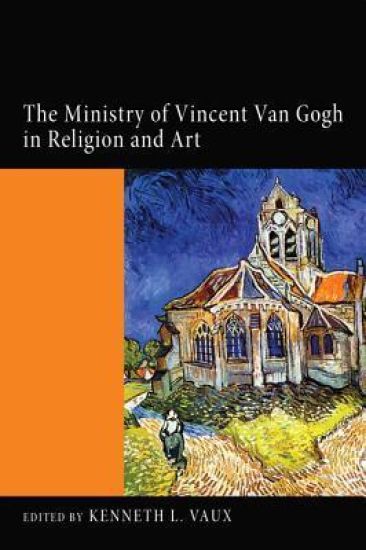
The Ministry of Vincent Van Gogh in Religion and Art
Kenneth L. Vaux
Wipf Stock Publishers
2012
pokkari
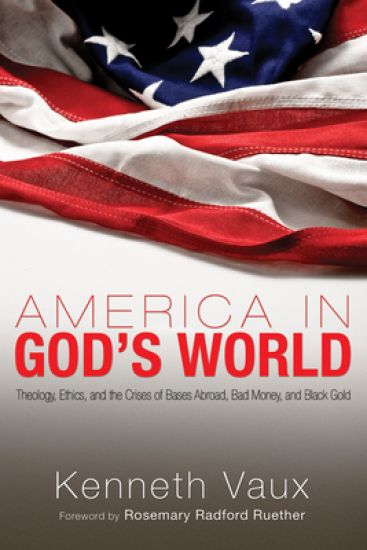
America in God's World argues that human injustice in social-policy areas such as security, economy, and ecology can be traced to defective theology/ethics abroad in the land. Renewing biblical theology and ethics, and finding new ways to appropriate this wisdom into public policy, can bring renewal to our national life and help heal and reconcile our troubled world.
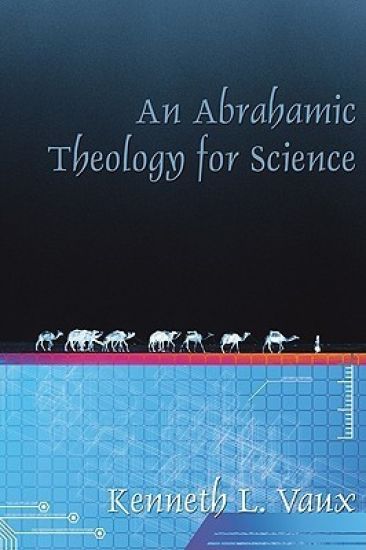
Kenneth Vaux advocates an Abrahamic theology as a dynamic and ethical axis for science and technology and argues for its continuing salience for a vital and humane science. He demonstrates a historical correlation between an Abrahamic theological tradition (monotheism and venturism) and the rise of science. Vaux illustrates these developments in the work of six scientists: Avicenna, Boyle, Schweitzer, and Teilhard, as well as contemporaries Amartya Sen and Leon Kass. In the course of his discussion, Vaux engages the contemporary dialogue between religion and science. ""Ken Vaux has shown what a powerful impulse Abrahamic monotheism has been to the rise and ongoing ethical guidance of science."" --John Polkinghorne, Professor of Mathematical Physics, Anglican Priest, Templeton Prize winner Kenneth Vaux is Emeritus Professor of Ethics at the University of Illinois College of Medicine and currently serves as the Professor of Theological Ethics at Garrett-Evangelical Theological Seminary and as a member of the Graduate Faculty at Northwestern University.
Kenneth Vaux elucidates the great just war traditions of Judaism, Christianity, and Islam, evaluating the key events of the Gulf War in light of the religious rhetoric used by both sides. Religious and ethical appeals played a major role in winning support not just of the U.S. and Iraqi peoples but of public opinion worldwide. Vaux demonstrates the wide gap between the religious rhetoric and the political-military action it was called on to support.