

Kirjailija
Kenneth Maxwell
Kirjat ja teokset yhdessä paikassa: 11 kirjaa, julkaisuja vuosilta 1983-2025, suosituimpien joukossa Portugal. Vertaile teosten hintoja ja tarkista saatavuus suomalaisista kirjakaupoista.
11 kirjaa
Kirjojen julkaisuhaarukka 1983-2025.



A study of Brazil during a critical formative period which illuminates the causes of her special historical development within Latin America. Professor Maxwell analyzes the shifting relationships between Portugal, England and Brazil during the second half of the 18th Century. Through his study, Professor Maxwell is concerned with the social, economic and political significance of the events he describes. An important part of this work is a study of the Minas Conspiracy of 1788-89.
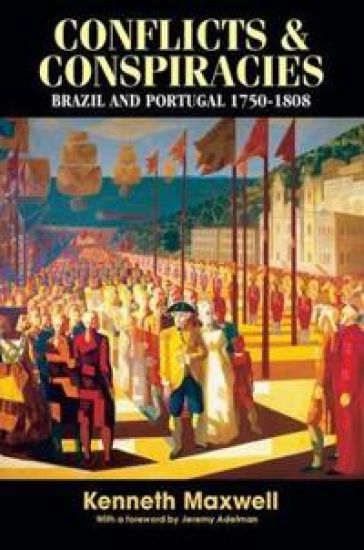
A study of Brazil during a critical formative period which illuminates the causes of her special historical development within Latin America. Professor Maxwell analyzes the shifting relationships between Portugal, England and Brazil during the second half of the 18th Century. Through his study, Professor Maxwell is concerned with the social, economic and political significance of the events he describes. An important part of this work is a study of the Minas Conspiracy of 1788-89.
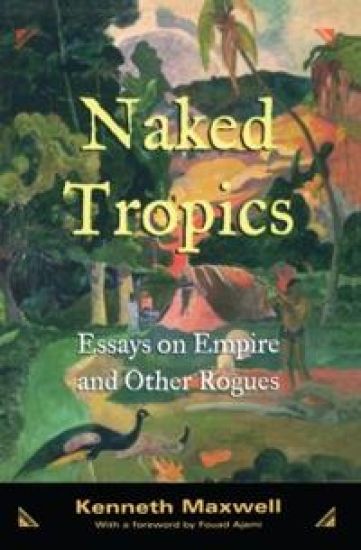
In this volume distinguished historian Kenneth Maxwell collects some of his most significant writings, following Portugal's imperial journey from the Atlantic to the Indian Ocean and from the coast of Asia to the mouth of the Red Sea. Maxwell takes the reader on a lively journey from Macao to the Amazon forests-each piece in the collection is a reflection of the authors driving passions. Major themes he examines are: the peopling of the Americas, the shaking up of continents, the spirit that took a precocious Portugal into its imperial venture, the play between Portugal's' extensive imperial reach into Africa and Asia and the Americas, and the rise of Brazil and its tumultuous history.
This vividly written book is the first comprehensive assessment of the origins of the present-day democratic regime in Portugal to be placed in a broad international historical context. It is written with the benefit of a long-term vision of Portuguese history, and it emphasizes the significance of Portugal’s new European orientation after centuries of global and oceanic preoccupations. After an account of the collapse of the old regime in 1974, the book studies the complex revolutionary period that followed, and the struggle in Europe and Africa to define the future role of Europe’s poorest country. These events also had international repercussions which transformed the balance of forces in southern Africa, following the collapse of Europe’s last overseas empire. The consequent actions and reactions of the European powers and the United States are examined, and telling comparisons are also drawn with later developments in Eastern Europe, and with the wider collapse of the communist movement.
This vividly written book is the first comprehensive assessment of the origins of the present-day democratic regime in Portugal to be placed in a broad international historical context. It is written with the benefit of a long-term vision of Portuguese history, and it emphasizes the significance of Portugal’s new European orientation after centuries of global and oceanic preoccupations. After an account of the collapse of the old regime in 1974, the book studies the complex revolutionary period that followed, and the struggle in Europe and Africa to define the future role of Europe’s poorest country. These events also had international repercussions which transformed the balance of forces in southern Africa, following the collapse of Europe’s last overseas empire. The consequent actions and reactions of the European powers and the United States are examined, and telling comparisons are also drawn with later developments in Eastern Europe, and with the wider collapse of the communist movement.
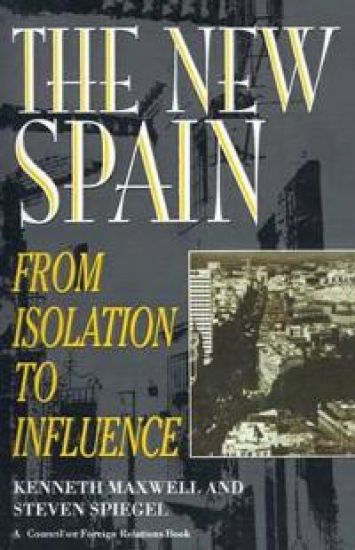
Since Franco's death in 1975, Spain has undergone an extraordinary transformation, developing from an authoritarian regime to a self-confident and consolidated democracy. After decades of international isolations, Spain is rapidly emerging as an influential participant in international political, economic, and security issues. Spain has also experienced a remarkable economic transformation, privatizing industries, raising living standards, and attaining membership in the European Community. The New Spain focuses on the countrys progress toward democracy and examines the manifold political, economic and social challenges with which Spain continues to grapple. The book concludes with an analysis of the countys agenda for ht e29990s and the dilemmas facing Felipe Gonzalez in his fourth term as prime minister. The lessons learned from Spains transition to democracy have broad international implications. The New Spain will be of interest to students of the political and economic changes taking place in Eastern Europe, the former Soviet Union, and Latin America, as well as those concerned with Spains future role within the European Community.
This authoritative study provides the most comprehensive analysis available of the current political, economic, and social situation in Portugal. In his introduction, Maxwell reviews the revolutionary changes of the past ten years. Several authors address the international issues, examining the nature and possible future direction of Portugal's foreign relations in general and her involvements with Spain, Africa, and Western Europe in particular. The potential benefits and disadvantages of Portugal's entry into the European Community are discussed, and the political and economic implications of Portugal's emergence as an important European power are considered. The difficult process of developing democratic institutions in a country beset by resistant social, political, and economic problems is analyzed from various perspectives. The constraints on Portugal's economy are carefully assessed. A chapter on social crisis and the state investigates the complex structure of state/society relationships and how they are affected by political polarization, severe socioeconomic inequalities, and high levels of poverty and illiteracy. Former Prime Minister Francisco Pinto Balsemao offers an inside look at the functioning of the political system and weighs prospects for the success and long term survival of democratic government in Portugal.
