Kirjojen hintavertailu. Mukana 12 595 353 kirjaa ja 12 kauppaa.

Kirjailija

Kenneth S. Broun

Kirjat ja teokset yhdessä paikassa: 5 kirjaa, julkaisuja vuosilta 1999-2022, suosituimpien joukossa Black Lawyers, White Courts. Vertaile teosten hintoja ja tarkista saatavuus suomalaisista kirjakaupoista.

5 kirjaa

Kirjojen julkaisuhaarukka 1999-2022.

Potter v. Shrackle and The Shrackle Construction Company: Case File, Trial Materials
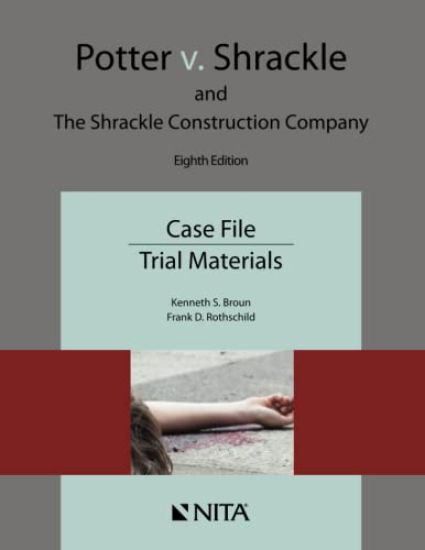
An inattentive moment costs a woman her life--the question is, which party wasn't paying attention? Charles Shrackle's truck struck and killed Katherine Potter as she crossed the street in Nita City. In the wrongful death action brought by her estate, the plaintiff claims Shrackle failed to yield to Katherine as she crossed in the crosswalk. Shrackle claims that Mrs. Potter stepped out in front of his truck from the median, well away from the crosswalk. Conflicting eyewitnesses support both versions of the accident. This classic file is ideal for teaching basic trial skills. It has been updated to include social media exhibits and text messages, but the basic questions remain. Was Katherine Potter crossing in a crosswalk? Was the accident caused by the use of a cell phone? Was Jeffrey Potter involved in an affair when his wife died? There are six witnesses for the plaintiff and four witnesses for the defendants. New to the Eighth Edition: Updated exhibits reflect accurate dates for events Professors and students will benefit from: Social media evidence Practice with both fact and expert witness examination
Saving Nelson Mandela

Saving Nelson Mandela

Kenneth S. Broun

Oxford University Press Inc
2015
nidottu
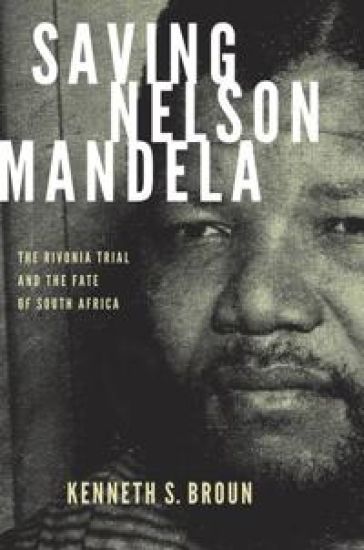
The question was: would he hang? In 1963, when South Africa's apartheid government charged Nelson Mandela with planning its overthrow, most observers feared that he would be sentenced to death. But the support he and his fellow activists in the African National Congress received during his trial not only saved his life, but also enabled him to save his country. In Saving Nelson Mandela, South African law expert Kenneth S. Broun recreates the trial--called the "Rivonia" Trial after the Johannesburg suburb where police seized Mandela. Based upon interviews with many of the case's primary figures and portions of the trial transcript, Broun situates readers inside the courtroom at the imposing Palace of Justice in Pretoria. Here, the trial unfolds through a dramatic narrative that captures the courage of the accused and their defense team, as well as the personal prejudices that colored the entire trial. The Rivonia trial had no jury and only a superficial aura of due process, combined with heavy security that symbolized the apartheid government's system of repression. Broun shows how outstanding advocacy, combined with widespread public support, in fact backfired on apartheid leaders, who sealed their own fate. Despite his 27-year incarceration, Mandela's ultimate release helped move his country from the racial tyranny of apartheid toward democracy. As documented in this inspirational book, the Rivonia trial was a critical milestone that helped chart the end of Apartheid and the future of a new South Africa.
Saving Nelson Mandela

Saving Nelson Mandela

Kenneth S. Broun

Oxford University Press Inc
2012
sidottu
When South Africa's apartheid government charged Nelson Mandela with planning its overthrow in 1963, most observers feared that he would be sentenced to death. But the support he and his fellow activists in the African National Congress received during his trial not only saved his life, but also enabled him to save his country. In Saving Nelson Mandela, South African law expert Kenneth S. Broun recreates the trial--called the "Rivonia" Trial after the Johannesburg suburb where police seized Mandela. Based upon interviews with many of the case's primary figures and portions of the trial transcript, Broun situates readers inside the courtroom at the imposing Palace of Justice in Pretoria. Here, the trial unfolds through a dramatic narrative that captures the courage of the accused and their defense team, as well as the personal prejudices that colored the entire trial. The Rivonia trial had no jury and only a superficial aura of due process, combined with heavy security that symbolized the apartheid government's system of repression. Broun shows how outstanding advocacy, combined with widespread public support, in fact backfired on apartheid leaders, who sealed their own fate. Despite his 27-year incarceration, Mandela's ultimate release helped move his country from the racial tyranny of apartheid toward democracy. As documented in this inspirational book, the Rivonia trial was a critical milestone that helped chart the end of Apartheid and the future of a new South Africa.
Black Lawyers, White Courts

Black Lawyers, White Courts

Kenneth S. Broun

Ohio University Press
1999
pokkari
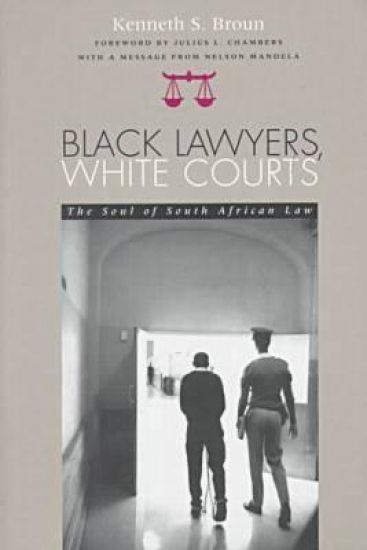
In the struggle against apartheid, one often overlooked group of crusaders was the coterie of black lawyers who overcame the Byzantine system that the government established oftentimes explicitly to block the paths of its black citizens from achieving justice. Now, in their own voices, we have the narratives of many of those lawyers as recounted in a series of oral interviews. Black Lawyers, White Courts is their story and the anti-apartheid story that has before now gone untold. Professor Kenneth Broun conducted interviews with twenty-seven black South African lawyers. They were asked to tell about their lives, including their family backgrounds, education, careers, and their visions for the future. In many instances they also discussed their years in prison or exile, or under house arrest. Most told of both education and careers interrupted because of the ongoing struggle. The story of the professional achievements of black lawyers in South Africa—indeed their very survival—provides an example of the triumph of individuals and, ultimately, of the law. Black Lawyers, White Courts is about South Africa, and about black professionals in that country, but the lessons its protagonists teach extend far beyond circumstances, geography, or race.
Black Lawyers, White Courts

Black Lawyers, White Courts

Kenneth S. Broun

Ohio University Press
1999
sidottu
In the struggle against apartheid, one often overlooked group of crusaders was the coterie of black lawyers who overcame the Byzantine system that the government established oftentimes explicitly to block the paths of its black citizens from achieving justice. Now, in their own voices, we have the narratives of many of those lawyers as recounted in a series of oral interviews. Black Lawyers, White Courts is their story and the anti-apartheid story that has before now gone untold. Professor Kenneth Broun conducted interviews with twenty-seven black South African lawyers. They were asked to tell about their lives, including their family backgrounds, education, careers, and their visions for the future. In many instances they also discussed their years in prison or exile, or under house arrest. Most told of both education and careers interrupted because of the ongoing struggle. The story of the professional achievements of black lawyers in South Africa—indeed their very survival—provides an example of the triumph of individuals and, ultimately, of the law. Black Lawyers, White Courts is about South Africa, and about black professionals in that country, but the lessons its protagonists teach extend far beyond circumstances, geography, or race.