Kirjojen hintavertailu. Mukana 12 595 353 kirjaa ja 12 kauppaa.
Kirjailija
Kenneth W. Clements
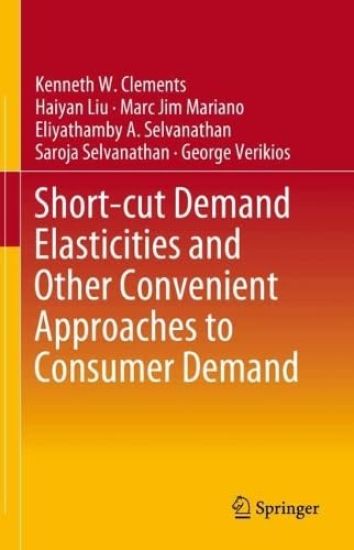
Kirjat ja teokset yhdessä paikassa: 8 kirjaa, julkaisuja vuosilta 2009-2025, suosituimpien joukossa Short-cut Demand Elasticities and Other Convenient Approaches to Consumer Demand. Vertaile teosten hintoja ja tarkista saatavuus suomalaisista kirjakaupoista.
The book deserves wide readership among applied economic modellers who want to take their field forward by supplementing judgement with statistical evidence.”
This title, first published in 1984, is a contribution to applied international trade theory. The author explores the specification and estimation of a multisector general equilibrium model of the open economy. The model is formulated with the aim of assessing empirically the effects of three key policy variables on trade flows, domestic prices, and the trade balance. The policy variables with which the author is concerned are the rate of growth of the stock of domestic credit, commercial policy, as represented by tariffs, and, finally, the exchange rate. This title will be of interest to students of economics.
This title, first published in 1984, is a contribution to applied international trade theory. The author explores the specification and estimation of a multisector general equilibrium model of the open economy. The model is formulated with the aim of assessing empirically the effects of three key policy variables on trade flows, domestic prices, and the trade balance. The policy variables with which the author is concerned are the rate of growth of the stock of domestic credit, commercial policy, as represented by tariffs, and, finally, the exchange rate. This title will be of interest to students of economics.
Currency values, prices, consumption and incomes are at the heart of the economic performance of all countries. In order to make a meaningful comparison between one economy and another, economists routinely make use of purchasing power parity (PPP) exchange rates, but while PPP rates are widely used and well understood, they take a lot of effort to produce and suffer from publication delays. Currencies, Commodities and Consumption analyses the strengths and weaknesses of two alternatives to PPP. Firstly, the so-called Big Mac Index, which uses hamburger prices as a standard of measurement, and second, a less well known technique which infers incomes across countries based on the proportion of consumption devoted to food. Kenneth W. Clements uses international macroeconomics, microeconomic theory and econometrics to provide researchers and policy makers with insights into alternatives to PPP rates and make sense of the ongoing instability of exchange rates and commodity prices.
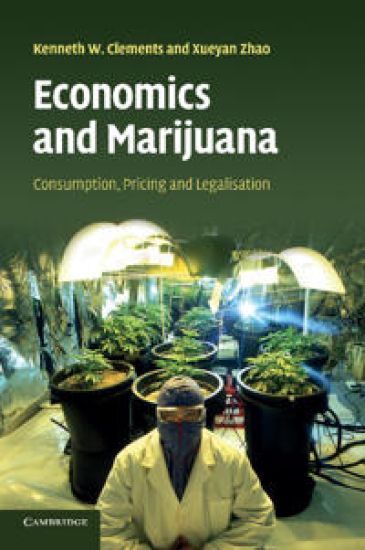
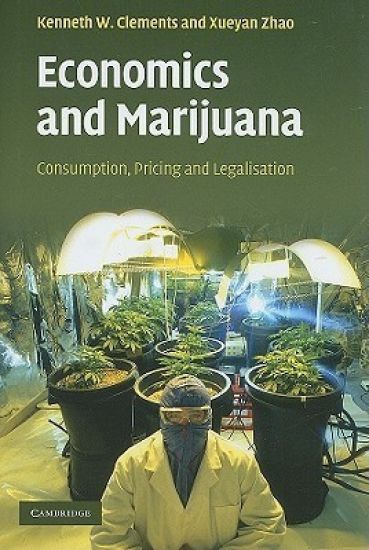
Do marijuana users cut back on consumption when the price rises? To what degree is marijuana consumption related to drinking and tobacco usage? What would happen if marijuana were legalised and taxed in the same way as alcohol and tobacco? Is marijuana priced in a similar way to other goods? Economics and Marijuana deals with these and other questions by drawing on a rich set of data concerning the consumption and pricing of marijuana in Australia, a country where the drug has been decriminalised in some, but not all, states. The book applies the economic approach to drugs to analyse consumption, pricing and the economics of legalising the use of marijuana. The result is a fascinating analysis of this widely used, but little understood illicit drug that provides much needed information and policy advice for a wide range of readers, including economists, policy makers and health professionals.
Currency values, prices, consumption and incomes are at the heart of the economic performance of all countries. In order to make a meaningful comparison between one economy and another, economists routinely make use of purchasing power parity (PPP) exchange rates, but while PPP rates are widely used and well understood, they take a lot of effort to produce and suffer from publication delays. Currencies, Commodities and Consumption analyses the strengths and weaknesses of two alternatives to PPP. Firstly, the so-called Big Mac Index, which uses hamburger prices as a standard of measurement, and second, a less well known technique which infers incomes across countries based on the proportion of consumption devoted to food. Kenneth W. Clements uses international macroeconomics, microeconomic theory and econometrics to provide researchers and policy makers with insights into alternatives to PPP rates and make sense of the ongoing instability of exchange rates and commodity prices.
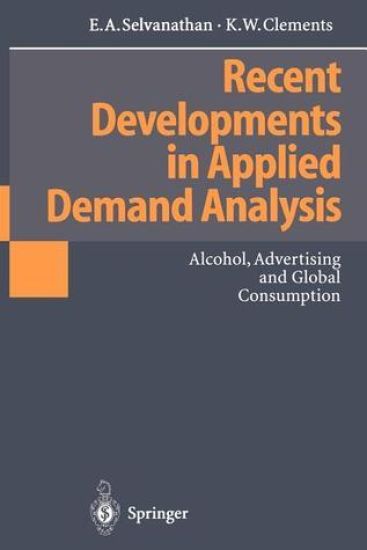
The study of consumer demand is important for a number of reasons. First, as total consumption absorbs more than 70 percent of GDP in most countries, it is the largest of the macroeconomic aggregates, thus having great significance for the state of the economy as a whole and business conditions. Second, the pattern of consumption contains a wealth of useful information regarding economic welfare and living standards. Closely allied to this is that as consumption (both current and future) is the ultimate objective of all economic activity and economic systems (mercantilists notwithstanding), in a fundamental sense consumption patterns are an objective way of measuring and assessing economic performance. Finally, an understanding of the price-responsiveness of consumption is of crucial importance for a host of microeconomic policy issues including public-utility pricing, the measurement of distortions, optimal taxation and the treatment of externalities. The analysis of consumer demand is one of the major successes of economics as it represents the near perfect marriage of theory and econometrics, a situation almost unparalleled in any other field of economics. This field has attracted a lot of attention since the introduction of the linear expenditure system and its application to British data by Stone (1954), followed by the differential demand system of Barten (1964) and Theil (1965, 1975176, 1980) and developments thereafter.
Do marijuana users cut back on consumption when the price rises? To what degree is marijuana consumption related to drinking and tobacco usage? What would happen if marijuana were legalised and taxed in the same way as alcohol and tobacco? Is marijuana priced in a similar way to other goods? Economics and Marijuana deals with these and other questions by drawing on a rich set of data concerning the consumption and pricing of marijuana in Australia, a country where the drug has been decriminalised in some, but not all, states. The book applies the economic approach to drugs to analyse consumption, pricing and the economics of legalising the use of marijuana. The result is a fascinating analysis of this widely used, but little understood illicit drug that provides much needed information and policy advice for a wide range of readers, including economists, policy makers and health professionals.