Kirjojen hintavertailu. Mukana 12 595 353 kirjaa ja 12 kauppaa.

Kirjailija

Kent Roach

Kirjat ja teokset yhdessä paikassa: 23 kirjaa, julkaisuja vuosilta 1999-2026, suosituimpien joukossa Due Process & Victims Rights-2nd Edition. Vertaile teosten hintoja ja tarkista saatavuus suomalaisista kirjakaupoista.

23 kirjaa

Kirjojen julkaisuhaarukka 1999-2026.

Red Alert

Red Alert

Kent Roach

UNIVERSITY OF TORONTO PRESS
2026
pokkari
Red Alert is a timely exploration of a national institution that has lurched from crisis to crisis. Once a mainstay of the nation’s image, the future of the Royal Canadian Mounted Police (RCMP) has become increasingly uncertain with Alberta and British Columbia proposing the establishment of provincial services to replace them and Justin Trudeau calling for the force to be reduced by two thirds to focus on national security. Policing and legal expert Kent Roach highlights the increasing challenges the RCMP faces as underlined by the 2020 massacres of twenty-two people in rural Nova Scotia and the underexamined 2022 mass murder of eleven people on James Smith Cree Nation. Red Alert explains how the RCMP’s insistence on boot camp training helps it retain its colonial and paramilitary nature, making it an incompatible fit for the specialized and dynamic world of modern policing. Roach emphasizes the need for restorative approaches to community safety including Indigenous peacekeeping and having police work with communities in both national security and local policing. A compelling portrayal of the pressures facing the RCMP, and the prospects for meaningful reform within and without it, Red Alert is essential for understanding the troubling state of law enforcement.
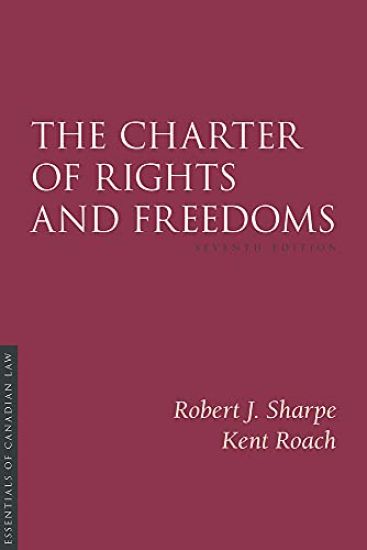
The Charter of Rights and Freedoms

The Charter of Rights and Freedoms

Robert J. Sharpe; Kent Roach

UNIVERSITY OF TORONTO PRESS
2026
pokkari
The eighth edition of The Charter of Rights and Freedoms provides an accessible yet thorough account of the constitutional protection and practical application of rights under the Canadian Charter. Charter rights are in a state of constant evolution, and renowned legal experts Robert J. Sharpe and Kent Roach help readers navigate these changes with clarity and insight. This new edition considers the current debate on the use of the s. 33 Notwithstanding Clause and examines the impact of approximately 60 new decisions from the Supreme Court of Canada. These cases dealt with a wide range of subjects including freedom of expression, democratic rights, the use of unwritten constitutional principles, the s. 7 right to life liberty and security of the person and the overbreadth doctrine. Many new cases deal with the rights of accused persons in the criminal process, as well as the right to equality. Important recent developments to the rights of Indigenous peoples and principles of self-governance are also examined. In addition to case-law development, the authors take account of the steady stream of scholarly writing that has emerged. This textbook provides a fundamental guide to navigating the Charter for practitioners, professors, students, and all those interested in understanding the foundations of law in Canada.
Canadian Justice, Indigenous Injustice

Canadian Justice, Indigenous Injustice

Kent Roach; John Borrows

MCGILL-QUEEN'S UNIVERSITY PRESS
2022
nidottu
In August 2016 Colten Boushie, a twenty-two-year-old Cree man from Red Pheasant First Nation, was fatally shot on a Saskatchewan farm by white farmer Gerald Stanley. In a trial that bitterly divided Canadians, Stanley was acquitted of both murder and manslaughter by a jury in Battleford with no visible Indigenous representation. In Canadian Justice, Indigenous Injustice Kent Roach critically reconstructs the Gerald Stanley/Colten Boushie case to examine how it may be a miscarriage of justice. Roach provides historical, legal, political, and sociological background to the case including misunderstandings over crime when Treaty 6 was negotiated, the 1885 hanging of eight Indigenous men at Fort Battleford, the role of the RCMP, prior litigation over Indigenous underrepresentation on juries, and the racially charged debate about defence of property, self-defence, guns, and rural crime. Drawing on both trial transcripts and research on miscarriages of justice, Roach looks at jury selection, the controversial "hang fire" defence, how the credibility and beliefs of Indigenous witnesses were challenged on the stand, and Gerald Stanley's implicit appeals to self-defence and defence of property, as well as the decision not to appeal the acquittal. Concluding his study, Roach asks whether Prime Minister Justin Trudeau's controversial call to "do better" is possible, given similar cases since Stanley's, the difficulty of reforming the jury or the RCMP, and the combination of Indigenous underrepresentation on juries and overrepresentation among those victimized and accused of crimes. Canadian Justice, Indigenous Injustice is a searing account of one case that provides valuable insight into criminal justice, racism, and the treatment of Indigenous peoples in Canada.
Remedies for Human Rights Violations

Remedies for Human Rights Violations

Kent Roach

Cambridge University Press
2021
sidottu
An innovative book that provides fresh insights into the neglected field of remedies in both international and domestic human rights law. Providing an overarching two-track theory, it combines remedies to compensate and prevent irreparable harm to litigants with a more dialogic approach to systemic remedies. It breaks new ground by demonstrating how proportionality principles can improve remedial decision-making and avoid reliance on either strong discretion or inflexible rules. It draws on the latest jurisprudence from the European and Inter-American Courts of Human Rights and domestic courts in Australia, Canada, India, New Zealand, Hong Kong, South Africa, the United Kingdom and the United States. Separate chapters are devoted to interim remedies, remedies for laws that violate human rights, damages, remedies in the criminal process, declarations and injunctions in institutional cases, remedies for violations of social and economic rights and remedies for violations of Indigenous rights.
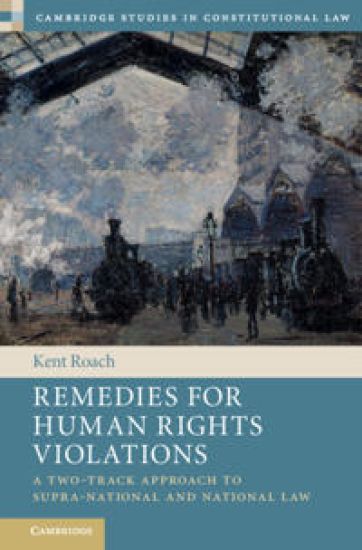
Remedies for Human Rights Violations

Remedies for Human Rights Violations

Kent Roach

Cambridge University Press
2021
pokkari
An innovative book that provides fresh insights into the neglected field of remedies in both international and domestic human rights law. Providing an overarching two-track theory, it combines remedies to compensate and prevent irreparable harm to litigants with a more dialogic approach to systemic remedies. It breaks new ground by demonstrating how proportionality principles can improve remedial decision-making and avoid reliance on either strong discretion or inflexible rules. It draws on the latest jurisprudence from the European and Inter-American Courts of Human Rights and domestic courts in Australia, Canada, India, New Zealand, Hong Kong, South Africa, the United Kingdom and the United States. Separate chapters are devoted to interim remedies, remedies for laws that violate human rights, damages, remedies in the criminal process, declarations and injunctions in institutional cases, remedies for violations of social and economic rights and remedies for violations of Indigenous rights.
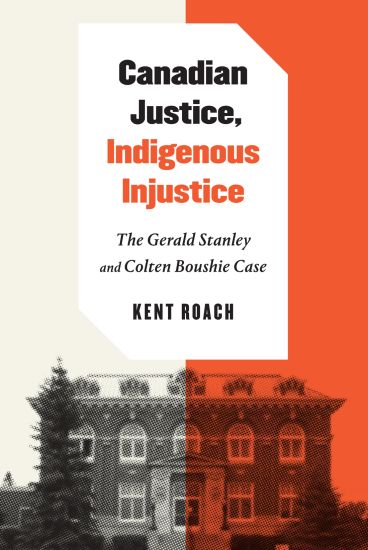
Canadian Justice, Indigenous Injustice

Canadian Justice, Indigenous Injustice

Kent Roach

McGill-Queen's University Press
2019
sidottu
In August 2016 Colten Boushie, a twenty-two-year-old Cree man from Red Pheasant First Nation, was fatally shot on a Saskatchewan farm by white farmer Gerald Stanley. In a trial that bitterly divided Canadians, Stanley was acquitted of both murder and manslaughter by a jury in Battleford with no visible Indigenous representation. In Canadian Justice, Indigenous Injustice Kent Roach critically reconstructs the Gerald Stanley/Colten Boushie case to examine how it may be a miscarriage of justice. Roach provides historical, legal, political, and sociological background to the case including misunderstandings over crime when Treaty 6 was negotiated, the 1885 hanging of eight Indigenous men at Fort Battleford, the role of the RCMP, prior litigation over Indigenous underrepresentation on juries, and the racially charged debate about defence of property, self-defence, guns, and rural crime. Drawing on both trial transcripts and research on miscarriages of justice, Roach looks at jury selection, the controversial "hang fire" defence, how the credibility and beliefs of Indigenous witnesses were challenged on the stand, and Gerald Stanley's implicit appeals to self-defence and defence of property, as well as the decision not to appeal the acquittal. Concluding his study, Roach asks whether Prime Minister Justin Trudeau's controversial call to "do better" is possible, given similar cases since Stanley's, the difficulty of reforming the jury or the RCMP, and the combination of Indigenous underrepresentation on juries and overrepresentation among those victimized and accused of crimes. Canadian Justice, Indigenous Injustice is a searing account of one case that provides valuable insight into criminal justice, racism, and the treatment of Indigenous peoples in Canada.
The Supreme Court on Trial

The Supreme Court on Trial

Kent Roach

Irwin Law
2016
pokkari
Shortlisted for the 2002 Donner Prize (first edition) The Supreme Court of Canada has been accused of usurping Canadian democracy on a long list of divisive topics, including assisted dying, sex work, supervised injection sites, same-sex marriage, labour relations, election spending, and health care policy. Some critics claim that the nine unelected judges on Canada's highest Court have used the Canadian Charter of Rights and Freedoms to impose their own views on public policy over those of elected governments. This book joins the crucial debate about the Charter, the Court, and Canadian democracy, and was shortlisted for the Donner Prize in public policy when originally published. Some of the questions that Kent Roach considers in this important and timely book include: What is judicial activism? Is the Charter making us more like America, where the political nature of the judges appointed to the Court has become critical? Can judges simply read their own political preferences into the Charter? Are judges captive to special interests? What can governments and people do when they think the Court has got it wrong? This revised edition updates the continued dialogue between the Court and Canadian governments and society over Charter issues, including recent dialogues about assisted dying and supervised injection sites. It also responds to criticisms from some commentators that the dialogue between courts and the government is a fraudulent and undemocratic monologue, and from others who believe that this dialogue can undermine the rule of law. In short, The Supreme Court on Trial makes an important contribution to understanding the role of the Court and the Charter in our democracy.
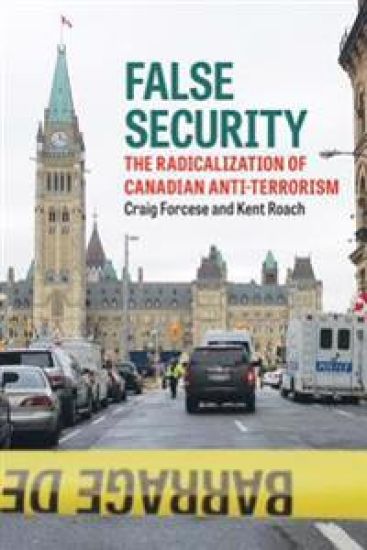
False Security

False Security

Craig Forcese; Kent Roach

Irwin Law
2015
pokkari
Winner of the 2016 Canadian Law and Society Association Book Prize On 20 October 2014, a terrorist drove his car into two members of the Canadian Armed Forces, killing Warrant Officer Patrice Vincent. Two days later, another terrorist murdered Corporal Nathan Cirillo before storming Parliament. In the aftermath of these attacks, Parliament enacted Bill C-51 -- the most radical national security law in generations. This new law ignored hard lessons on how Canada both over- and underreacted to terrorism in the past. It also ignored evidence and urgent recommendations about how to avoid these dangers in the future. For much of 2015, Craig Forcese and Kent Roach have provided, as Maclean's put it, the "intellectual core of what's emerged as surprisingly vigorous push-back" to Bill C-51. In this book, they show that our terror laws now make a false promise of security even as they present a radical challenge to rights and liberties. They trace how our laws repeat past mistakes of institutionalized illegality while failing to address problems that weaken the accountability of security agencies and impair Canada's ability to defend against terrorism.
Emergency Law

Emergency Law

Kent Roach

Ashgate Publishing Limited
2012
sidottu
The essays selected for this volume provide a comprehensive overview of the philosophical, ethical, historical, legal and practical issues in the diverse field of emergency law. The essays focus on terrorist attacks and natural disasters and highlight the roles of a vast variety of actors, such as the military, fire services, health services, police, volunteers and many more. The volume reveals legislative trends in emergency law by combining different national, international and comparative legal perspectives on a number of different types of emergency situations. In addition, essays taken from a practitioner perspective provide insight into civilian and military emergency management on the ground and the frequently reoccurring legal challenges. By comparing different national approaches to emergency law and emergency management, this collection of essays goes beyond the narrow view of one political system and draws instructive conclusions relating to the similarities and differences between a variety of common law and civil law systems and constitutional set-ups.
The 9/11 Effect

The 9/11 Effect

Kent Roach

Cambridge University Press
2011
sidottu
This book critically and comparatively examines the responses of the United Nations and a range of countries to the terror attacks on September 11, 2001. It assesses the convergence between the responses of Western democracies including the United States, the United Kingdom, Australia and Canada with countries with more experience with terrorism including Egypt, Syria, Israel, Singapore and Indonesia. A number of common themes - the use of criminal law and immigration law, the regulation of speech associated with terrorism, the review of the state's whole of government counter-terrorism activities, and the development of national security policies - are discussed. The book provides a critical take on how the United Nations promoted terrorism financing laws and listing processes and the regulation of speech associated with terrorism but failed to agree on a definition of terrorism or the importance of respecting human rights while combating terrorism.
The 9/11 Effect

The 9/11 Effect

Kent Roach

Cambridge University Press
2011
pokkari
This book critically and comparatively examines the responses of the United Nations and a range of countries to the terror attacks on September 11, 2001. It assesses the convergence between the responses of Western democracies including the United States, the United Kingdom, Australia and Canada with countries with more experience with terrorism including Egypt, Syria, Israel, Singapore and Indonesia. A number of common themes - the use of criminal law and immigration law, the regulation of speech associated with terrorism, the review of the state's whole of government counter-terrorism activities, and the development of national security policies - are discussed. The book provides a critical take on how the United Nations promoted terrorism financing laws and listing processes and the regulation of speech associated with terrorism but failed to agree on a definition of terrorism or the importance of respecting human rights while combating terrorism.
Forensic Investigations and Miscarriages of Justice

Forensic Investigations and Miscarriages of Justice

Bibi Sangha; Kent Roach; Robert Moles

Irwin Law Inc
2010
pokkari
Miscarriages of justice have been the focus of judicial and public inquiries in Britain, Canada, and Australia. The objective of "Forensic Investigations and Miscarriages of Justice" is to make clear that, despite the rules laid down by statutes and decided cases to ensure that criminal trials are properly conducted, there are many instances where those rules have not been properly applied. In all three jurisdictions, there have been cases in which investigations have fundamentally miscarried and where expert witnesses have given evidence that has been either fraudulent or wrong. The book reviews how these problem cases are dealt with, and the marked differences between the jurisdictions in the procedures available to identify possible errors. The authors recommend ways to narrow the gap between the rhetoric of impartial forensic science and prosecutions and the reality of a growing number of recognized miscarriages of justice, emphasizing that both forensic science and the legal system must change and seek to better understand each other.
Brian Dickson

Brian Dickson

Robert Sharpe; Kent Roach

University of Toronto Press
2003
pokkari
When Brian Dickson was appointed in 1973, the Supreme Court of Canada was preoccupied with run-of-the-mill disputes. By the time he retired as Chief Justice of Canada in 1990, the Court had become a major national institution, very much in the public eye. The Court's decisions, reforming large areas of private and public law under the Charter of Rights, were the subject of intense public interest and concern. Brian Dickson played a leading role in this transformation. Engaging and incisive, Brian Dickson: A Judge's Journey traces Dickson's life from a Depression-era boyhood in Saskatchewan, to the battlefields of Normandy, the boardrooms of corporate Canada and high judicial office, and provides an inside look at the work of the Supreme Court during its most crucial period. Dickson's journey was an important part of the evolution of the Canadian judiciary and of Canada itself. Sharpe and Roach have written an accessible biography of one of Canada's greatest legal figures that provides new insights into the work of Canada's highest court.