Kirjojen hintavertailu. Mukana 12 390 323 kirjaa ja 12 kauppaa.

Kirjailija

Kevin Fox Gotham

Kirjat ja teokset yhdessä paikassa: 8 kirjaa, julkaisuja vuosilta 2007-2026, suosituimpien joukossa Race, Real Estate, and Uneven Development. Vertaile teosten hintoja ja tarkista saatavuus suomalaisista kirjakaupoista.

8 kirjaa

Kirjojen julkaisuhaarukka 2007-2026.

Rethinking Tourism Gentrification

Rethinking Tourism Gentrification

Kevin Fox Gotham

EDWARD ELGAR PUBLISHING LTD
2026
sidottu
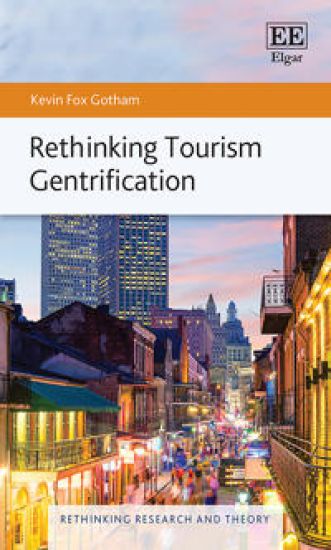
In this timely book, Kevin Fox Gotham assesses the advantages and limitations of current theorizations and empirical examinations of tourism gentrification. He challenges conventional understandings and raises novel questions about the interaction of government policy, tourism development and gentrification. Identifying unexplored areas at the nexus of tourism gentrification, Gotham rethinks the binaries that are predominant in conventional tourism and gentrification research. Chapters also address the impact of short-term rentals, platform capitalism, neoliberalization and financialization on processes and patterns in tourism gentrification. Ultimately, the book illustrates the analytic value of tourism gentrification as a conceptual and heuristic tool for progressing beyond discipline-centric debates to promote research on tourism development in cities, gentrification and urban life. This is a beneficial resource for scholars and students of hospitality and tourism studies, human geography, urban studies, sociology and criminology. It will also be a helpful read for urban planners, particularly those looking at the intersections between tourism, development and crime.

Practicing Forensic Criminology

Practicing Forensic Criminology

Kevin Fox Gotham; Daniel Bruce Kennedy

Academic Press Inc
2019
nidottu
Practicing Forensic Criminology draws on examples from actual court cases and expert witness reports and testimony to demonstrate the merits and uses of substantive criminological knowledge in the applied setting of civil law and the courts. Throughout the book, the authors provide a highly readable, informative discussion of how forensic criminologists can apply their research and teaching skills to assist judges and juries in rendering legal decisions. Engaging and lively, the chapters include excerpts from forensic criminological investigations, in-depth discussions of the methodological and analytical bases of these investigations, and important lessons learned from real litigation cases. Case examples are drawn from the forensic realms of premises liability, administrative negligence, workplace violence, wrongful conviction litigation, and litigation involving police departments and corrections facilities. Well referenced and thoroughly researched, Practicing Forensic Criminology serves as an introduction to the vast and heterogeneous field of forensic social science that is rapidly changing and expanding. This unique and original book guides readers through the research work of expert witnesses working as consultants, researchers, and crime analysts and investigators. Offering expert criminological insights into litigation cases, the chapters reveal how forensic social science research can be an effective mechanism for reaching beyond the academy to influence public policy reform and legal proceedings. Practicing Forensic Criminology will appeal to a diverse audience, including social scientists, criminal justice students and researchers, expert witnesses, attorneys, judges, and students of judicial proceedings seeking to understand the value and impact of criminology in the civil court system.
Crisis Cities

Crisis Cities

Kevin Fox Gotham; Miriam Greenberg

Oxford University Press Inc
2014
sidottu
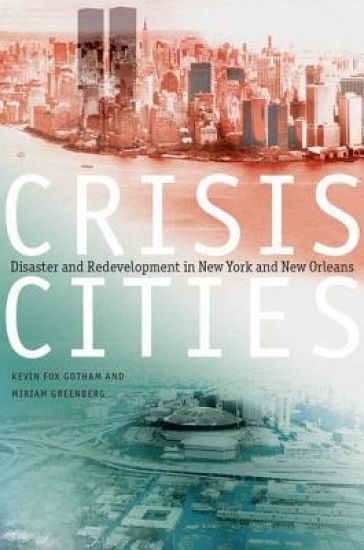
Crisis Cities blends critical theoretical insight with a historically grounded comparative study to examine the form, trajectory, and contradictions of redevelopment efforts following the 9/11 and Hurricane Katrina disasters. Based on years of research in the two cities, Gotham and Greenberg contend that New York and New Orleans have emerged as paradigmatic crisis cities, representing a free-market approach to post-disaster redevelopment that is increasingly dominant for crisis-stricken cities around the world. This approach, which Gotham and Greenberg term crisis driven urbanization, emphasizes the privatization of disaster aid and resources, the devolution of disaster recovery responsibilities to the local state, and the use of generous tax incentives to bolster revitalization. Crisis driven urbanization also involves global branding campaigns and public media events to repair a city's image for business and tourism, as well as internally-focused political campaigns and events that associate post-crisis political leaders and public-private partnerships with this revitalized urban image. By focusing on past and present conditions in New York and New Orleans, Gotham and Greenberg show how crises expose long-neglected injustices, underlying power structures, and social inequalities. In doing so, they reveal the impact of specific policy reforms, public-private actions, and socio-legal regulatory strategies on the creation and reproduction of risk and vulnerability to disasters. Crisis Cities questions the widespread narrative of resilience and reveals the uneven and contradictory effects of redevelopment activities in the two cities.
Crisis Cities

Crisis Cities

Kevin Fox Gotham; Miriam Greenberg

Oxford University Press Inc
2014
nidottu
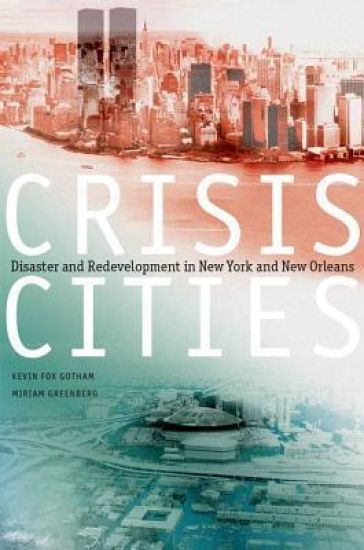
Crisis Cities blends critical theoretical insight with a historically grounded comparative study to examine the form, trajectory, and contradictions of redevelopment efforts following the 9/11 and Hurricane Katrina disasters. Based on years of research in the two cities, Gotham and Greenberg contend that New York and New Orleans have emerged as paradigmatic crisis cities, representing a free-market approach to post-disaster redevelopment that is increasingly dominant for crisis-stricken cities around the world. This approach, which Gotham and Greenberg term crisis driven urbanization, emphasizes the privatization of disaster aid and resources, the devolution of disaster recovery responsibilities to the local state, and the use of generous tax incentives to bolster revitalization. Crisis driven urbanization also involves global branding campaigns and public media events to repair a city's image for business and tourism, as well as internally-focused political campaigns and events that associate post-crisis political leaders and public-private partnerships with this revitalized urban image. By focusing on past and present conditions in New York and New Orleans, Gotham and Greenberg show how crises expose long-neglected injustices, underlying power structures, and social inequalities. In doing so, they reveal the impact of specific policy reforms, public-private actions, and socio-legal regulatory strategies on the creation and reproduction of risk and vulnerability to disasters. Crisis Cities questions the widespread narrative of resilience and reveals the uneven and contradictory effects of redevelopment activities in the two cities.
Race, Real Estate, and Uneven Development

Race, Real Estate, and Uneven Development

Kevin Fox Gotham

State University of New York Press
2014
sidottu
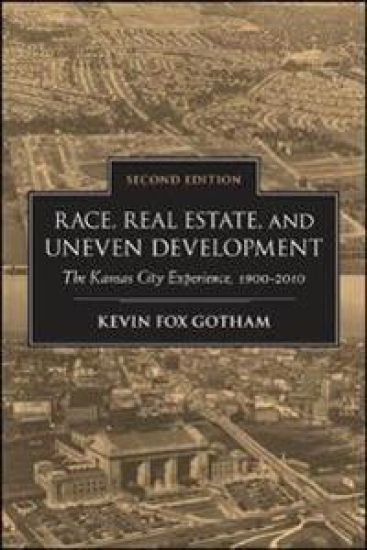
Updated second edition examining how the real estate industry and federal housing policy have facilitated the development of racial residential segregation. Traditional explanations of metropolitan development and urban racial segregation have emphasized the role of consumer demand and market dynamics. In the first edition of Race, Real Estate, and Uneven Development Kevin Fox Gotham reexamined the assumptions behind these explanations and offered a provocative new thesis. Using the Kansas City metropolitan area as a case study, Gotham provided both quantitative and qualitative documentation of the role of the real estate industry and the Federal Housing Administration, demonstrating how these institutions have promulgated racial residential segregation and uneven development. Gotham challenged contemporary explanations while providing fresh insights into the racialization of metropolitan space, the interlocking dimensions of class and race in metropolitan development, and the importance of analyzing housing as a system of social stratification. In this second edition, he includes new material that explains the racially unequal impact of the subprime real estate crisis that began in late 2007, and explains why racial disparities in housing and lending remain despite the passage of fair housing laws and antidiscrimination statutes.
Race, Real Estate, and Uneven Development

Race, Real Estate, and Uneven Development

Kevin Fox Gotham

State University of New York Press
2014
pokkari
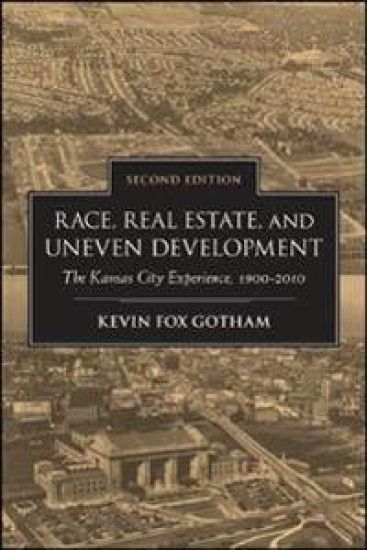
Updated second edition examining how the real estate industry and federal housing policy have facilitated the development of racial residential segregation.Traditional explanations of metropolitan development and urban racial segregation have emphasized the role of consumer demand and market dynamics. In the first edition of Race, Real Estate, and Uneven Development Kevin Fox Gotham reexamined the assumptions behind these explanations and offered a provocative new thesis. Using the Kansas City metropolitan area as a case study, Gotham provided both quantitative and qualitative documentation of the role of the real estate industry and the Federal Housing Administration, demonstrating how these institutions have promulgated racial residential segregation and uneven development. Gotham challenged contemporary explanations while providing fresh insights into the racialization of metropolitan space, the interlocking dimensions of class and race in metropolitan development, and the importance of analyzing housing as a system of social stratification. In this second edition, he includes new material that explains the racially unequal impact of the subprime real estate crisis that began in late 2007, and explains why racial disparities in housing and lending remain despite the passage of fair housing laws and antidiscrimination statutes.
Authentic New Orleans

Authentic New Orleans

Kevin Fox Gotham

New York University Press
2007
pokkari
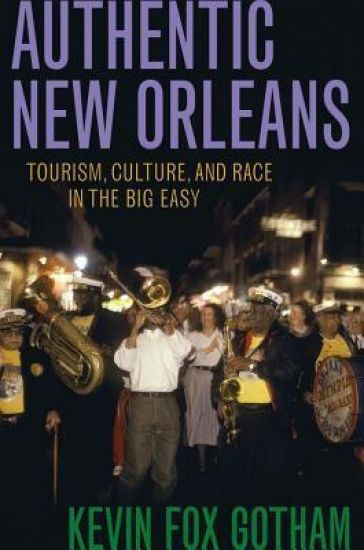
Honorable Mention for the 2008 Robert Park Outstanding Book Award given by the ASA's Community and Urban Sociology Section Mardi Gras, jazz, voodoo, gumbo, Bourbon Street, the French Quarter—all evoke that place that is unlike any other: New Orleans. In Authentic New Orleans, Kevin Fox Gotham explains how New Orleans became a tourist town, a spectacular locale known as much for its excesses as for its quirky Southern charm. Gotham begins in the aftermath of Hurricane Katrina amid the whirlwind of speculation about the rebuilding of the city and the dread of outsiders wiping New Orleans clean of the grit that made it great. He continues with the origins of Carnival and the Mardi Gras celebration in the nineteenth century, showing how, through careful planning and promotion, the city constructed itself as a major tourist attraction. By examining various image-building campaigns and promotional strategies to disseminate a palatable image of New Orleans on a national scale Gotham ultimately establishes New Orleans as one of the originators of the mass tourism industry—which linked leisure to travel, promoted international expositions, and developed the concept of pleasure travel. Gotham shows how New Orleans was able to become one of the most popular tourist attractions in the United States, especially through the transformation of Mardi Gras into a national, even international, event. All the while Gotham is concerned with showing the difference between tourism from above and tourism from below—that is, how New Orleans' distinctiveness is both maximized, some might say exploited, to serve the global economy of tourism as well as how local groups and individuals use tourism to preserve and anchor longstanding communal traditions.
Authentic New Orleans

Authentic New Orleans

Kevin Fox Gotham

New York University Press
2007
sidottu
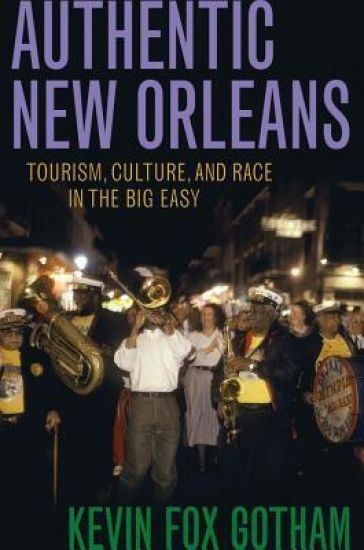
Honorable Mention for the 2008 Robert Park Outstanding Book Award given by the ASA's Community and Urban Sociology Section Mardi Gras, jazz, voodoo, gumbo, Bourbon Street, the French Quarter—all evoke that place that is unlike any other: New Orleans. In Authentic New Orleans, Kevin Fox Gotham explains how New Orleans became a tourist town, a spectacular locale known as much for its excesses as for its quirky Southern charm. Gotham begins in the aftermath of Hurricane Katrina amid the whirlwind of speculation about the rebuilding of the city and the dread of outsiders wiping New Orleans clean of the grit that made it great. He continues with the origins of Carnival and the Mardi Gras celebration in the nineteenth century, showing how, through careful planning and promotion, the city constructed itself as a major tourist attraction. By examining various image-building campaigns and promotional strategies to disseminate a palatable image of New Orleans on a national scale Gotham ultimately establishes New Orleans as one of the originators of the mass tourism industry—which linked leisure to travel, promoted international expositions, and developed the concept of pleasure travel. Gotham shows how New Orleans was able to become one of the most popular tourist attractions in the United States, especially through the transformation of Mardi Gras into a national, even international, event. All the while Gotham is concerned with showing the difference between tourism from above and tourism from below—that is, how New Orleans' distinctiveness is both maximized, some might say exploited, to serve the global economy of tourism as well as how local groups and individuals use tourism to preserve and anchor longstanding communal traditions.